






 Portuguese
  Spanish


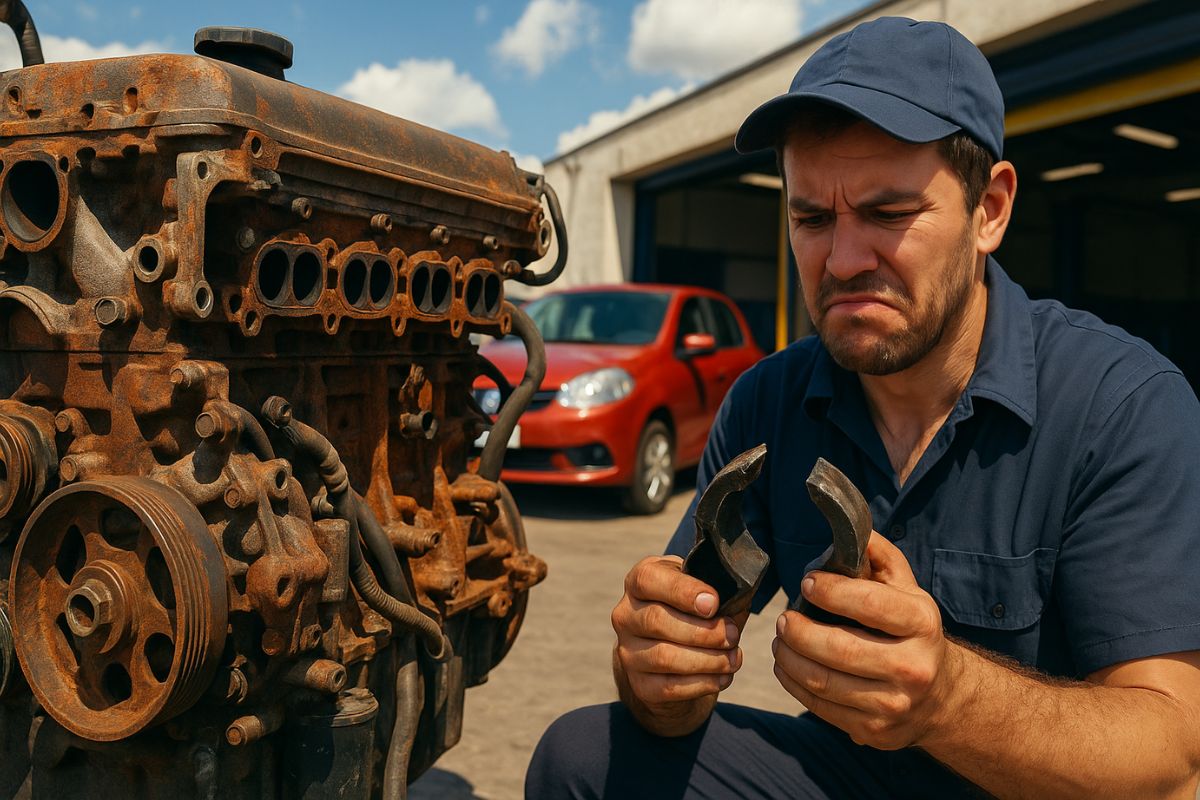


Does Your Car Have One of These? Check Out the Worst Engines That Ever Existed in Brazil. The List Brings Together the Worst Engines That Ever Existed in Brazil, Marked by Chronic Defects, Recalls, and Expensive Maintenance.
The topic of the worst engines that ever existed in Brazil always sparks debates among drivers, mechanics, and car enthusiasts. Some models have made their mark, but they are better known for their problems than for their reliability.
From engines with lubrication failures to fragile timing belt systems, the list includes designs that became true nightmares for owners of used vehicles. Understanding which are the worst engines that ever existed in Brazil helps those looking to buy or sell cars to avoid losses.
The Controversial EA111 1.0 16V from Volkswagen
Among the worst engines that ever existed in Brazil, the EA111 1.0 16 valves from Volkswagen is one of the most cited. It equipped versions of the Gol, Parati, and Polo in the 2000s and had chronic lubrication defects.
-
Volkswagen to Cut Production by 1 Million Cars by 2030, Reducing Jobs and Platforms, Focusing on More Profitable Models

-
Toyota Launches First 100% Electric Car in Brazil: bZ4X with 343 HP, All-Wheel Drive, 361 km Range, Priced at $419,990 BRL, Limited to 99 Units

-
Chinese SUV Achieves 24.4 km/l, Outperforms Toyota Yaris Cross in Real-World Tests with 224 hp Hybrid System, Offers 51-Liter Tank for Greater Range, and Costs Up to R$ 5,000 Less.
-
Uber Black Revamps Fleet, Drops Ten Car Models and Sets Deadline for Electric BYD Dolphin


Frequent problems included premature wear of pistons, rings, and bushings, as well as oil leaks in different parts of the engine. Even with good maintenance, many owners faced serious failures, leading to a devaluation of these vehicles in the used market.
The 2.4 “Theta” from Hyundai and Kia
Another name on the list of worst engines is the 2.4 16 valves, known as “Theta.” It equipped models like Kia Sorento, Hyundai Sonata, and Santa Fe.
The most common defect was in the oil pump, which had sealing failures. The lack of lubrication led to internal wear and even engine seizing. In the United States, there were recalls; in Brazil, many consumers bore the high repair costs alone.
CSS Prime 1.0 and 1.2 from Chevrolet
Most recent among the worst engines that ever existed in Brazil, the CSS Prime powers the Onix, Onix Plus, Tracker, and Nova Montana. Despite good fuel efficiency, the mechanics proved to be fragile.
The major problem lies in the timing belt bathed in oil, which can degrade, shed fragments, and compromise lubrication. Even in new cars, there are already reports of serious failures, making this engine a potential headache for owners.
TU3JP 1.4 from Peugeot and Citroën
The 1.4 8-valve engine from Peugeot and Citroën also makes the worst engines list. It equipped models like Peugeot 206, 207, and Citroën C3, becoming famous for easily burning head gaskets.
Furthermore, the cooling system is extremely sensitive. Any temperature failure can result in irreversible engine damage, leading to the need for costly overhauls. This history helped build the poor reputation of the French brands in the country.
Dodge 2.7 V6 and High Maintenance Costs
Among imported engines, the Dodge 2.7 V6 that powered the Journey deserves special mention. Also listed among the worst engines that ever existed in Brazil, it had serious problems with oil sludge and design flaws.
The combination of high operating temperature, low oil volume, and complex maintenance resulted in recurring breakdowns. In Brazil, the difficulty in finding parts only aggravated the situation, making maintenance even more expensive.
THP 1.6 First Generation
The THP 1.6 turbo gasoline engine, launched by Peugeot and Citroën, had good performance, but serious failures placed it among the worst engines.
Defects in the wastegate, coils, and even in the oil filter were common, resulting in high repair costs. The second generation corrected some issues, but the older models still carry the negative reputation.
The list of engines shows that efficiency or performance does not always go hand in hand with reliability. Poorly executed designs, engineering failures, and high repair costs have negatively marked these engines, affecting generations of drivers.
And you: have you ever had a car with one of these problematic engines? What was your experience? Share in the comments and help enrich this debate about the worst engines that ever existed in Brazil.




Matéria sem fundamento e nem base. Claramente direcionada a prejudicar o consumidor e algumas marcas