






 Portuguese
  Spanish


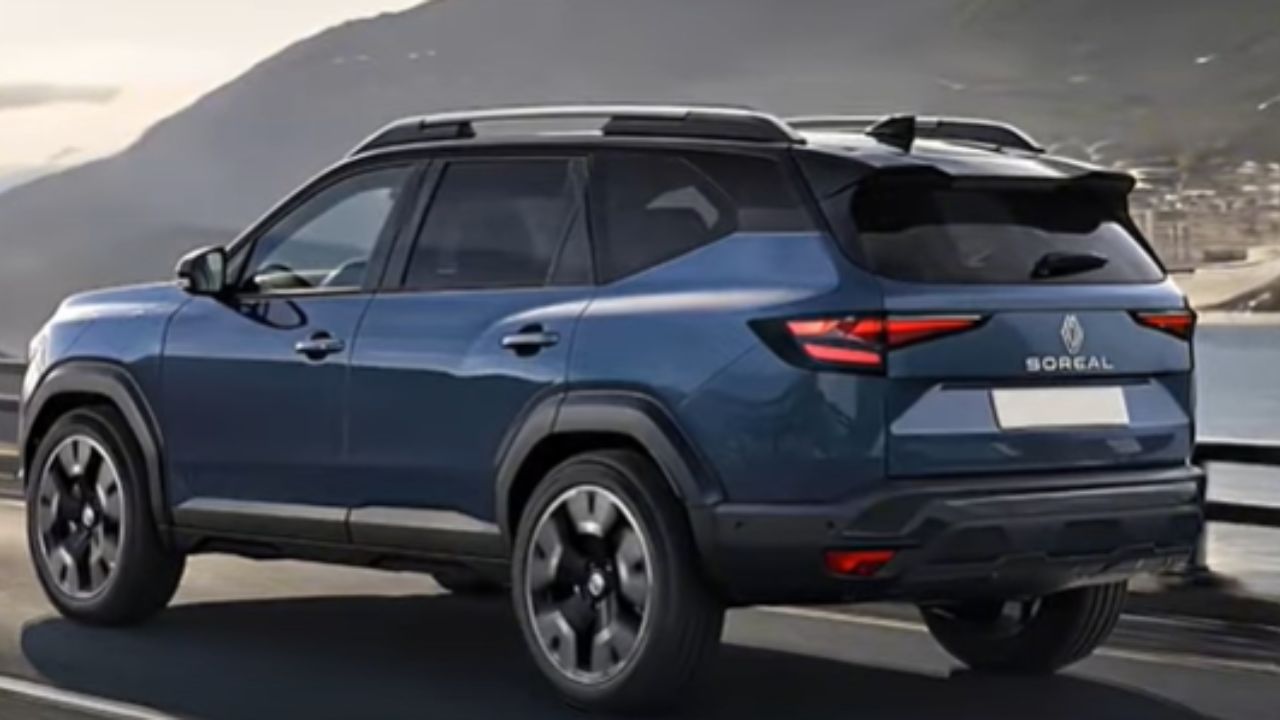


With Global Presentation Set for Brazil, the New Renault SUV Targets Major Rivals Like Jeep Compass and Toyota Corolla Cross; Learn Everything That Has Been Revealed So Far.
The Renault Boreal is one of the most anticipated launches of 2025 in the Brazilian automotive market. This new midsize SUV from the French brand already has a date and location for its world debut: July 10, in São Paulo. Developed to compete directly with segment leaders such as the Jeep Compass and the Toyota Corolla Cross, the model promises to shake up the category. Below, we present five crucial pieces of information already known about the Renault Boreal.
Design: Brazilian Identity with European Roots

Despite the heavy camouflage seen in spy shots taken in Brazil, some details of the Renault Boreal‘s design are already apparent. The SUV will feature a front grille with horizontal slats, prominently displaying the Renault logo in the center.
The look was designed for the Brazilian market, presenting differences in the front and rear overhangs compared to its European counterpart, the Dacia Bigster. However, it inherits features such as the wheel design and the rear door handles that are integrated. Internally, the panel and seat structures will come from the Dacia model, but with styling and materials tailored to Brazilian consumer preferences.
-
Toyota Launches First 100% Electric Car in Brazil: bZ4X with 343 HP, All-Wheel Drive, 361 km Range, Priced at $419,990 BRL, Limited to 99 Units

-
Chinese SUV Achieves 24.4 km/l, Outperforms Toyota Yaris Cross in Real-World Tests with 224 hp Hybrid System, Offers 51-Liter Tank for Greater Range, and Costs Up to R$ 5,000 Less.

-
Uber Black Revamps Fleet, Drops Ten Car Models and Sets Deadline for Electric BYD Dolphin
-
Chinese Giant Uses Metal Structures and Cranes to Deliver Over 700 Electric Cars to Brazil


Its approximate dimensions will be 4.60 meters in length, 1.80 m in width, 1.70 m in height, and 2.70 m in wheelbase, utilizing a monocoque structure.
Powertrain: The Known and Efficient 1.3 TCe Turbo Flex Engine
The Renault Boreal will be built on the RGMP platform, a variation of the CMF-B base already used in the Kardian. Under the hood, it will feature the well-known 1.3 TCe turbo flex engine, which already powers the higher-end versions of the Duster.
After updates to meet Proconve L8 regulations, the engine now delivers 163 hp with ethanol and 156 hp with gasoline. The torque is 27.5 kgfm (ethanol) and 25.5 kgfm (gasoline), respectively. The transmission will be a 6-speed automated dual-clutch (EDC), and the drivetrain will be exclusively front-wheel drive. For the future, between 2026 and 2027, a mild hybrid system is planned.
Equipment: Focus on Safety and Comfort
The new midsize SUV will come with a more complete active safety package (ADAS) than that of the Kardian. According to Antônio Fleischman, vice-president of engineering at Renault Latin America, the model will feature a lane keeping assist.
This indicates that, in addition to items like adaptive cruise control (ACC) and blind spot warning, the Renault Boreal will bring more advanced technologies. A comfort feature already confirmed for the top-of-the-line version is the massage function in the driver’s seat.
Pricing: How Does the Renault Boreal Position Itself in the Market?
The expectation is that the prices of the Renault Boreal will range between R$ 180,000 and R$ 200,000. For comparison, the Jeep Compass has versions starting at R$ 189,990, while the Toyota Corolla Cross starts at R$ 179,190. This pricing strategy positions the Boreal competitively at the heart of the midsize SUVs segment.
Launch: When Does the New Renault Boreal SUV Arrive in Brazil?


The official presentation of the Renault Boreal will occur in July. However, production at the São José dos Pinhais (PR) plant will begin in the third quarter. Thus, the effective arrival of the SUV at dealerships and the start of sales are expected to take place around October.
The project was created and designed for Brazil, which will be the first market to receive it. Later, the Renault Boreal will be launched in other countries in Latin America and around 70 global markets.
With information from AutoEsporte.








Um Dacia (Renault versão popular na Europa) sendo vendido por quase 200 mi. A BYD merece fazer a festa mesmo, meu próximo carro.
Um detalhe que quase nunca apresentam : é a relação peso/potência de um veículo.
Pode parecer pouco, mas facilita, e muito a comparação entre diversos modelos.