Portuguese
  Spanish


The Discovery Of The Marine Reptile Was Made In Germany, And Brings New Information About Marine Biodiversity From The Jurassic Period.
A marine reptile about 3 meters long, with an extremely long neck, has just been officially recognized by scientists as a new species.
The animal lived 183 million years ago, during the Jurassic period, and its fossilized remains had been stored since 1978 at the State Museum of Natural History Stuttgart in Germany.
Now, thanks to a more in-depth analysis, the species has been named Plesionectes longicollum.
-
Brazilian Innovator Survives Homemade Submarine Dive in Paraty Despite Hatch Leak and False Oxygen Alarm

-
China Develops Custom 140-Ton Electric Mining Truck with 770 kWh Swappable Battery, Deploys 290 Units in Xinjiang’s Largest Zinc Mine
-
Meta to Launch Arena, a New Prediction App Targeting 3.56 Billion Users, Competing with Polymarket and Kalshi

-
Scientist Challenges Famous Human Evolution Theory, Argues Homo Sapiens Evolved Gradually Over Thousands of Years




Fossil Stayed Decades Kept Before Being Studied
According to Sven Sachs from the Naturkunde-Museum Bielefeld and the lead author of the study, the fossil had been part of scientific collections for decades but had never been fully investigated.
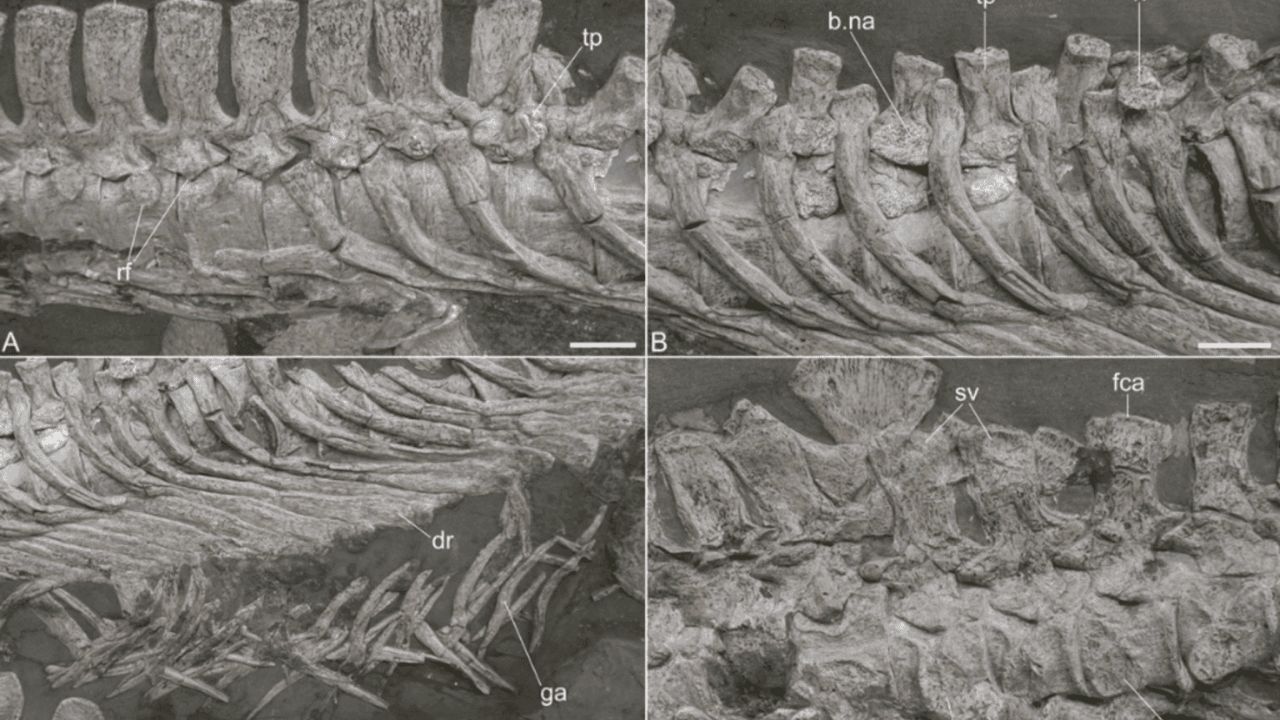
“Our detailed examination revealed an unusual combination of skeletal features that clearly distinguishes it from all known plesiosaurs,” Sachs stated.
The specimen was originally excavated in Holzmaden, a region famous for its fossil-rich shale deposits from the Posidonia formation.
Marine Reptile Lived In A Period Of Great Transformations
The study also highlights the context in which this marine reptile lived: the beginning of the Toarcian period, a phase marked by intense environmental changes, including an oceanic anoxic event — when parts of the ocean were devoid of oxygen.
For co-author Dr. Daniel Madzia, the discovery represents a breakthrough:
“This discovery adds another piece to the puzzle of the evolution of marine ecosystems during a critical period in Earth’s history.”
3-Meter Reptile With Long Neck Challenges Old Classifications
Initially, the fossil was classified as belonging to the genus Microcleidus. This species is characterized mainly by its neck with 40 vertebrae and a short tail with 28 vertebrae.
However, subsequent analyses noted considerable differences in the skeleton, although for years the official recognition of a new species was delayed, mainly due to the poor preservation of the skull and the young stage of the animal.
Current Analysis Confirms New Species For Science
In the most recent assessment, scientists were able to conduct a complete osteological description of the fossil.
This allowed for the reinterpretation of some important features and confirmed that it was a new taxon.
“The presence of a unique set of osteological characters justifies the creation of a new genus and species,” the study states.
With about 3 meters in length, Plesionectes longicollum increases the diversity of marine reptiles already known from the Posidonia formation.
The discovery of Plesionectes longicollum contributes to expanding knowledge about marine reptiles that inhabited the oceans about 183 million years ago.
The fossil represents an important paleontological record that helps understand how these animals evolved during a period marked by significant environmental transformations on the planet.