






 Portuguese
  Spanish


In Passos, in the south of Minas, the retired historian Norival Barbosa turned retirement into a treasure hunt: for 12 years he has been restoring antique sewing machines and has already gathered more than 100 pieces, including one from 1875 from Broadway. Now he wants to donate the restored collection to become a museum in the city.
For many people, retirement is a time to slow down, but for Norival Barbosa it was the start of a mission. For 12 years, the retired historian has been traveling across Brazil in search of antique sewing machines forgotten in basements, thrift stores, and family homes. Each piece he finds gets a second life in his hands, and the collection has already become one of the most curious collections in the interior of Minas.
According to Noticiar, the resident of Passos has already restored more than 100 antique sewing machines, from European and American brands of the 19th and 20th centuries. Among the rarities is a machine produced in 1875 on Broadway, in New York, a symbol of the era when sewing became an industry. His dream is to turn the collection into a museum for the city.
Who is Norival Barbosa and how the collection was born
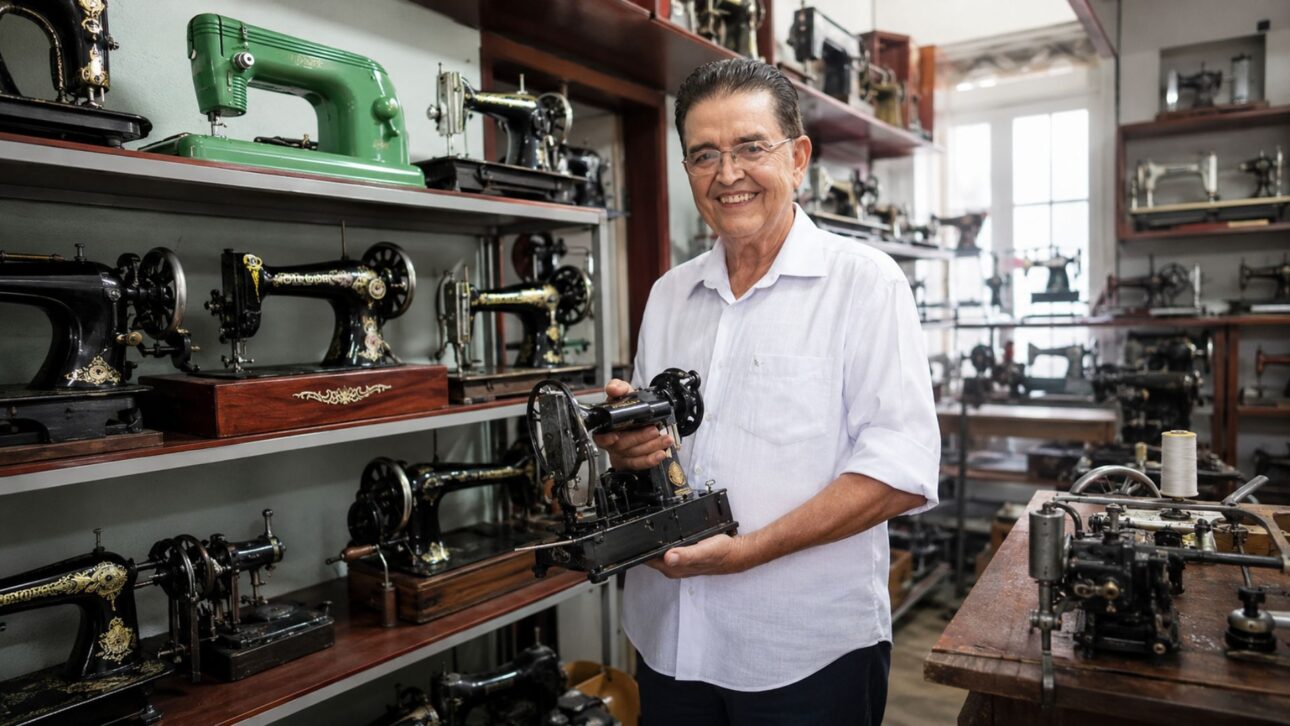
Norival Barbosa is a retiree from Passos who decided to use his free time to rescue the country’s material past.
-
El Niño Set to Raise Temperatures Above 30°C in Southeastern Brazil by Late July as Cold Wave Ends

-
Brazilian Government Challenges Drug Trafficking Claims Linked to Social Program with Study by Fiocruz and Harvard

-
Resident left tap running to prevent freezing, but woke up to ice in the sink after -1.8°C cold snap in Brazil’s Serra Gaúcha region.
-
Man Inherits Old House in France and Discovers 100 kg of Hidden Gold Throughout the Property




What started with one machine or another turned into a permanent treasure hunt, which has already lasted 12 years.
He does not limit himself to sewing machines: he also restores furniture, porcelain, silverware, scales, barber chairs, and old irons.
The difference with the retired historian is treating each object as a document, not just an old ornament.
For him, recovering a piece is recovering a piece of the daily life of those who lived a century ago.
Thus, piece by piece, the restored collection was born, which today draws attention in the region.
The antique sewing machines and the 1875 piece from Broadway
The heart of the collection is the machines that sewed the wardrobe of generations.
There are more than 100 antique sewing machines, both pedal and motorized, from brands like Wheeler & Wilson, Willcox & Gibbs, Pfaff, and Dürkopp.
The most talked-about jewel is a machine produced in 1875 on Broadway, New York, at the height of the American textile industry.
But there are even older pieces: the oldest in the collection is a Wheeler & Wilson from 1854.
Each antique sewing machine carries design details from its era, from cast iron to hand-painted decorations.
Bringing together brands from Germany, the United States, and Brazil in one place is what makes the collection so rare.
It is a timeline of sewing told in iron, wood, and needle.
How the restoration of the machines works
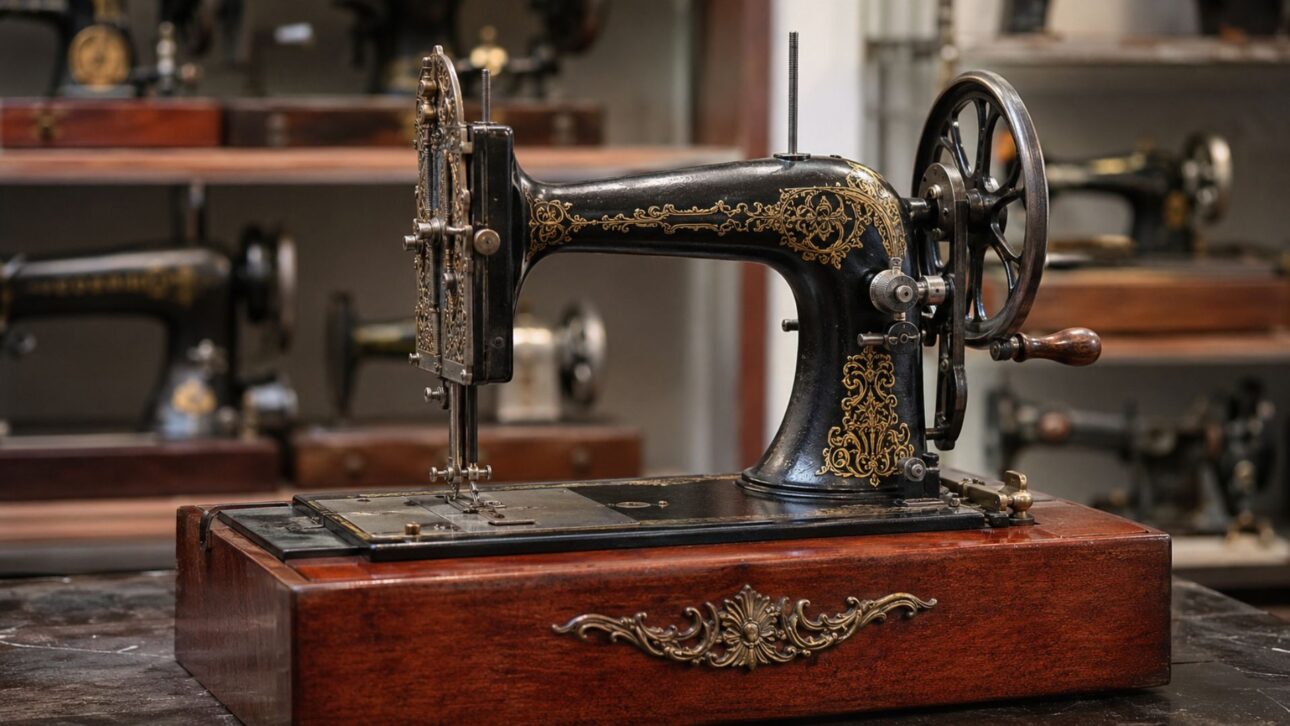
Many arrive rusted, jammed, or with missing parts after decades of inactivity.
Norival’s work involves cleaning, lubricating, hunting for replacement parts, and adjusting the mechanism until the machine sews again.
In pedal machines, it’s necessary to recover the belt and gear that transform foot movement into stitches.
Without a manual and without a factory to turn to, the restorer relies on technical knowledge and patience.
Each antique sewing machine that returns to function is a small victory against time and rust.
It’s this care that separates a restored collection from a simple pile of old junk.
Why the sewing machine is a memory of work
The value of the collection goes far beyond nostalgia.
The sewing machine was one of the inventions that most changed domestic life and work in the 19th century.
She sped up the production of clothes, lowered prices, and opened a source of income, especially for women seamstresses.
In millions of homes, the sewing machine was the first industrial equipment to enter through the front door.
Preserving these pieces is preserving the history of the work of seamstresses, tailors, and small clothing manufacturers.
Each machine tells how families dressed, sustained themselves, and managed before cheap factory clothes.
It is the memory of work sewn into metal, and not just obsolete technology.
The dream of the museum in Passos
The destiny Norival envisions for the collection is collective, not personal.
The retired historian’s idea is to donate 80% of the collection to a museum in Passos.
The other 20% would go to Guapé, his hometown, as a gesture of giving back to his own roots.
For this, however, he depends on the interest of the public authorities to create and maintain the space.
A museum would give Passos a cultural and tourist attraction built almost for free, from a personal passion.
Turning the restored collection into a museum is what can ensure that these machines do not disperse again.
The retired historian has already done the hardest part: gathering and restoring everything.
Why collections like this become heritage
The case of Passos is not unique, and this works in favor of the idea.
Throughout Brazil, private collections of everyday objects have already become visited museums.
According to ND Mais, Santa Catarina hosts one of the largest sewing machine museums in the world, born from a personal collection.
This shows that there is an audience for this type of memory, when well organized and displayed.
Museums of old technology attract schools, tourists, and curious people in search of practical history.
A restored collection like Norival’s has similar potential if it finds support to become a permanent space.
Heritage, in the end, is what a community decides to keep and show.
What the case of the Passos collection shows
The story of Norival Barbosa is an example of how passion turns into preservation.
It shows that a retired historian, alone, can save more than a century of domestic technology.
It’s better to keep your feet on the ground.
For now, the museum is a dream that depends on the interest and money of the public authorities.
Maintaining and displaying more than 100 machines requires space, security, and continuous conservation care.
And, without someone to continue, even the best collection risks being dispersed over time.
Even so, few cases summarize so well the value of preserving old sewing machines and the memory of work.
From a 12-year search to a possible museum, the collection in Passos shows that history can also be repaired with hands.
And you, do you still have an old sewing machine from your grandmother stored in a corner at home? Comment here if you would visit a museum of old sewing machines like the one Norival wants to create in Passos.


