Portuguese
  Spanish


Discover How Technology Transformed Automotive Keys, From The Mechanical Era To Proximity Control, With Steps Marked By Innovation And Safety.
It all started with the starter motor
During the early decades of the 20th century, drivers did not use keys to start the car.
In the 1910s, the system was entirely manual, with hand cranks turned at the front of the vehicle.
-
Sales of Brazil’s Cheapest Electric Car Halted Before First Deliveries: E-Motors Suspends Emova Easy Due to Import Tax Increase and Rising Freight Costs

-
Nissan Discontinues Qashqai SUV Amid Cost-Cutting, Chinese Competition, and Product Line Review

-
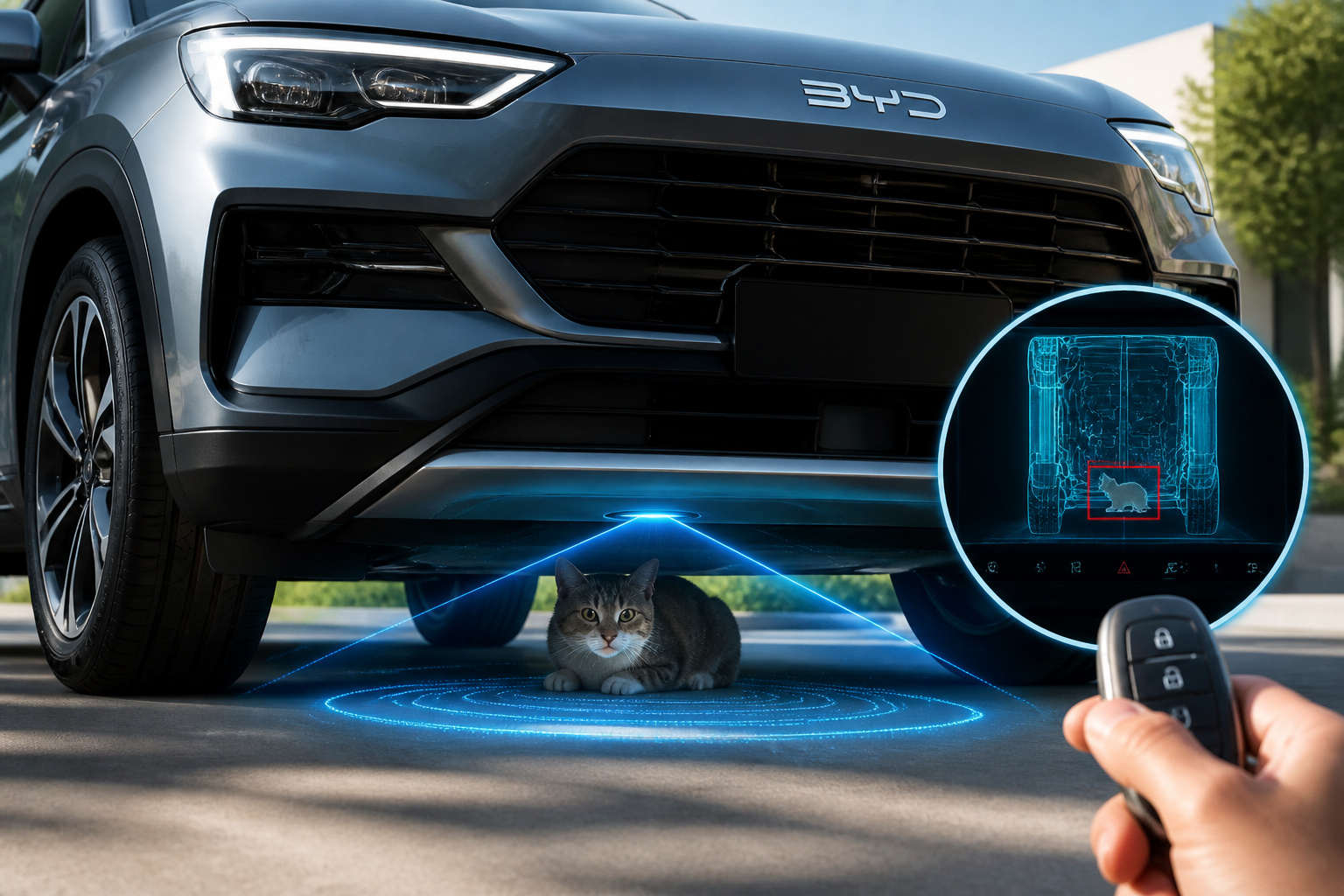
BYD Patents Revolutionary System Using Computer Vision to Detect Animals Under Cars Before Starting, Preventing Tragedies

-
Study Reveals Why Cars Are More Expensive to Produce and Buy in Brazil Compared to Mexico, Highlighting Taxes, Logistics, and Industrial Costs as Key Factors.



In 1911, Cadillac revolutionized the industry by introducing the electric starter, which allowed the car to be started without physical effort.
Although the key was still not used to start the engine, this advancement paved the way for automation in automobiles.
1940s and 1950s: The Beginning Of The Ignition Key
It was only after World War II that the first cars with real ignition keys began to appear more widely.
Chrysler, for example, adopted in 1949 a key that combined ignition and steering lock.
Until then, cars used separate buttons to start the engine. The key served only as control for the electrical panel.
The integration of the key and ignition marked the beginning of what we now call the “traditional key.”
The 1980s Brought Safety And Coding
In the 1980s, with the rise in vehicle thefts, manufacturers began to incorporate electronic security systems into keys.
Models like the GM Monza, launched in Brazil in 1982, started to use coded keys with specific standards to make cloning difficult.
Soon after, Volkswagen introduced in the Santana a transponder code system, still without an immobilizer, but already focused on protection.
As a result, the use of the key became essential not only to start the engine but also to unlock the car’s electronic module.
In The 2000s, The Key Became Control
The turn of the millennium brought a new concept: the key card and integrated remote controls, which eliminated the need for direct contact with the ignition.
Cars like the Renault Laguna (2002) popularized the proximity key card, which starts the engine upon detecting the presence of the device.
Additionally, automakers began to offer keyless systems that eliminate the act of physically inserting the key.
Security began to depend on encrypted communication between the car and the entry device.
Today, Access Is By Biometrics And Cellphone
In the last five years, technological evolution has accelerated the end of physical keys.
Manufacturers like Tesla and BMW already allow the car to be accessed via a smartphone app or facial recognition.
More recent models come equipped with biometrics, digital sensors, and voice commands, integrating the car into the user’s digital ecosystem.
Moreover, brands like Hyundai and Mercedes-Benz are testing fingerprint technology on the start button.
This movement shows that despite changes in format, the car key continues to evolve in the name of safety, practicality, and innovation.
How Do You Prefer To Start Your Car?
After so many transformations, do you still prefer the classic metal key or have you adopted the new proximity, card, or app systems?
Leave in the comments which technology you consider to be the safest and most practical for everyday use.