






 Portuguese
  Spanish
  5 min of reading
  0 comments


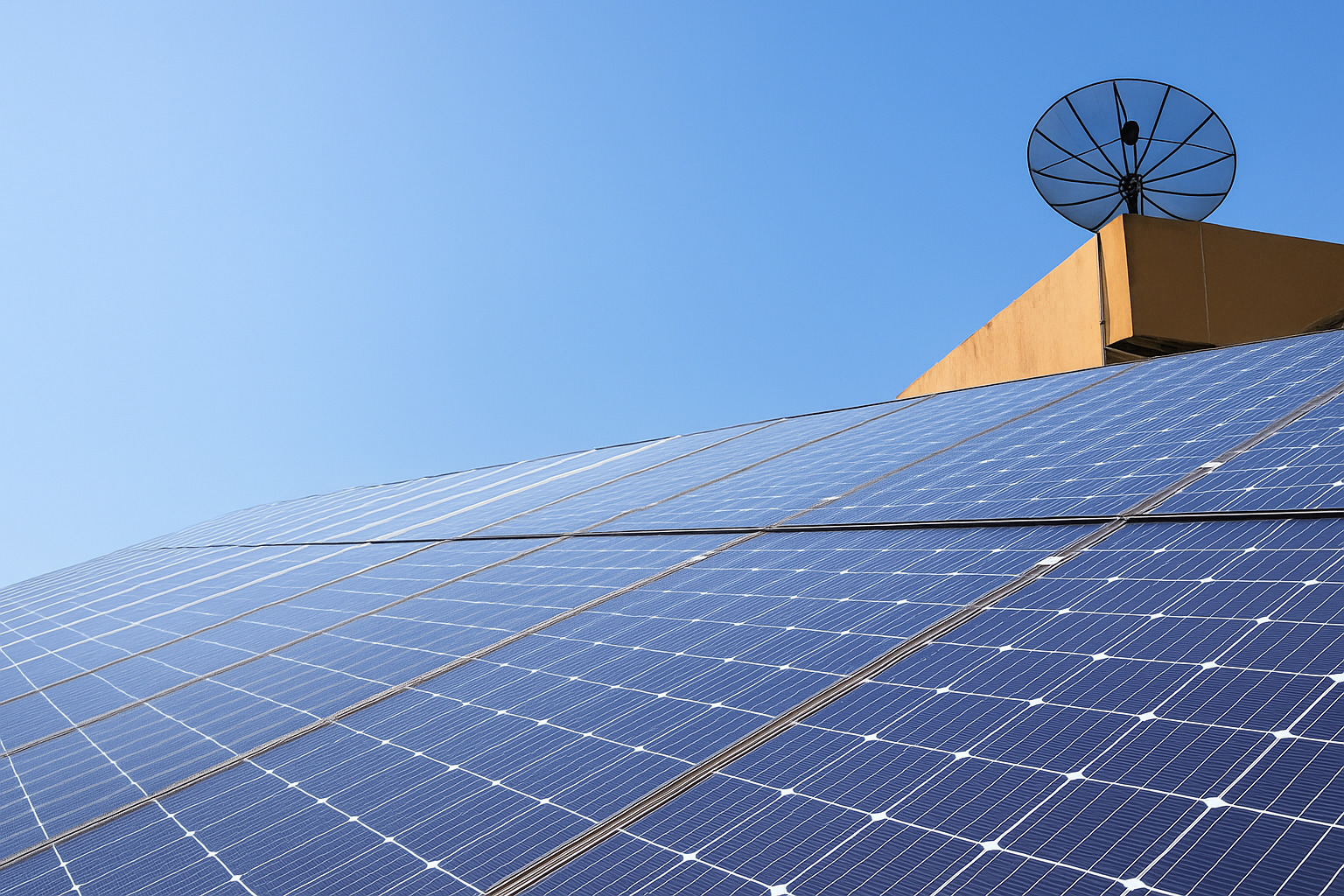
Discover How Red Onion Skins Can Increase the Longevity of Solar Energy, Making Panels More Efficient and Sustainable Without Compromising Energy Production.
In recent years, the search for renewable energy sources has intensified, as the world needs to reduce reliance on fossil fuels and minimize the environmental impacts caused by global warming.
In this context, solar energy stands out as one of the most promising alternatives, as it generates clean electricity directly from sunlight.
However, despite technological advancements, a persistent challenge limits its potential: the degradation of solar panels over time.
-
Solar energy can increase property value by up to 10% and become a selling point.

-
Solar and wind energy surpass natural gas for the first time in the world and accelerate energy revolution

-
Africa has about 500,000 cell towers and most still burn diesel to operate, while companies rush to cover antennas with solar energy and avoid signal blackouts.
-
Farmers swapped diesel for solar panels in Pakistan, powered irrigation pumps almost cost-free, expanded rice fields, and now groundwater has become a red alert in the countryside.




Therefore, an innovative solution emerges that uses an unexpected resource from nature – red onion skins – to increase the longevity of solar energy.
Historically, the development of solar energy began over a century ago, when French physicist Edmond Becquerel discovered the photovoltaic effect, a phenomenon that allows for the conversion of light into electricity.
Over the years, scientists have created more efficient solar cells and significantly reduced production costs.
Additionally, in just the last decade, the price of photovoltaic cells has dropped by about 90%, making solar energy increasingly accessible for homes, industries, and large-scale projects.
However, the degradation of panels remains a concern, as factors such as ultraviolet (UV) radiation, weather variations, and natural elements can reduce the efficiency of solar systems by up to 0.8% per year.
According to data from international renewable energy laboratories, this loss of efficiency requires innovative solutions.
Challenges in Protecting Solar Panels
Traditionally, manufacturers apply protective films made from petroleum-derived plastics, which filter some UV radiation.
Although effective, these films have limitations, as they can block part of the visible light necessary for energy conversion and rely on non-renewable resources.
For this reason, researchers from the University of Turku in Finland investigated how the natural pigments found in red onion skins can protect solar panels without compromising their efficiency.
Red onion skins contain anthocyanins, pigments that absorb UV radiation and provide natural protection against the degradation of photovoltaic cells.
Then, the scientists combined extracts from these skins with nanocellulose, forming a protective film capable of blocking 99.9% of UV radiation up to 400 nanometers.
The results were published in the journal ACS Applied Optical Materials.
Consequently, the material surpassed the effectiveness of commercial PET (polyethylene terephthalate) films and maintained the light transmission essential for energy generation.
During tests equivalent to one year of solar exposure in Central Europe, the onion-based film maintained its performance.
Meanwhile, traditional alternatives, such as lignin or iron ions, showed significant losses in efficiency.
Moreover, the research showed that the biological film performed well under extreme conditions, simulating prolonged exposure to high temperatures and humidity variations.
Thus, the innovation of red onion skins not only enhances the longevity of solar energy but also expands the reach of this technology in different climates and geographical contexts.
Sustainability and Innovation in Solar Energy
The impact of this discovery goes beyond simple protection of the panels.
Indeed, the use of natural extracts not only increases the longevity of solar energy, but also promotes sustainability, as it reduces the need for petroleum-derived polymers and utilizes organic waste that would typically be discarded.
Additionally, the transparency of nanocellulose allows over 80% of visible light between 650 and 1,100 nanometers to reach solar cells, a critical range for electrical conversion, ensuring that energy production does not suffer losses.
On the other hand, experts highlight that the adoption of biological materials as photovoltaic sunscreens represents a significant shift in the energy industry.
Traditionally, solar panels relied on synthetic materials that, while effective, caused considerable environmental impacts.
Thus, the integration of solutions based on natural resources, like red onion skins, indicates a move towards greater environmental responsibility and technological innovation.
This promotes solar energy that is more sustainable and durable.
Furthermore, by encouraging the utilization of organic waste, the research contributes to the circular economy, transforming what was once discarded into a valuable technological input.
Applications Beyond Solar Panels
In addition to applications in conventional solar panels, researchers see uses in various areas.
For example, smart food packaging can monitor freshness and contamination.
Portable electronics can integrate ultrathin solar cells.
Smart clothing can generate clean energy while moving.
Even the protection of more sensitive perovskite photovoltaic cells against UV radiation becomes possible.
These possibilities show that the technology developed from a natural waste can generate broad impacts, promoting innovation and sustainability across multiple sectors.
However, experts warn that the transition from laboratory research to industry requires investments, planning, and extensive testing.
Therefore, it is necessary to evaluate the scalability of extracting the pigment from red onion, its performance in different climates, and the economic viability of the material compared to traditional polymers.
Moreover, scientists consider the logistics of large-scale production and the environmental impact of pigment extraction.
Studies indicate that sustainable onion farming techniques can provide sufficient raw material without compromising agricultural production for human consumption.
Thus, the use of the skins proves to be efficient and environmentally responsible.
Therefore, despite the challenges, initial results indicate that biological solutions could become viable alternatives, especially in a global context where reducing plastics and increasing energy efficiency are priorities.
Perspectives for the Future of Solar Energy
Professor Kati Miettunen, co-author of the study, emphasizes that the research opens new opportunities for both the forestry and electronics industries.
By transforming natural waste into technological resources, the study reinforces the importance of rethinking how we produce and consume energy, encouraging more responsible and innovative practices.
This approach connects with historical trends of utilizing byproducts and organic materials.
Often, the most efficient and sustainable solutions lie within the raw materials of nature itself.
Furthermore, the discovery contributes to the debate on solar energy as a tool for sustainable development.
In a scenario where global demand for clean electricity is constantly growing, technologies that increase the longevity of photovoltaic systems become essential.
The longer a solar panel maintains its efficiency, the lesser the need for replacement, reducing environmental impacts and costs associated with manufacturing, transporting, and disposing of materials.
In summary, the Finnish study demonstrates that even natural waste, such as onion skins, can become valuable allies in the pursuit of clean and sustainable energy.
Thus, by increasing the longevity of solar energy, reducing reliance on plastics, and offering innovative technological alternatives, the research reinforces the importance of creativity and scientific knowledge in building a more efficient and responsible energy future.
In this way, solar energy, combined with biological solutions, is on track to become not only a clean source but also more resilient, sustainable, and aligned with the needs of a changing world.









Be the first to react!