Portuguese
  Spanish


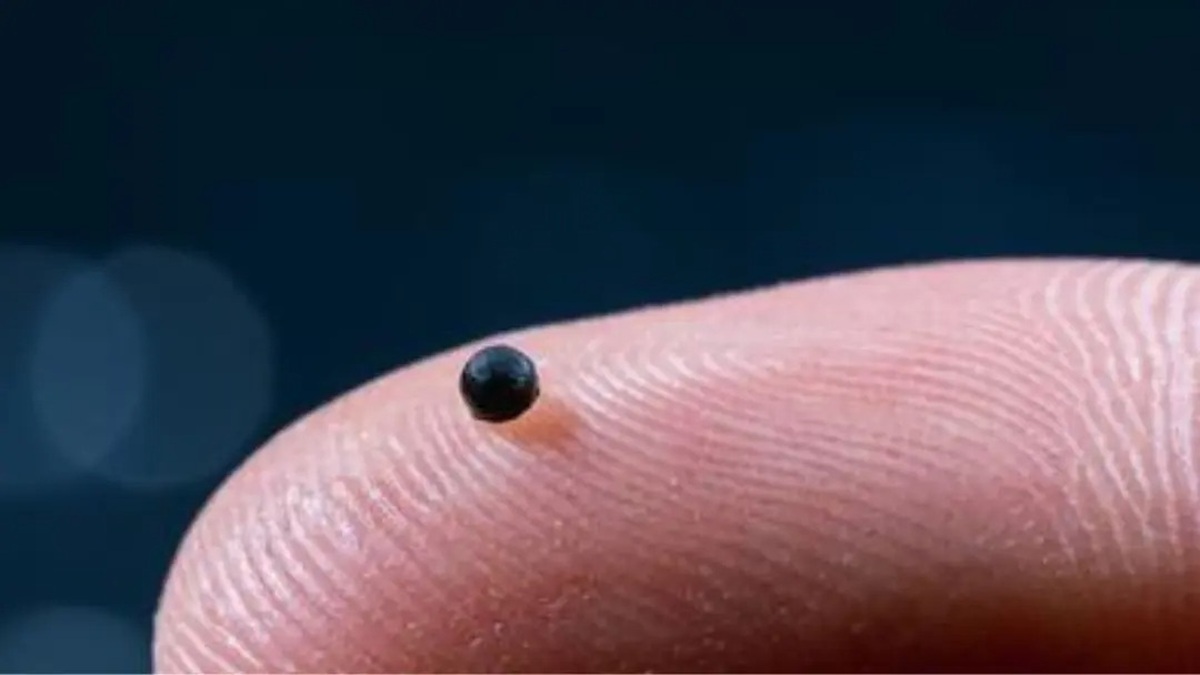


Microrobots Developed by ETH Zurich Show Unprecedented Precision in Delivering Drugs Directly to Clots, Achieving 95% Success in Tests with Models and Animals
In the future, microrobots capable of navigating the human body could transform the treatment of strokes and other serious diseases.
The ETH Zurich team developed tiny magnetic devices that deliver drugs directly to clots, enhancing therapeutic precision and reducing risks associated with current thrombolytic treatments.
-
China Unveils 300-Ton Hybrid-Electric Truck as the Heavy Machinery of the Future

-
Brazilian mechanic invents simple solar lamp using water and chlorine in a PET bottle, providing up to 60 watts of light during the day

-
Swiss glaciers melting fast enough to fill an Olympic pool every 6 seconds, France confirms 3,700 heatwave deaths, and WMO predicts strong El Niño intensifying extremes until 2027

-
Sudden Sea Recession in São Paulo Sparks Tsunami Alert and Online Debate on Giant Wave Risks in Brazil


Currently, available therapies require high doses of drugs that circulate throughout the bloodstream and can cause complications such as internal bleeding. The new technology emerges as an alternative to deliver the drug precisely to the problem area, improving patients’ health conditions.
Navigation Mechanisms
The central innovation is an extremely small spherical capsule coated with a thin layer of soluble gel. Inside, iron oxide nanoparticles enable external control with magnets, while tantalum nanoparticles serve as a contrast agent, allowing doctors to track the microrobot’s path using X-ray imaging.
To ensure precision even with variations in blood flow speed, the researchers created a modular electromagnetic navigation system.
This system combines three different magnetic control strategies, including a technique that causes the capsule to roll along the vessel wall with high precision, moving at 4 millimeters per second.
This integrated approach allowed the microrobots to deliver the drug directly to the target in over 95% of the tested cases.
Professor Bradley Nelson, a leader in the field of microrobotics, emphasized that magnetic fields and gradients are ideal for minimally invasive procedures because they penetrate deeply into the body and, at the intensities used, do not cause harm to the organism.
Laboratory and Animal Tests
The capsule carries the active drug, such as a thrombolytic agent, which is released when a high-frequency magnetic field heats the magnetic nanoparticles and dissolves the outer gel layer. The delivery of the microrobots occurs through a specialized catheter, which positions the capsule with high precision near the clot site.
In the initial tests, the researchers used highly realistic silicone models designed to replicate human and animal blood vessels. In these experiments, the microrobot was able to reach and dissolve a blood clot. After this stage, the team advanced to in vivo demonstrations, successfully guiding microrobots in pigs and also through the cerebral fluid of sheep, considered one of the most complex anatomical environments to navigate.
The lead author, Fabian Landers, explained that this challenging environment enhances the potential for innovative therapeutic interventions, reinforcing the team’s excitement in realizing that the technology adapts to such complex scenarios.
Potential to Treat Tumors and New Research Stages
Although the initial focus was on stroke treatment, the development of these microrobots paves the way for targeted therapies for other diseases, including localized infections and tumors. The ETH Zurich group prioritizes making the technology available in clinical settings as quickly as possible, now aiming for the start of tests in humans.
Landers highlighted that the team’s motivation comes from the possibility of helping patients more quickly and effectively, offering new hope through innovative medical approaches.
Given the global impact of strokes, which affect 12 million people each year and often result in death or permanent disability, the widespread adoption of these devices could represent a significant shift in treatment on a global scale.
The complete study was published in the journal Science on November 13.