






 Portuguese
  Spanish


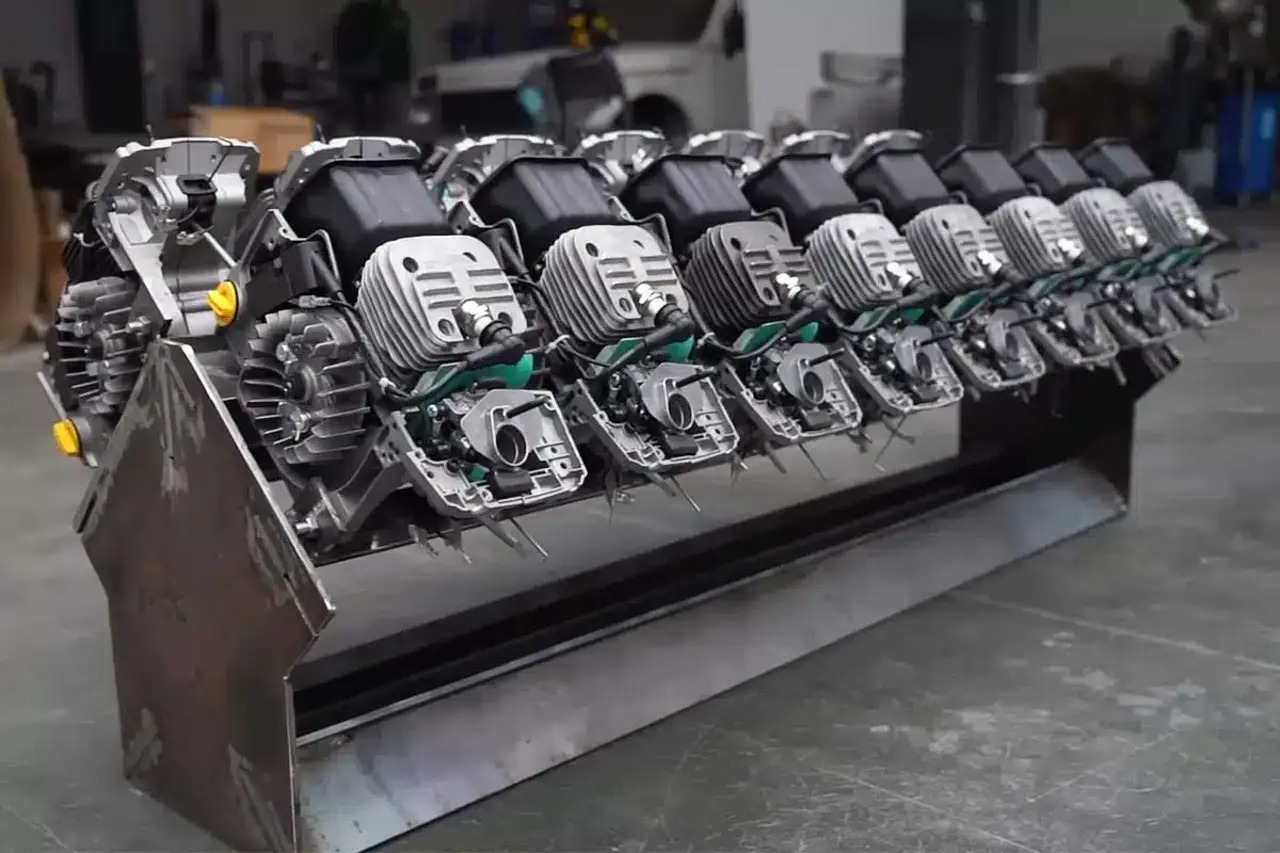


Garage 54 Russians Create V16 Engine with 16 Chainsaws and Install in Lada; Car Works and Reaches 60 km/h
The creators of the Russian channel Garage 54 became known for transforming ordinary cars into eccentric experiences. They took another step in that direction. The team created a V16 engine using no less than 16 gasoline chainsaws, mounted on a Lada. The idea was presented in a YouTube video, and it caught attention for its originality and boldness.
The channel is already famous for testing limits. On other occasions, they mounted tank wheels on a Lada. They have also built a car that moves with metal legs.
This time, the innovation came with the attempt to make a car run using only chainsaw engines. The result? A unique and noisy project that works — even if not very efficiently.
-
Children Turn $600,000 Ferrari into Slide, Sparking Legal Dispute in China After Video Surpasses 60 Million Views

-
Nikola, once valued at $29 billion for its hydrogen truck promise, files for bankruptcy after prototype scandal.

-
Volkswagen to Invest Up to $5.8 Billion in Rivian, the American Electric Car Startup, Securing Software Expertise for Future Vehicles
-
End of the Affordable Car Era: Fiat Argo 1.0 2026 Offers 14.7 km/l Efficiency and Easy Maintenance, but $18,000 Price Raises Cost-Benefit Concerns




.banners-container {
display: flex;
gap: 16px;
justify-content: center;
align-items: center;
flex-wrap: wrap;
}
.banner-link {
display: block;
width: 300px;
height: 250px;
border-radius: 12px;
overflow: hidden;
box-shadow: 0 2px 12px rgba(0,0,0,0.08);
transition: transform 0.2s;
background: #fff;
}
.banner-link:hover {
transform: scale(1.04);
}
.banner-img {
width: 100%;
height: 100%;
object-fit: contain; /* Changed from cover to contain */
display: block;
background: #fff;
}
@media (max-width: 700px) {
.banners-container {
flex-direction: column;
gap: 24px;
}
}


Engine Created with Chainsaws
The V16 engine was made with 16 chainsaws of the BS-62 model, from the brand Hüter Technik. Each one has a two-stroke engine with 58 cm³.
All parts that were not essential were removed, leaving only the gasoline engines. These blocks were mounted on a special chassis and aligned in a V shape. This created an engine approximately 1.31 meters long.
Unlike traditional engines with crankshafts, like those used in older Cadillac models or the new Bugatti Tourbillon, the chainsaw engine uses toothed belts connected to a central metal shaft.
This shaft rotates through three bearings — two at the ends and one in the middle. According to the project leaders, the set generates about 72 horsepower, as each chainsaw produces 4.5 horsepower.
Fuel and Control System
To fuel the engines, the team used a transparent hose that carries the gasoline and oil mixture to the 16 engines.
The distribution of fuel is done with T-shaped connectors. The rotation of the engines is synchronized through cables, which are connected to a single throttle control.
This improvised engine was then coupled to a conventional manual gearbox with four gears. With this setup, the V16 chainsaw engine was installed inside a Lada.
Road Test
During the tests, the vehicle managed to accelerate from 0 to 60 km/h in 26 seconds. It is not exactly sporty performance, but the main goal was not speed.
The intention of the Garage 54 channel was to show that it is possible to use different technical solutions to move a car. And once again, they succeeded.
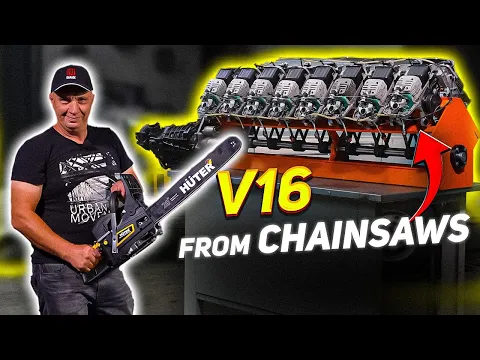

The creation surprised the channel’s followers and showcased the Russians’ creativity when it comes to automotive modification. More details of the project are available on the Garage 54 channel on YouTube.
With information from Neo Zone.
Like the Subject? Check Out This Super Bugatti That Mechanics Built Using Used Parts from Three Different Cars
A group of car enthusiasts decided to create their own version of a Bugatti. For this, they used parts from three different models and assembled a unique supercar, called “Volgatti”.
The project combined parts from a Mitsubishi Eclipse, a GAZ-21 Volga, and a BMW Series 6. Each of these cars was chosen for a specific reason. The entire construction process was filmed and explained in detail.
The Junction of Three Cars
The Mitsubishi Eclipse served as the base but needed adjustments to accommodate the changes. The GAZ-21 Volga was chosen for its classic and stylish appearance. Meanwhile, the BMW Series 6 completed the set with some important parts.

To make this mix work, the creators built the body from scratch, using fiberglass. They also added chrome details and made improvements to the engine. The result was a car that resembles a Bugatti but with a unique touch.
Creating a Supercar Without Spending Millions
Supercars tend to be luxurious and very expensive. For instance, a Bugatti Tourbillon 2026 can cost US$ 4.6 million. Instead of spending that fortune, these creators decided to build their own model, spending much less.
The result was an exclusive car made from the combination of three different models. With this, they achieved an impressive look and enhanced performance without needing a million-dollar budget.
How Was the Assembly Process?
The first step was to dismantle the three cars and select the best parts from each. The chassis of the Eclipse was reinforced to handle the changes. Then, they shaped the body in fiberglass, ensuring a beautiful and aerodynamic finish.
Additionally, the engine and suspension were adjusted to make the car more powerful and stable. Everything was done with great patience and skill.
In the end, the “Volgatti” became a true automotive work of art. The project shows how creativity and knowledge can transform common parts into a unique supercar.
With information from Super Car Blondie.


