Portuguese
  Spanish


Unprecedented project on the northern coast of São Paulo promises to strengthen supply in Ilhabela with desalination technology, million-dollar investment, and focus on water security during periods of higher demand, such as long holidays and summer season.
Sabesp will build in Ilhabela, on the northern coast of São Paulo, the first public desalination plant in São Paulo aimed at human supply, with the forecast to expand the local water supply in a city pressured by tourism and environmental limitations.
Announced this Tuesday (09), the project foresees an investment of R$ 56.4 million, an increase of 20 liters of water per second to the municipal system, and a 20% increase in water availability for residents, visitors, and essential activities on the island.
With completion expected by December 2027, the new structure will be integrated into the Água Branca system and was planned to strengthen supply in a municipality where conventional freshwater capture faces technical, territorial, and environmental barriers.
-
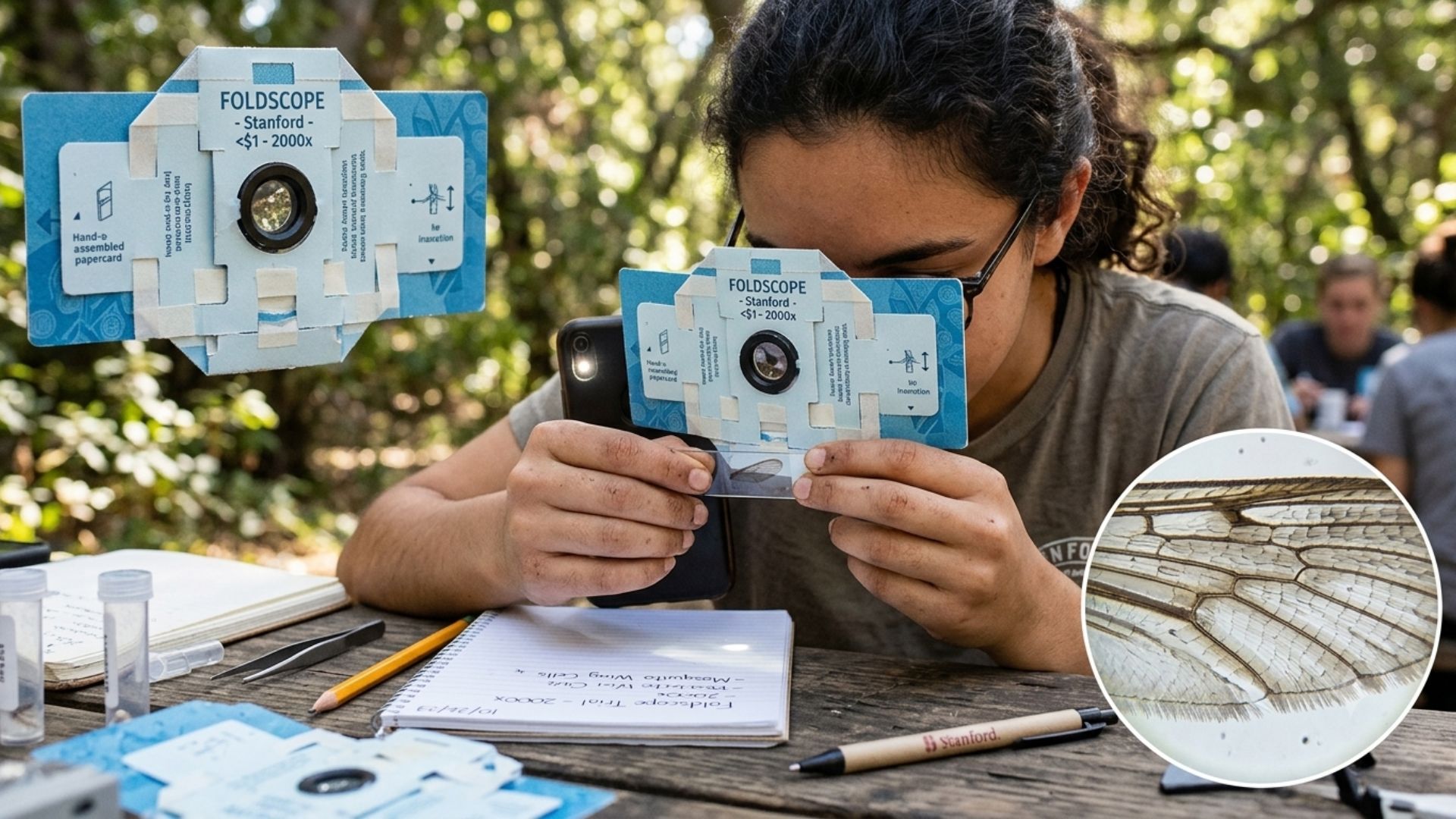
Bioengineer Develops Microscope That Magnifies Objects Up to 2,000 Times Using Just a Folded Sheet of Paper, a Tiny Lens, and Less Than $1, Bringing Lab Science Anywhere for Less Than the Cost of a Candy

-
Dog Walker in English Forest Uncovers 3,400-Year-Old Bronze Age Axe
-
Texas Blackout Inspires Student to Develop Bionic Leaf Catalyst for Converting Sunlight, Water, and Bacteria into Fuel

-
Brazilian Students Develop Process to Turn Styrofoam Waste into Water-Purifying Charcoal




Ilhabela will have the first public desalination plant in São Paulo
The choice of Ilhabela is linked to the geographical and environmental characteristics of the municipality, as the insular condition reduces capture alternatives and makes it more difficult to expand the water supply by traditional methods used in other cities served by the company.
As a large part of the territory is in an environmental preservation area, new captures in freshwater sources depend on specific restrictions, while drilling deep wells also does not appear as a technically viable solution for local supply.
In an interview with Metrópoles, Sabesp’s Director of Engineering and Innovation, Roberval Tavares, stated that the combination of growing demand and limitation of available sources led the company to adopt a less common solution in Brazilian public supply.
“Ilhabela is a municipality where freshwater has a great capture restriction because it is an island,” said the director, explaining why the municipality was chosen to receive the unprecedented structure in the state.
The seasonal pressure caused by tourism was also included in the company’s studies, especially because long holidays and the summer season increase water consumption and require a greater operational margin to reduce risks of instability in supply.
According to Sabesp, demand calculations considered the current population and the growth projection for the next ten years, which reinforced the need for a complementary source capable of meeting periods of higher load on the network.
In this scenario, the plant should function as a permanent reinforcement to the system, especially at times when the presence of visitors increases consumption and makes it more difficult to balance production, storage, and distribution of water in the municipality.
Reverse osmosis will treat brackish water in Ilhabela
Although the project is presented as a solution to transform seawater into drinking water, the capture will not occur directly offshore, but at a point where tidal influence alters the composition of the available water.
The withdrawal will be made at the Ribeirão Água Branca, in a section near the mouth, where contact with the tide makes the resource brackish and requires specific treatment before the water can be incorporated into the public supply.
To make this water suitable for consumption, Sabesp will use reverse osmosis, a technology applied in desalination plants in different countries and based on the passage of water through special membranes subjected to high pressure.
During this process, dissolved salts and other impurities are separated before distribution, allowing the treated water to meet the required parameters for human consumption and be integrated into the municipal supply system.
Roberval Tavares stated that the company already uses membranes in other types of treatment but highlighted that this will be the first application in the state with the purpose of producing drinking water from brackish water for public supply.
“The great differential is precisely the use of reverse osmosis to transform this brackish water into fresh water for human consumption,” declared the director, detailing the main technical innovation planned for the future unit.
In addition to the treatment station, the project includes structures for capture, pumping, storage, and integration with the existing system, so that the produced water can reach the network without relying on an isolated operation.
The implementation also includes pipelines, reservoirs, and operational control stages, necessary elements to monitor the quality of the produced water and ensure that the announced reinforcement is incorporated into the city’s supply routine.
Desalination cost will be higher than conventional treatment
Desalination still has limited use in Brazilian public supply, mainly because the operation requires high consumption of electricity and usually has a higher cost than conventional freshwater treatment systems.
In the case of Ilhabela, the technology depends on constant pressure on the membranes to separate the salt from the water, a step that makes the operation more expensive and requires planning to absorb the costs without compromising the service.
According to Roberval Tavares, the future unit is expected to cost about 30% more than a conventional water production system, a difference mainly attributed to the energy required for the operation of reverse osmosis.
Even with this additional cost, Sabesp states that the impact will be absorbed by the company’s operational structure and should not cause an increase in the rates charged to consumers served by the local supply system.
The technology is more common in countries with severe water scarcity, such as Israel and Middle Eastern nations, where desalination has become a relevant alternative to enhance the security of potable water supply.
In Brazil, similar initiatives are already appearing in states like Ceará, Espírito Santo, and Pernambuco, but the solution has not yet been consolidated as a broad tool for large urban networks, mainly for economic reasons.
For Sabesp, the adoption of the technology in Ilhabela is justified by the difficulty of expanding the local water matrix with traditional methods, as other alternatives encountered environmental, operational limitations, or timelines incompatible with the projected demand.
Environmental licensing defines brine disposal
Among the main points of attention in desalination projects is the destination of the brine, a residue with a high salt concentration that remains after the separation done by the membranes during the treatment of brackish water.
According to Sabesp, this material will be returned to the sea following the parameters defined in the environmental licensing conducted by the Environmental Company of the State of São Paulo, Cetesb, responsible for analyzing the project.
The company states that it conducted environmental studies before the project’s approval, including assessments of possible impacts on marine fauna and ecosystems, steps considered necessary to guide the disposal and monitoring of the operation.
When the unit becomes operational, the operation should include continuous monitoring of the quality of the produced water and the residues generated during the treatment, in addition to controls linked to the environmental requirements of the licensing.
Sabesp also informed that the necessary licensing steps have been completed so far and that, after the completion of the works, it should request the operating license to start the plant’s activities.
In the company’s assessment, the implementation is also related to adaptation to the effects of climate change, as historical rainfall series monitored for over 50 years indicated a reduction in indices in the last decade.
Despite this climatic context, Tavares denied that the construction of the plant is directly related to the water crisis that hit the São Paulo Metropolitan Region in 2014, attributing the decision to the specific conditions of Ilhabela.
In addition to the desalination structure, the project includes an environmental education center open to visitors, with an auditorium and photovoltaic panels to help supply energy to the space intended for educational activities.
To measure the initiative’s performance, Sabesp considers it essential to deliver the expected flow of 20 liters per second and enhance water security for residents and visitors in a city with strong demand variation throughout the year.