Portuguese
  Spanish


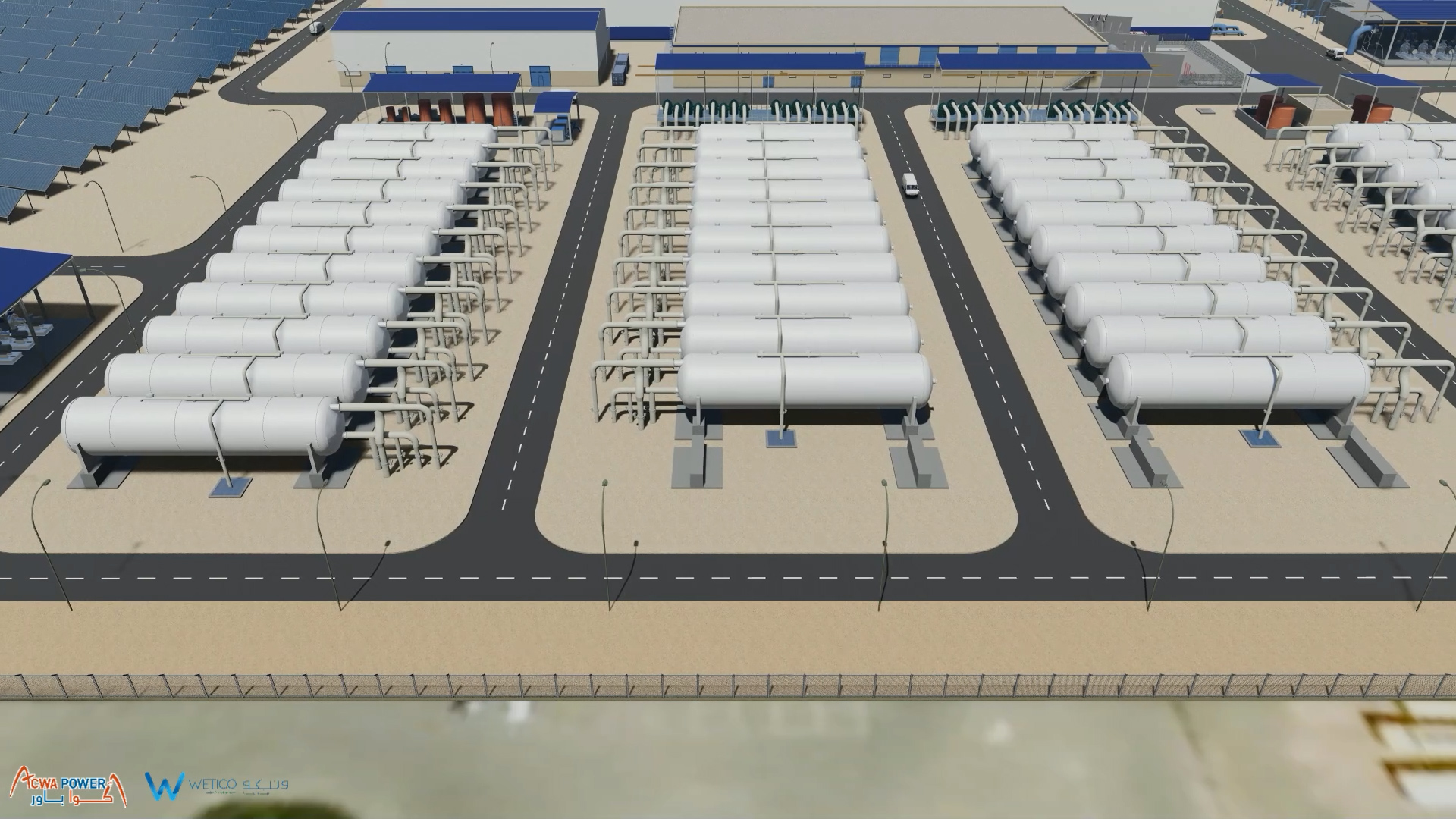

Rabigh 4 produces 600 million liters of water per day in the Red Sea and expands Saudi desalination to Mecca and Medina.
Saudi Arabia has put into operation the Rabigh 4 IWP, one of the largest reverse osmosis desalination plants in the country, built on the coast of the Red Sea to produce 600,000 m³ of drinking water per day. In liters, this means 600 million liters daily, a volume sufficient to make the plant a central piece of Saudi water security.
The plant was developed by a consortium led by ACWA Power, alongside Haji Abdullah Alireza & Co. and Almoayyed Group, with an operation contract for 25 years. The project was planned to primarily serve the regions of Mecca and Medina, two strategic areas in a country where drinking water heavily depends on desalination.
Rabigh 4 transforms Red Sea water into 600 million liters of potable water per day
Rabigh 4 uses seawater reverse osmosis technology, known by the acronym SWRO. In this process, saltwater passes through high-pressure membranes that separate salts and impurities, producing potable water on a large scale.
-
In a Degraded Atlantic Forest Area, a São Gonçalo Resident Transforms Land into a Living Eco-Museum, Now a Model for Environmental Education

-
World’s First Lithium-Sulfur Battery Factory Launches, Promising to Double Range Without Relying on China

-
AI Data Centers Now Feature Built-In Nuclear Power Plants and Have Ordered Non-Existent Reactors
-
In India, thousands earn about $2.50 an hour cooking and cleaning with a phone strapped to their heads, as every move is recorded to train humanoid robots for jobs they might one day replace.


The plant’s daily capacity is 600,000 m³. Since each cubic meter is equivalent to 1,000 liters, the calculation is straightforward: 600,000 m³ × 1,000 = 600,000,000 liters per day.


When the daily capacity is projected for an entire year, the scale becomes even more impressive. It is 600 million liters per day × 365 days, which results in approximately 219 billion liters of water per year.
This volume places Rabigh 4 among the major water projects in the Middle East. In a region marked by arid climate, low availability of permanent rivers, and high urban demand, desalination has ceased to be an alternative and has become basic infrastructure.
1.2 million m³ tanks ensure two days of operational reserve
In addition to the desalination plant, the project includes storage tanks with a total capacity of 1.2 million m³. Converting to liters, this is equivalent to 1.2 billion liters of stored water.
SWPC reported that this capacity corresponds to approximately two days of production from the plant. This reserve helps increase the reliability of the system, allowing greater stability in supply to Mecca, Medina, and areas connected to the water network.
The Rabigh 4 contract was valued at around 2.54 billion Saudi riyals, equivalent to approximately US$ 677 million. The structure follows the independent water plant model, where the private consortium develops, builds, operates, and maintains the asset for the long term.
According to SWPC, the winning consortium is formed by ACWA Power, Almoayyed Group, and Haji Abdullah Alireza Company. The plant was designed to operate for 25 years from the commercial operation date, reinforcing the role of the private sector in major Saudi water projects.
Rabigh 4 doubles ACWA Power’s desalination capacity in the region
ACWA Power already operates the Rabigh 3 IWP, also with a capacity of 600,000 m³ per day, in the same region. With the addition of Rabigh 4, the company’s combined capacity in Rabigh reaches 1.2 million m³ per day.
This data shows the strategic concentration of water infrastructure on the Red Sea coast. The region functions as an essential corridor to supply urban centers, industrial hubs, and areas linked to the religious flow of Mecca and Medina.
Reverse osmosis replaces older models and reduces operational consumption
Rabigh 4 was designed with reverse osmosis technology, a model that is gaining ground over older thermal desalination systems. The advantage lies in the lower relative energy consumption and the possibility of integrating efficiency improvements throughout the operation.
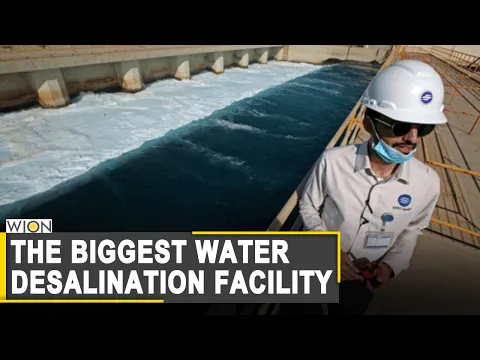
The CEO of SWPC, Khaled Alqureshi, stated in 2023 that the project was designed to reduce electricity consumption, cut operational costs, and increase local content in the production chain. This type of directive is central for a country that needs to produce water on a large scale without indefinitely raising energy costs.
Plant began operation in 2026, within the timeframe set by the contract
The official forecast was for Rabigh 4 to begin commercial operation in the first quarter of 2026. In May 2026, the specialized publication MEES reported that the plant was already online and at full capacity, according to an announcement by ACWA Power in its first-quarter results report.
This milestone is important because it confirms the transition of the project from the construction phase to the operational phase. From there, the plant effectively integrates into the Saudi supply network, reinforcing the availability of potable water in the west of the country.
Rabigh 4 shows how arid countries are transforming the sea into water infrastructure

Rabigh 4 is not just an isolated industrial project. It is part of a larger strategy by Saudi Arabia to reduce water vulnerability in a territory where demand is growing and the natural availability of fresh water is limited.
With 600 million liters per day, 219 billion liters per year, and 1.2 billion liters in tanks, the plant demonstrates the scale that desalination has reached in the Middle East. What was once complementary technology has now become one of the foundations of urban supply in arid regions.
The question remains as to how far this model can advance, because producing water from the sea has ceased to be an emergency solution and has become one of the biggest infrastructure bets for countries living on the brink of water scarcity.