






 Portuguese
  Spanish
  4 min of reading
  0 comments


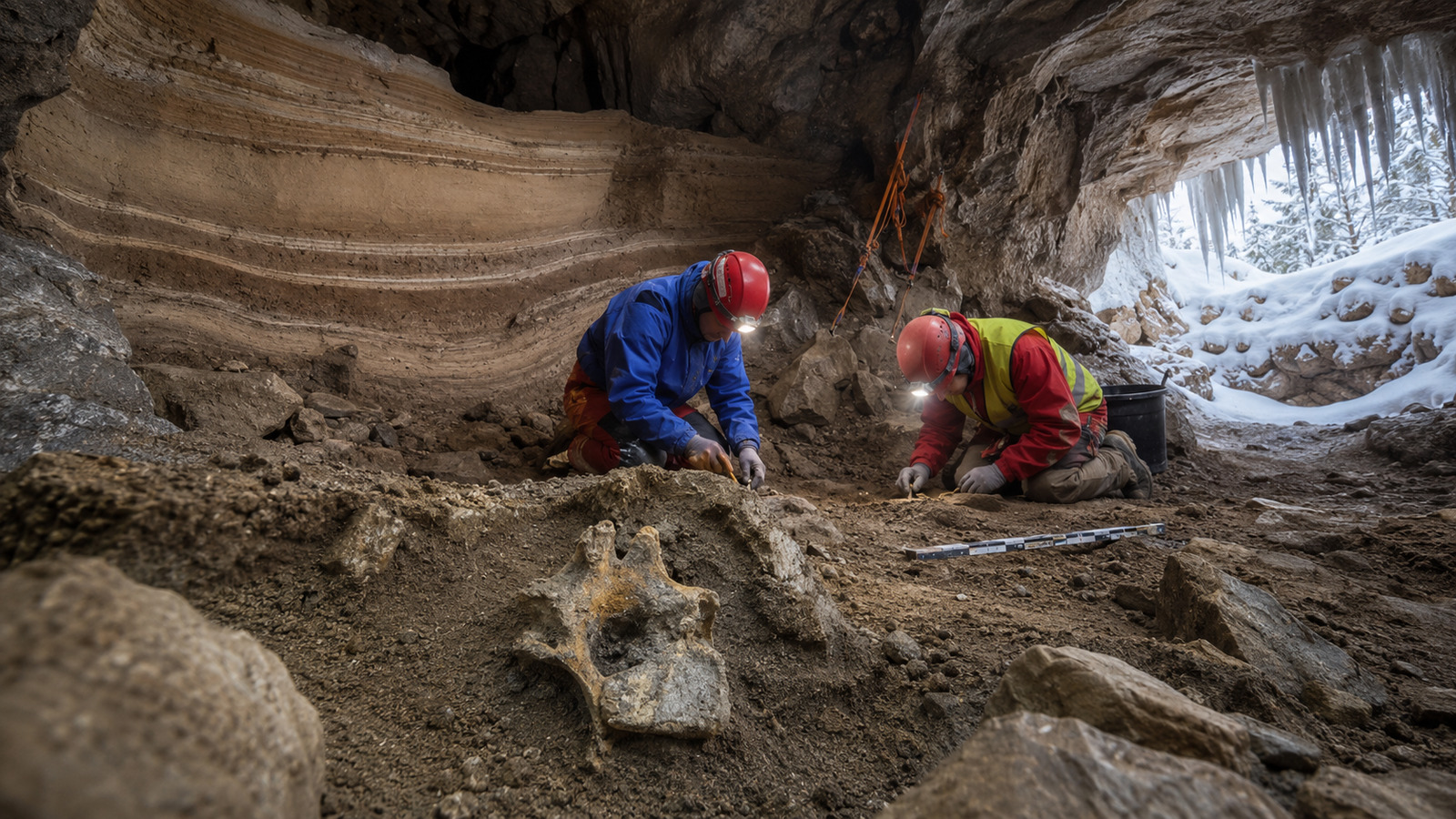
Discovery in Arne Qvamgrotta Cave gathers bones and ancient DNA of marine animals, terrestrial animals, birds, and fish, revealing what the Arctic was like during the Ice Age
A cave in Norway has revealed remains of 46 species that lived about 75,000 years ago in the Arctic, including polar bears, walruses, bowhead whales, birds, and fish. The study, published in PNAS, shows a rare record of an ancient coastal ecosystem preserved in the Arne Qvamgrotta cave.


Find preserves a rare portrait of the ancient Arctic
The discovery occurred in the Arne Qvamgrotta cave, in northern Norway, and is considered important because records of Arctic environments over 10,000 years old are very difficult to find.
According to the researchers, the site preserves one of the oldest known records of an Arctic ecosystem from this period.
-
Scientists were looking for a black hole in a galaxy 11 billion light-years away, but ALMA revealed a “factory” of neutrinos hidden by dust and powered by intense star formation.

-
Sandisk stock soars 5,636% in 14 months, surpasses Bitcoin’s appreciation in nine years, and shows how the race for artificial intelligence has turned SSDs and memory cards into coveted pieces by tech giants.

-
The household appliance that consumes the most energy in the Brazilian home is not the air conditioner, it is located in the smallest room of the house, is used daily, and alone can account for up to 25% of the electricity bill, while an alternative in the same outlet can reduce this cost by up to 75%.

-
The country that will host COP31 has lost 186 of its 250 lakes in half a century, saw boats abandoned in dry areas, and now faces advancing desertification, the collapse of migratory birds, and communities leaving regions where water has disappeared.




The collection shows a landscape where marine animals, terrestrial animals, birds, and fish shared the same region.
The cave was discovered by chance in the 1990s when mining work led to the construction of a tunnel through a nearby mountain.
Even known for decades, it remained virtually unexplored until major excavations were carried out in 2021 and 2022.
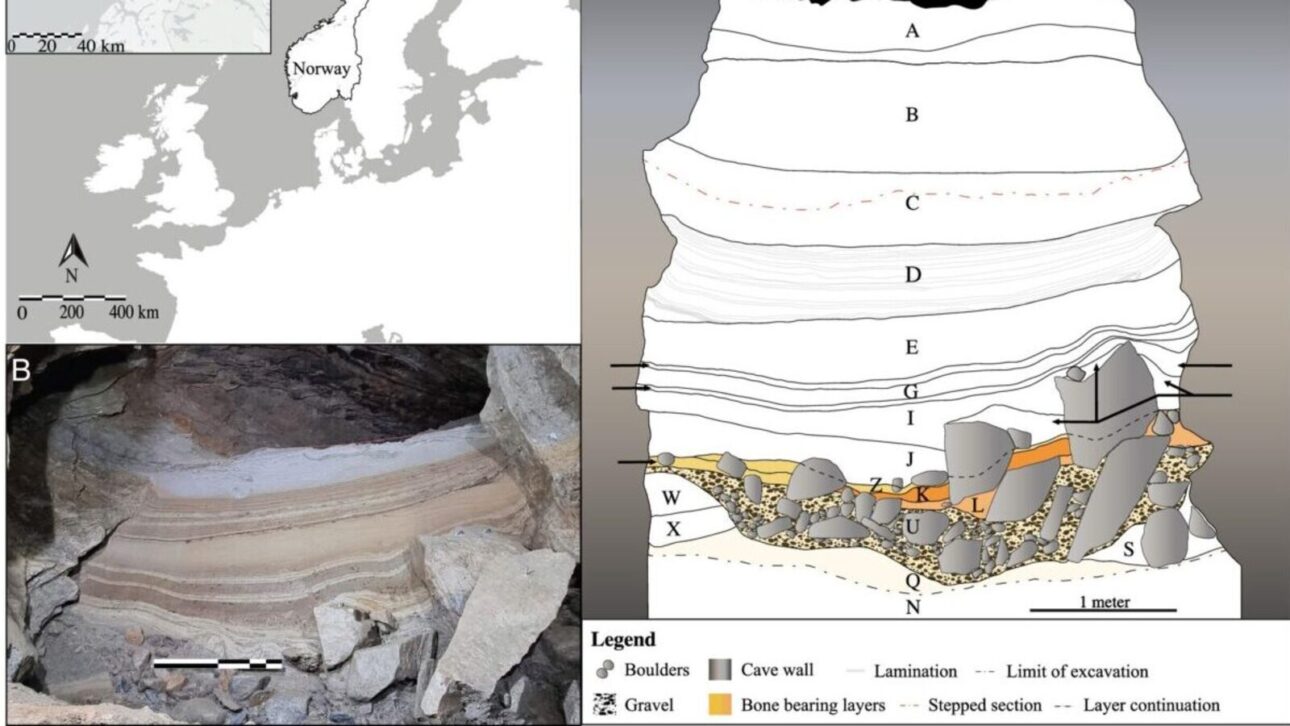
Bones of 46 species show animal richness
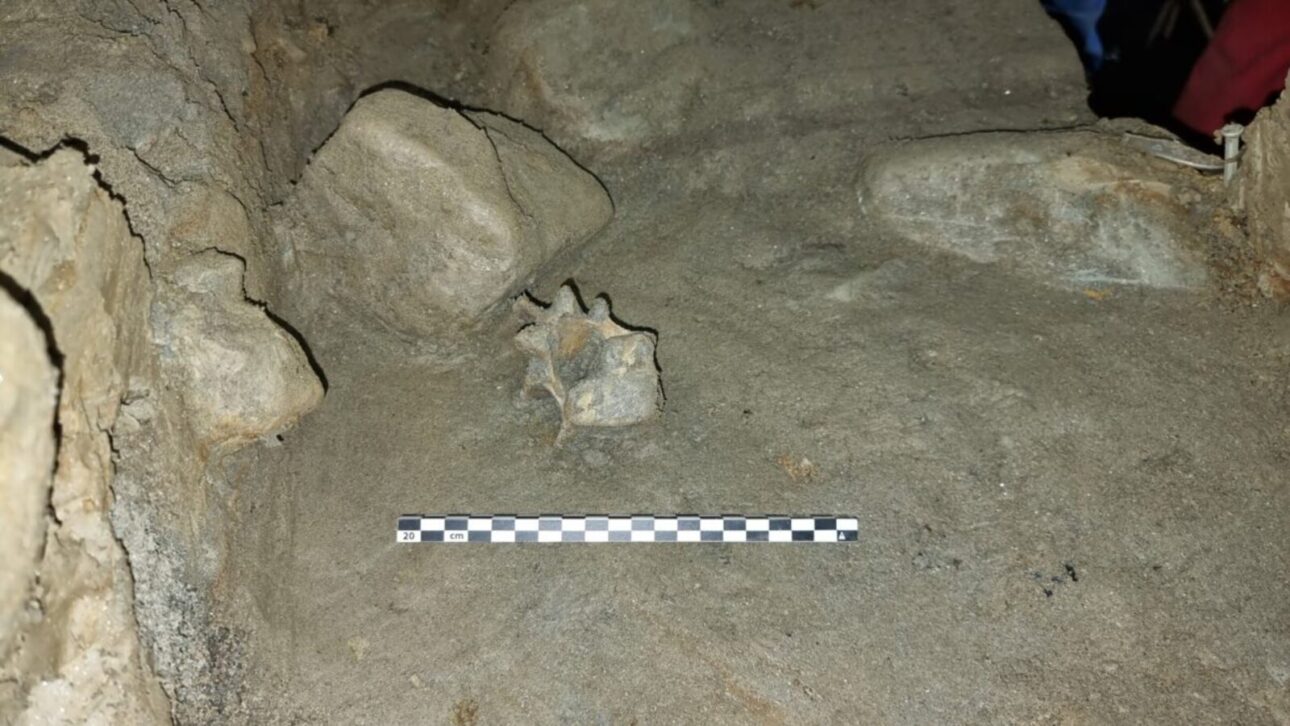
The remains found belong to 46 different types of animals. Among the identified species are polar bears, walruses, bowhead whales, puffins, common eiders, rock ptarmigans, and Atlantic cod.
One of the discoveries that attracted the most attention was the collared lemming. The species is extinct in Europe and had never been discovered in Scandinavia, which increases the relevance of the material preserved in the cave.
Professor Sanne Boessenkool, from the University of Oslo, stated that the cave revealed a diverse mix of animals in a coastal ecosystem that represents both the marine and terrestrial environments.
Ancient DNA points to populations that disappeared
Besides the bones, scientists analyzed ancient DNA preserved in the remains. Genetic evidence indicates that the animal lineages that lived in the region 75,000 years ago did not survive after the return of colder climatic conditions.
The study suggests that these species migrated to the area after the glaciers receded. Then, with the expansion of ice over the landscape, the populations represented in the cave eventually disappeared.
The lead author, Dr. Sam Walker, from Bournemouth University and the University of Oslo, described the discovery as “a rare glimpse into a vanished Arctic world.”
The genetic results carry special weight because there is little direct information about life in the Arctic during this phase of the Ice Age. The lack of well-preserved remains makes findings like this more valuable for research.
Ice, tundra, rivers, and sea shared the same landscape
The animal remains also help to understand what northern Norway was like about 75,000 years ago. Researchers believe that the coast was practically ice-free during that period, creating conditions for the migration of reindeer.
The presence of freshwater fish indicates the existence of lakes and rivers scattered across the tundra. At the same time, species like bowhead whales and walruses point to the presence of sea ice off the coast.
The discovery of common porpoise remains adds another important piece of information. Since these animals tend to avoid ice-covered waters, scientists believe that the sea ice was likely seasonal, not permanent.
Climate changes help explain the disappearance
The team states that the findings show how cold-adapted populations reacted when the environment changed again. For Walker, the finding highlights the difficulty these species faced in dealing with major climatic events.
He also related the case to current challenges in the Arctic, where climate warming is occurring at an accelerated pace. According to the researcher, the current habitats of these species are much more fragmented than they were 75,000 years ago.
Boessenkool observed that the environmental change recorded in the cave was a transition to colder conditions.
For her, if species adapted to the cold had difficulties in the past, adapting to a warmer climate may be even more challenging.
This article was prepared based on information from the study published in the journal Proceedings of the National Academy of Sciences (PNAS), with data, numbers, and statements preserved as per the consulted material.


Be the first to react!