Portuguese
  Spanish


Discover The Potential Of RS In The Debate About Offshore Wind Energy And The Advances In Research, Innovation, And Strategic Projects.
The state of Rio Grande do Sul has distinguished itself in recent years as a hub of innovation and development in the energy sector. This is especially true regarding renewable energy sources. Moreover, one of the topics that has gained increasing relevance is offshore wind energy, which consists of generating electricity from turbines installed at sea.
This technology represents a significant opportunity for states with high wind potential, like Rio Grande do Sul. It has motivated important discussions among academics, entrepreneurs, and public authorities.
A recent seminar at the Federal University of Rio Grande do Sul (Ufrgs) brought together researchers, representatives from the private sector, and government officials to deepen the debate on offshore wind energy. Therefore, the event, organized by the Center for Integration of Studies, Research, and Innovation in Wind Energy (Niepiee), addressed the challenges and opportunities of developing this energy source in the state.
-
Billion-Dollar Winds Propel Wind Energy Growth in Brazil, Boosting Unprecedented Technical Workforce Development

-
Brazil filled the Northeast with wind turbines but now faces the side effect of 705 giant blades reaching the end of their lifespan by 2032 just in Rio Grande do Norte, while the world projects 43 million tons of waste by 2050.
-
Brazil has filled the Northeast with wind turbines, but now it faces the side effect of 705 giant blades reaching the end of their useful life by 2032 just in Rio Grande do Norte, while the world projects 43 million tons of waste by 2050.
-
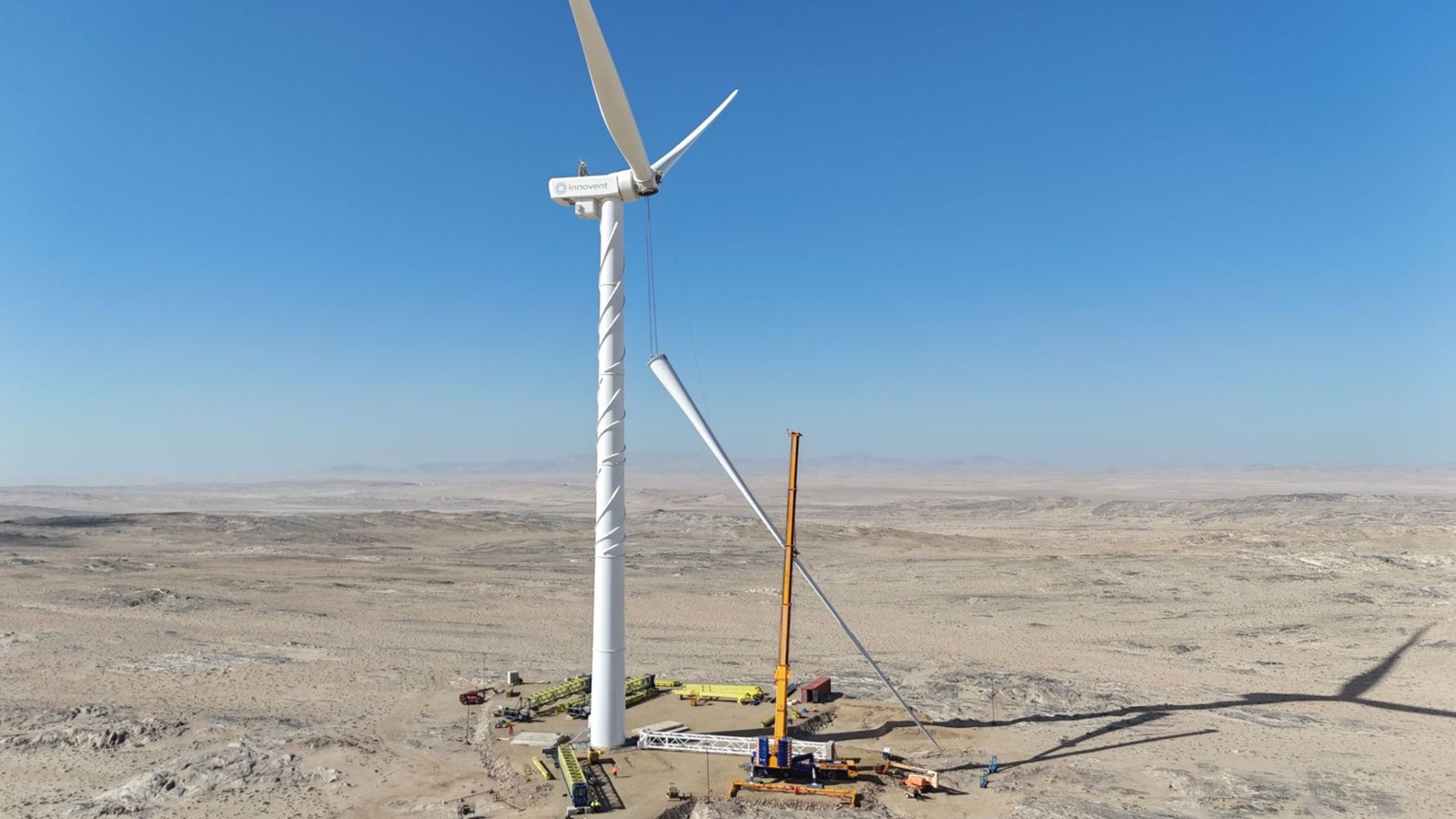
Wind farm in Namibia will have wind turbines assembled without giant cranes and is expected to avoid 200,000 tons of carbon dioxide per year when it becomes operational.


Consequently, the meeting highlighted the importance of integrating research, technology, and public policies. This will help consolidate the energy potential of Rio Grande do Sul and position it as a national and international reference.
Historically, Brazil has been investing in renewable energy since the 1990s, initially focusing on hydroelectric energy and, later, on onshore wind energy. The advancement of offshore wind energy emerges as a natural evolution of this trajectory.
For it allows harnessing stronger and more consistent winds, typical of coastal regions, increasing efficiency and electricity generation capacity. Additionally, this technology contributes to diversifying Brazil’s energy matrix, reducing reliance on fossil sources and mitigating the impacts of climate change.
These projects demonstrate that investments in infrastructure, workforce training, and environmental planning are essential for the success of offshore wind energy.
The Strategic Role Of Rio Grande Do Sul In The Energy Sector
During the seminar, Daniela Cardeal, president of the Renewable Energy Industry Union of RS (Sindienergia-RS), highlighted that Rio Grande do Sul is experiencing a strategic moment.
In which the combination of technological innovation and technical knowledge can attract significant investments to the energy sector. She emphasized that training qualified professionals and developing applied research are essential actions to provide security and sustainability to offshore wind energy projects.
Thus, initiatives like the Aura Sul Wind project show how the integration between universities, businesses, and government can generate concrete and promising results.
The Japanese company JB Energy develops the Aura Sul Wind project in partnership with Ufrgs and the state government. This project marks a step forward in the development of offshore wind energy in Brazil.
The success of initiatives like this depends on strategic planning, technological innovation, and cooperation between different sectors of society.
Rodolfo Gonçalves, a professor at the University of Tokyo and representative of JB Energy, explained that the interest of Japanese companies in developing projects in Brazil is linked to the learning gained in Japan and the search for markets with high wind potential. Thus, this exchange of knowledge highlights the importance of international cooperation for the advancement of clean energy.
It allows successful experiences in other countries to adapt to the Brazilian reality.
Moreover, the seminar addressed the technological evolution of wind turbine systems, with special attention to marine corrosion-resistant materials and remote monitoring systems. These innovations increase operational efficiency and reduce costs over the life cycle of offshore parks.
Which consolidates investment as sustainable and economically viable.
Environmental And Regulatory Aspects Of Offshore Wind Energy
The debate about offshore wind energy also involves regulatory and environmental aspects. Installing turbines offshore requires detailed studies on environmental impact, logistics, and economic feasibility.
Therefore, it is necessary to ensure that projects respect the marine fauna and flora. Furthermore, it is essential to promote solutions that minimize impacts on fishing and other coastal activities.
International experience shows that, with adequate planning and scientific monitoring, companies and governments can reconcile energy development and environmental preservation.
Additionally, the seminar emphasized the importance of public policies that encourage innovation and the adoption of new technologies. Tax incentives, specific financing lines, and professional training programs are essential tools to consolidate offshore wind energy as a relevant source in the energy matrix of Rio Grande do Sul.
Consequently, the state has created a favorable environment for investments. It combines port infrastructure, academic research, and public-private partnerships.
Another important point discussed was the generation of knowledge and technological innovation. The Ufrgs plays a central role in this process, promoting applied research and training skilled professionals to act in all phases of developing offshore wind energy.
Thus, the university creates a robust and sustainable ecosystem. This drives the economy and consolidates Rio Grande do Sul as a reference in renewable energy.
The seminar also highlighted that offshore wind energy projects require urban planning and integration with ports and electrical transmission networks. This coordination ensures that the energy generated reaches the state’s electrical grid efficiently, avoiding losses and ensuring reliable supply.
Economic And Social Impacts Of Offshore Wind Energy
In the long term, offshore wind energy can transform not only the energy sector but also the economy of Rio Grande do Sul. Installing wind farms at sea creates job opportunities, stimulates equipment and service industries, and strengthens the state’s position in the national and international landscape.
Furthermore, it contributes to reducing greenhouse gas emissions, aligning with environmental commitments and sustainability goals.
The seminar at Ufrgs also highlighted that the debate on offshore wind energy is not limited to technology or investment. It involves strategic planning, human development, environmental protection, and integration with public policies.
Therefore, the ability to unite different sectors of society around a common goal is essential for the potential of Rio Grande do Sul to be fully realized. The experience of Aura Sul Wind shows that, with cooperation, innovation, and planning, companies and government can transform challenges into concrete opportunities.
Additionally, the advancement of offshore wind energy can stimulate new production chains in the state, including manufacturing specialized equipment, maintenance services, and technological research in marine engineering.
Thus, it strengthens the local economy, promotes professional training, and increases the competitiveness of Rio Grande do Sul in the global renewable energy scenario.
Consolidating The Energy Future Of RS
In conclusion, the debate on offshore wind energy in Rio Grande do Sul goes beyond a technical or academic discussion. It reflects a historical moment in which the state can position itself as a leader in clean energy generation, harnessing constant winds and innovative technologies.
Seminars like the one held at Ufrgs play a vital role in bringing together knowledge, international experiences, and strategic vision. Moreover, they strengthen the state’s capacity to face the energy challenges of the future.
The path to consolidating offshore wind energy in Rio Grande do Sul requires perseverance, planning, and collaboration among universities, government, and the private sector. With investments in research, training qualified professionals, and adequate public policies, the state can fully leverage its potential and contribute significantly to a more sustainable and innovative energy future.