






 Portuguese
  Spanish
  3 min of reading
  0 comments


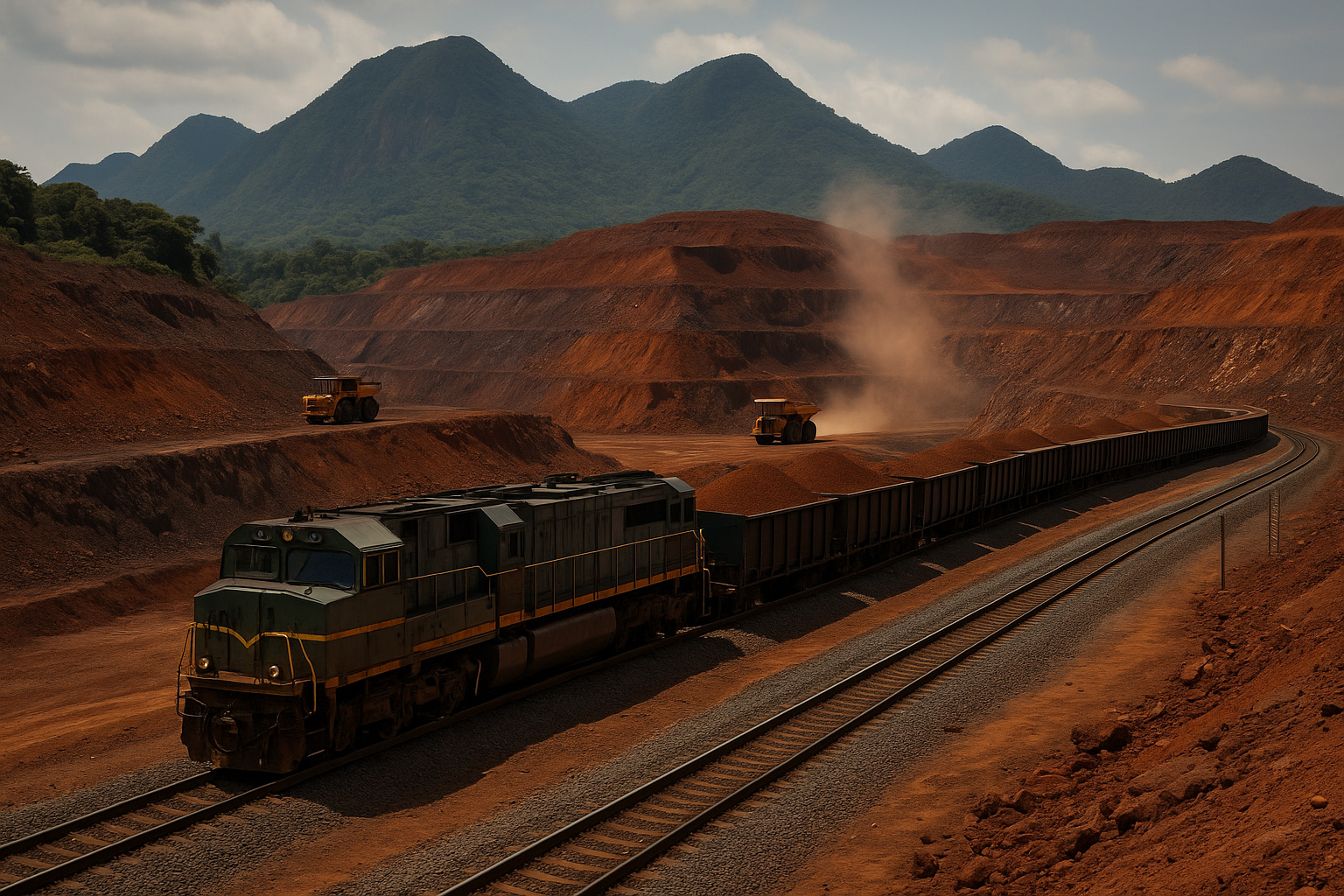
African Giant Advances with Railway, Port, and High-Grade Production Expected by 2025, Putting Guinea on the Map of Global Mining
Located in Guinea, the mega-mine Simandou is set to begin production in 2025 and is already considered the largest unexplored iron ore deposit in the world, with at least 3 billion tons. The project, valued at US$ 23 billion, includes 600 km of railway infrastructure and an exclusive port, which will allow for direct transportation of the ore to Chinese steel mills.
For this reason, the enterprise has the potential to reconfigure the global balance between Vale, BHP, and Rio Tinto, altering the power dynamics in the mining sector.
Origin and Trajectory of the Mega Project
The discovery of the deposit dates back to the 1950s, when Guinea was still a French colony. By April 1998, geologist Sidiki Koné, working for Rio Tinto, confirmed the enormous potential of the site.
However, political instability, corruption scandals, and changes in ownership control delayed exploration for decades.
In 2008, then-president Lansana Conté withdrew part of the concession from Rio Tinto and transferred the rights to BSGR, owned by billionaire Beny Steinmetz, who sold half to Vale for US$ 2.5 billion.
A few years later, amid corruption accusations, the government of Alpha Condé revoked the contracts in 2014, seeking to regain control of the strategic resource.
Thus, Simandou entered a long period of uncertainty until new investors arrived.
Strategic Partnership and Chinese Dominance
The landscape changed in 2019, when the consortium WCS, formed by Chinese and Singaporean companies, obtained the exploration rights.
In July 2022, Rio Tinto joined the group, creating a joint venture with 15% participation from the Guinean government.
The country is led by General Mamadi Doumbouya, who has pushed the project as a national priority.
Thus, Guinea became co-owner of the largest mineral project in Africa.
Today, Rio Tinto only retains 25% of the control, while Chinese companies, such as Chinalco, Baowu, and state-owned China Mineral Resources Group (CMRG), hold the majority of the operation.
These companies also concentrate the purchasing power of the ore.
-
Brazil is sitting on one of the largest lithium reserves in the world, in the Jequitinhonha Valley, but national mining has almost become an appendage of China: 97% of the metal’s export goes to a single country, which also dominates refining.

-
Iron ore falls to 762 yuan in China as real estate sales decline and steel production hits lowest level since 2018
-
Brazil has minerals, clean energy, and a waiting market, but it could miss a billion-dollar opportunity if it doesn’t speed up the race for green minerals, while the steel industry seeks to reduce emissions.
-
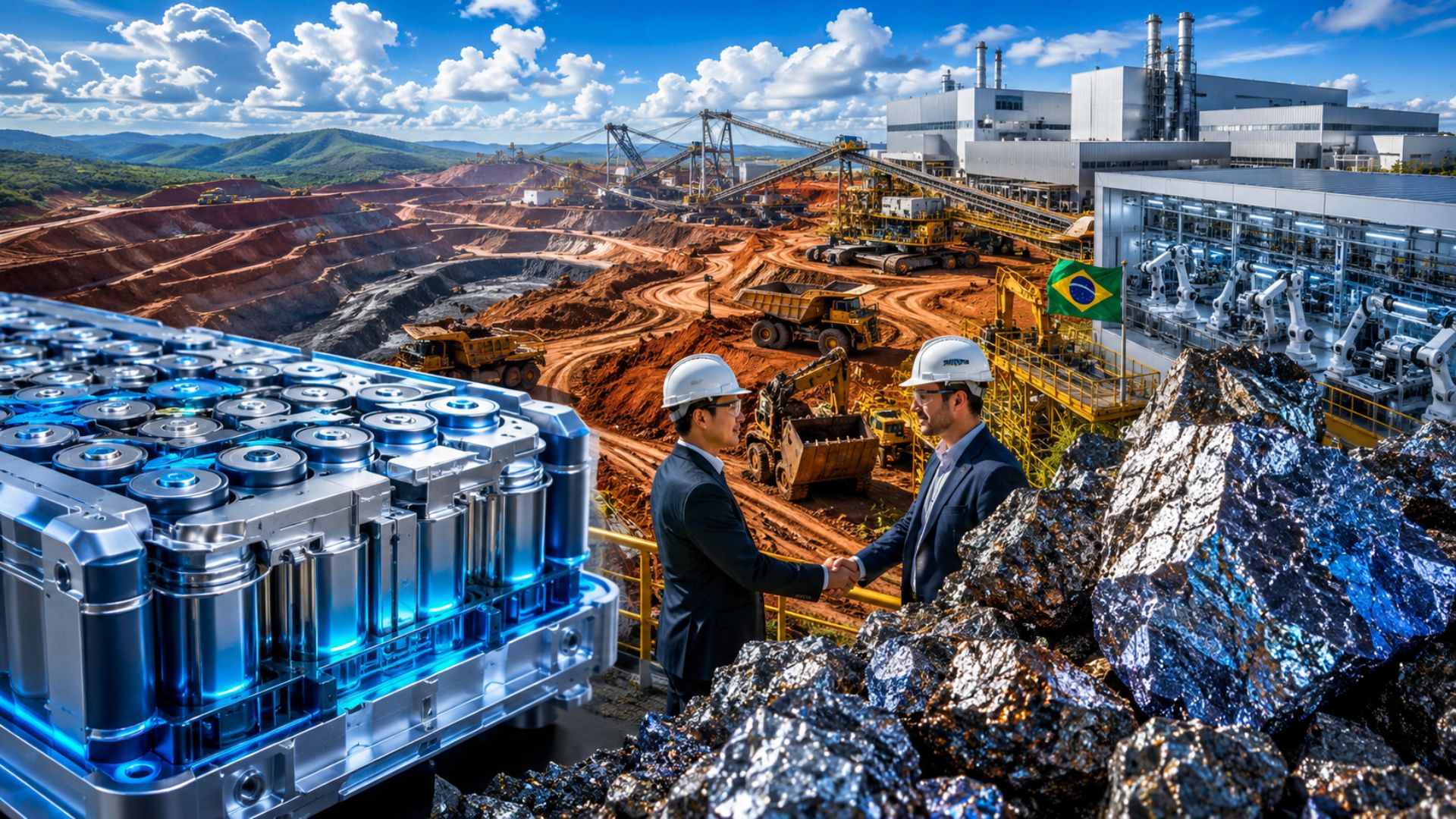
Asian battery manufacturer becomes a partner in a rare earth and niobium project in Minas Gerais, with estimated reserves of 70 million tons and operations expected to start in 2027.


Economic Impacts and Pressure on the Global Market
With the expansion of Simandou, the global iron ore market enters a new phase of competition.
According to Tom Price, head of commodities at Panmure Liberum, China has reached an unprecedented level of pricing power in maritime trade.
Thus, forecasts indicate that the price per ton could fall to US$ 85 by 2027, driven by increasing supply.
The project, nicknamed the “Pilbara Killer”, directly threatens Australian mines, significantly reducing China’s dependence on Australia and thereby strengthening Beijing’s autonomy.
Additionally, the state-owned CMRG centralizes the purchases of Chinese steel mills, making the entire supply chain more efficient and strategic.
As a result, giants Vale, BHP, and Rio Tinto face an unavoidable adaptation scenario in light of the African rise.
Environmental Challenges and National Transformation
Despite international enthusiasm, Simandou brings significant environmental and social challenges.
The project affects over 450 villages and cuts through areas of high biodiversity.
The region is home to the largest remaining habitat of the Western African chimpanzee, an endangered species.
To mitigate the impacts, the government hired KPMG and Rothschild & Co..
These institutions are supposed to manage the project’s revenues and seek the first sovereign credit rating for Guinea.
According to the International Monetary Fund (IMF), the country’s GDP could grow by over 25% by the early next decade.
Furthermore, the government launched the Simandou 2040 plan, which aims to diversify the economy and reduce reliance on mining.
Thus, Guinea seeks to transform the ore into sustainable and lasting development.
The Future of Global Mining Passes Through Simandou
With iron content above 65%, modern infrastructure, and Chinese support, Simandou is currently the largest mining project in Africa.
Its entry into the market is set to redefine the global price of ore, also altering geopolitical and economic relations.
Even with environmental risks, the project symbolizes a historical milestone for the African continent.







Be the first to react!