Portuguese
  Spanish


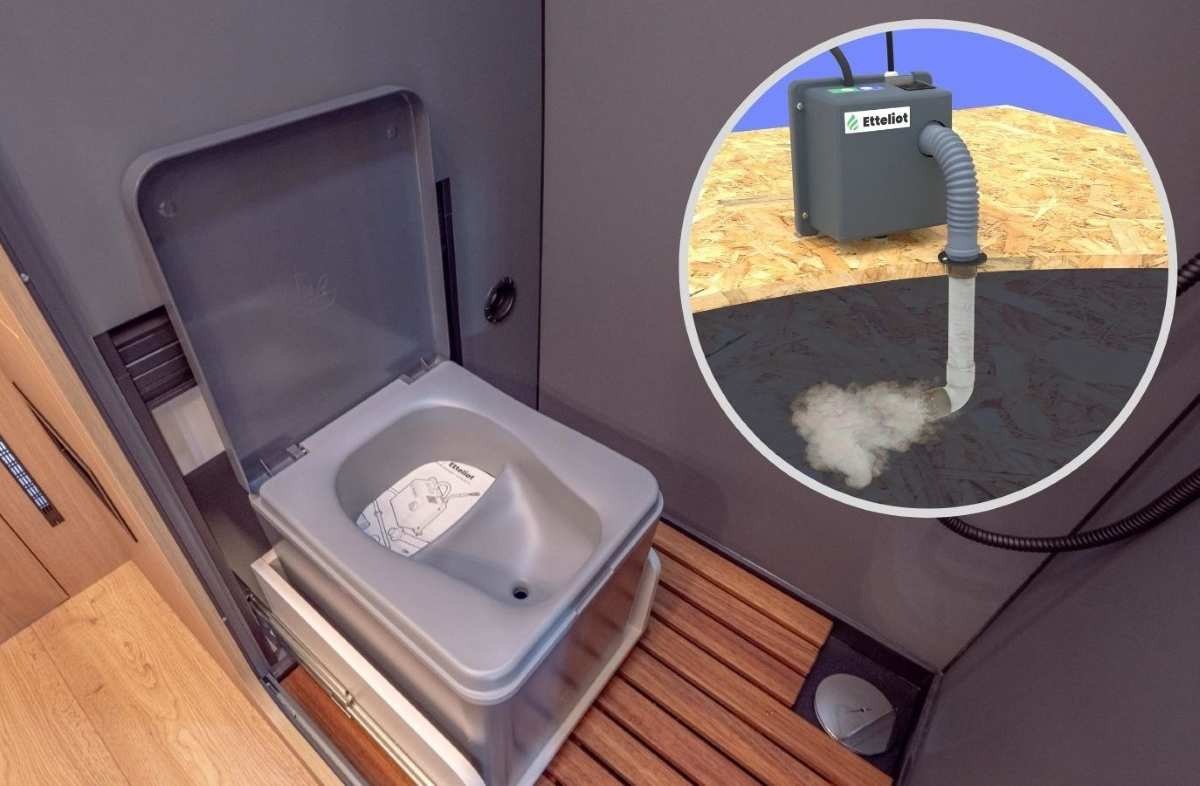

The Innovation Created by the French Startup Uses Filtration, Electrolysis, and Ultrasound to Process Up to 4.8 Liters Per Day, Reducing Odors, Saving Water, and Offering More Autonomy for Those Living in Trailers, Vans, or Off-Grid Homes
The proposal to turn urine into a clean, discreet, and completely odorless mist seems like something out of a camping anecdote, but it has already become a reality.
A French startup has developed a system capable of eliminating up to 4.8 liters of urine per day without using water, without containers to empty, and without generating odors.
The device, called Etteliot S, was created to complement dry toilets and turn the treatment of the liquid into something practical, compact, and much more hygienic.
-
Oceanographer Turns Abandoned Fishing Nets from Brazilian Waters into Bags, Creating Jobs and Earning Over $7,000 Monthly

-
Australia deploys poisoned sausages and uses traps, shooting, and fences in a battle against invasive cats that kill over 1.5 billion native animals annually, threatening more than 200 species.

-
NASA Rover Captures “Tired Face” on Mars, Highlighting Human Brain’s Tendency to See Faces in Rock Formations

-
Ancient Stone City in the Desert, Once Home to 30,000, Puzzles Scientists with Nabateans’ Water Mastery 2,000 Years Ago




In vans, trailers, tiny homes, or off-grid residences, this innovation is changing habits that have long been considered inevitable.
A System That Modifies the Routine of Those Living a Nomadic Lifestyle
The French team responsible for Etteliot S developed the module to work as a complement to dry toilets that separate solids and liquids.
The idea is to prevent the user from having to deal with containers full of urine and eliminate uncomfortable steps from daily life.
The equipment, measuring about 20 cm on each side, is almost always seen installed inside cabinets or under benches at fairs and events.
Even though it is discreet, it attracts the attention of companies specializing in van conversions like Wood & Van, which already integrates it into frequently used dry toilets, such as the Trelino models.
The installation is simple.
A thin tube sends the urine into the module.
A larger tube releases the clean mist that emerges at the end of the process outside the vehicle.
There are no heavy tanks, noisy pumps, or complex plumbing systems.
How the Startup Transformed Urine into a Clean Mist
The Etteliot S takes advantage of the basic principle of dry toilets, which separate liquids and solids.
The solids follow traditional methods such as drying or mixing with sawdust.
The urine, which is usually collected in containers requiring frequent emptying, now has a different destination within the equipment.
When the sensor detects liquid in the jar, the module aspirates the urine and sends the content for initial filtration.
This filtration removes loose particles and prepares the liquid for the next stage.
Next, the system applies electrolysis, which neutralizes bacteria, decomposes urea, and eliminates ammonia.
The result is a stable and odorless liquid.
The module uses ultrasound to turn this liquid into an ultra-fine and nearly invisible aerosol.
This mist is released through an external duct and disperses under the vehicle.
For those living in vans or tiny homes, this ends the routine of dealing with containers and keeps the environment consistently clean.
Exaggerated Comfort or Practical Solution
The price of 950 euros does not target occasional campers.
It is aimed at users who spend the entire year traveling or living off the grid.
For this audience, the system represents convenience and relief in daily life.
The Etteliot S operates on 12V power and requires periodic maintenance.
The startup recommends descaling to prevent mineral buildup and checking the internal filter.
Still, maintenance is simple and does not require complex technical skills.
Van projects exceeding 60,000 euros easily include the Etteliot S as part of the overall improvements.
This integration also differentiates vehicles in a market with an increasing number of mobile housing options.
The module processes up to 4.8 liters per day.
This volume comfortably meets the needs of a couple traveling or living full-time in compact spaces.
The company also offers kits for custom bathrooms and adapters for cassette models used in traditional caravans.
The future may include integrations between the Etteliot S and already existing hybrid systems.
The CompoCloset S1, which automates solid bagging, is one example.
The combination of automatic bagging and urine conversion into mist brings the industry closer to the idea of a fully automated dry toilet.
Expansion to Other European Markets
The majority of Etteliot sales occur in France.
Nonetheless, the system is already appearing in camper conversion workshops in Spain, Germany, and other countries.
The waterless sanitation sector is experiencing rapid growth and offers space for new solutions.
Systems like electric incinerators and toilets that encase waste in compostable film coexist with approaches like that of Etteliot.
This ecosystem fosters the expansion of technologies aimed at autonomous living.
Releasing a small cloud of clean vapor every time someone uses the bathroom might become a joke among campers.
At the same time, it represents a new way of treating waste in mobile or isolated homes.
Environmental Impacts of the Etteliot S
The environmental impact of the Etteliot S involves water savings, reduced health risks, and decreased pressure on natural areas.
Moreover, it replaces makeshift disposal practices that often occur off the grid.
Consistent Water Savings
Dry toilets already eliminate the need for flushes, which consume between three and six liters per use.
The Etteliot S deepens these savings as it reduces the need to wash urine containers or use makeshift methods.
For homes and vans dependent on limited sources, this advantage is evident.
Reduction of Spills in Sensitive Areas
Living away from urban infrastructure leads many users to dispose of urine in inappropriate places.
This includes slopes, ditches, and protected areas.
Urine acts as fertilizer in small quantities, but repeated disposal leads to nitrogen and salt accumulation.
This buildup alters the soil, affects flora, and can contaminate shallow waters if runoff occurs.
The Etteliot S releases a homogeneous, stable mist with no significant biological load, reducing the direct environmental impact.
Less Risk of Contamination in Small Spaces
The electrolysis applied by the system neutralizes bacteria, urea, ammonia, and enzymes. This prevents the urine from fermenting and generating strong odors.
This control is essential in vans and tiny homes, spaces where odors spread easily. Furthermore, it reduces contamination risks and prevents insect attraction.
Reduction of Trips for Emptying
Traditional dry toilets require the user to empty tanks every few days. In mobile residences, this involves constant trips to appropriate locations.
The reduction of these trips decreases fuel consumption and pollutant emissions. Over long distances, this savings becomes noticeable.
Electric Energy Consumption
The Etteliot S operates on 12V power.
This consumption represents a moderate downside.
When the system runs on energy from solar panels, the impact is low.
When it relies on alternators or generators, the environmental weight increases.
Even so, the consumption is lower than that of more intensive systems, like incinerators.
Materials, Maintenance, and Electronic Waste
The module uses components like filters, pumps, and ultrasound.
This creates a need for maintenance and eventual replacement.
These replacements generate electronic waste throughout the equipment’s lifespan.
This point represents the least sustainable aspect of the system, although it is similar to other compact devices used in autonomous homes.
Path to New Housing Models
Technologies like the Etteliot S facilitate the creation of modular housing, autonomous vans, urban tiny homes, and communities that do not depend on centralized infrastructure.
This reduces pressure on sewage networks and decreases the need for extensive construction.
By turning urine into clean mist, the startup offers a solution that eases exhausting routines and brings the market closer to a fully automated dry toilet. With the module, the user simply uses the bathroom and continues their routine.