Portuguese
  Spanish


A farmer in Rutland, England, noticed fragments and a mark in the wheat field during lockdown, before archaeologists confirmed a Roman mosaic linked to the Iliad. The 7 by 11-meter floor revealed Achilles, Hector, and an elite rural villa under official protection by the British government since then.
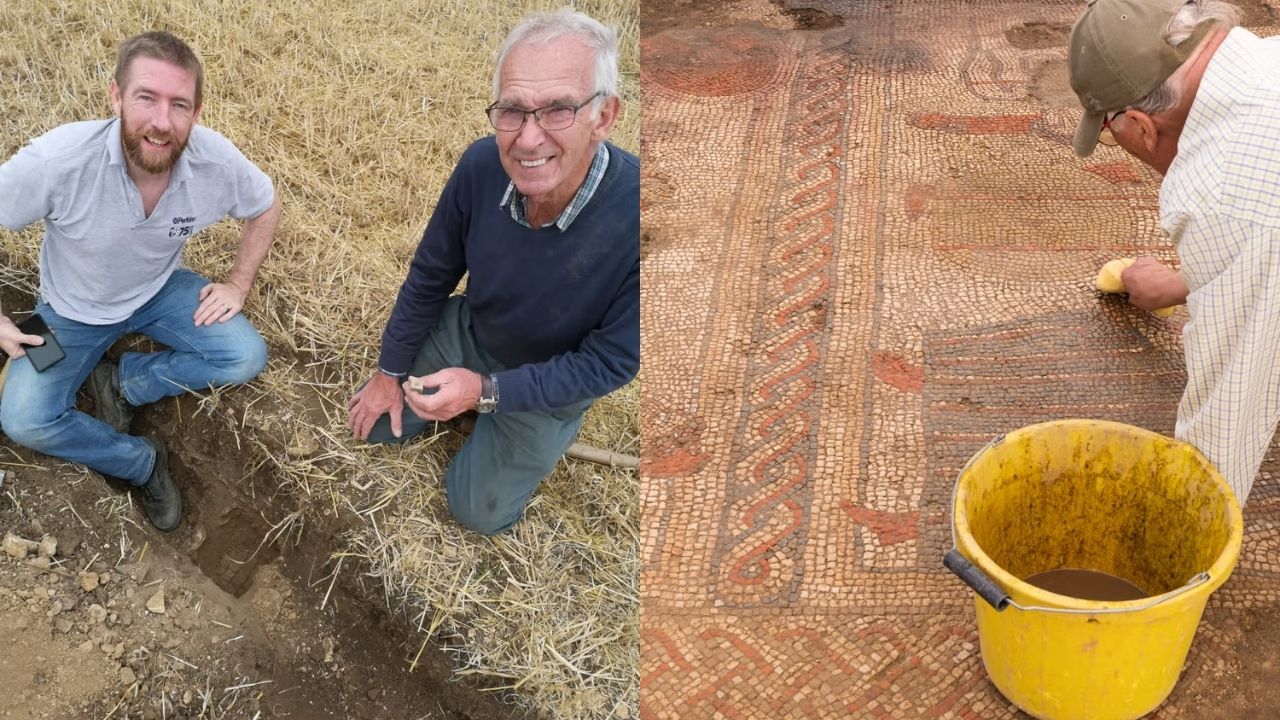
A farmer linked to a rural property in Rutland, England, helped reveal a rare Roman mosaic under a wheat field during the lockdown period in 2020. The discovery began when Jim Irvine, son of the landowner, Brian Naylor, noticed fragments on the ground, compared satellite images, and noticed an unusual mark in the plantation.
According to The Art Newspaper, in an article published on November 25, 2021, the find was considered one of the most exciting Roman mosaic discoveries in the UK in a century. The confirmation came after excavations conducted with support from Historic England, the Leicestershire County Council, and teams linked to the University of Leicester.
A mark in the wheat paved the way for a rare find
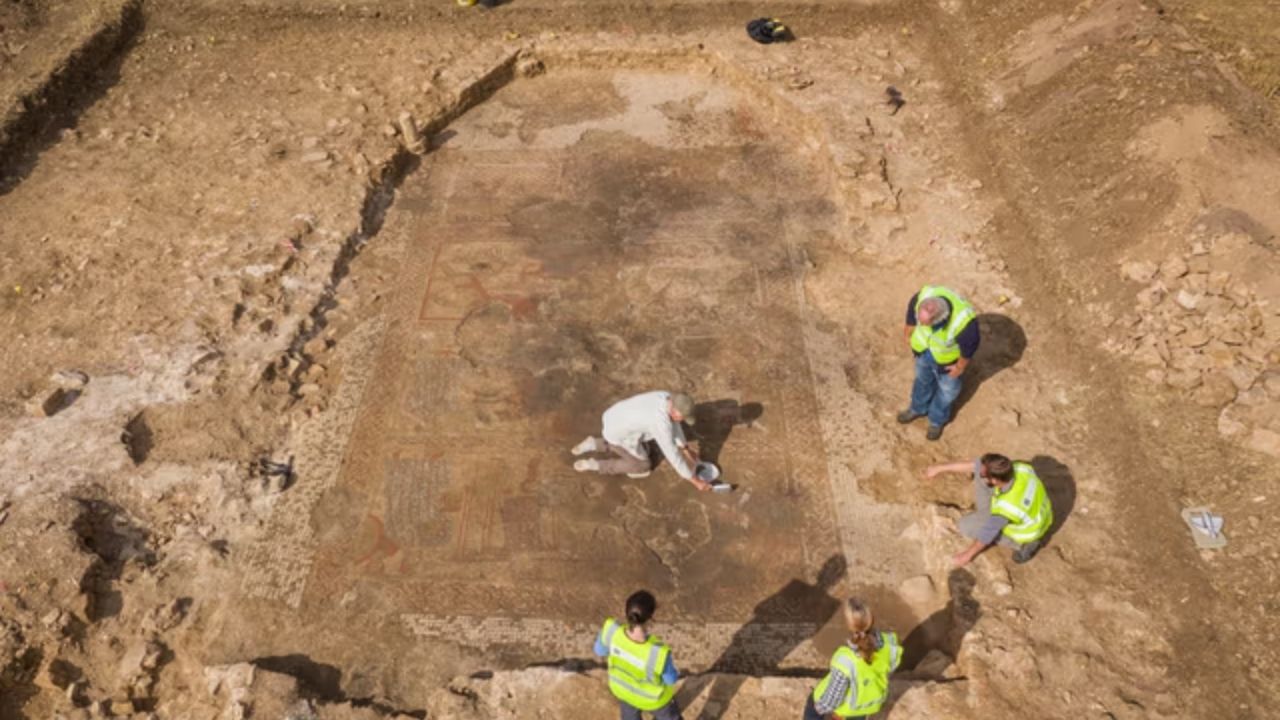
The story began discreetly, without sophisticated machines or a large archaeological expedition. Jim Irvine, a farmer’s son, was walking through the family area when he found ceramic fragments in the wheat field, a small detail that caught attention because it seemed out of place in that rural environment.
-
Low-Cost Concrete Panel House Goes Viral: Investor Reveals Prefabricated Kit Structure for Around $1,500, Assembled in 30 Days, with Plans for Rental and Resale Income

-
Brazilian Lottery Winner Ordered by Court to Share $22 Million Jackpot with Ex-Partner, Sparking Major Legal Battle

-
Why Yellow is the Safety Color for Heavy Machinery: Origins and Benefits Since 1931

-
U.S. Channel Highlights 20 Brazilian Innovations Leading Latin America: From Açaí to Modular Homes and Biogas




Later, upon observing satellite images, he identified a clear mark in the plantation. The difference in the terrain’s design indicated that there was something buried beneath the surface, as if the crop was silently revealing the outline of an ancient structure.
The Roman mosaic appeared too close to the surface
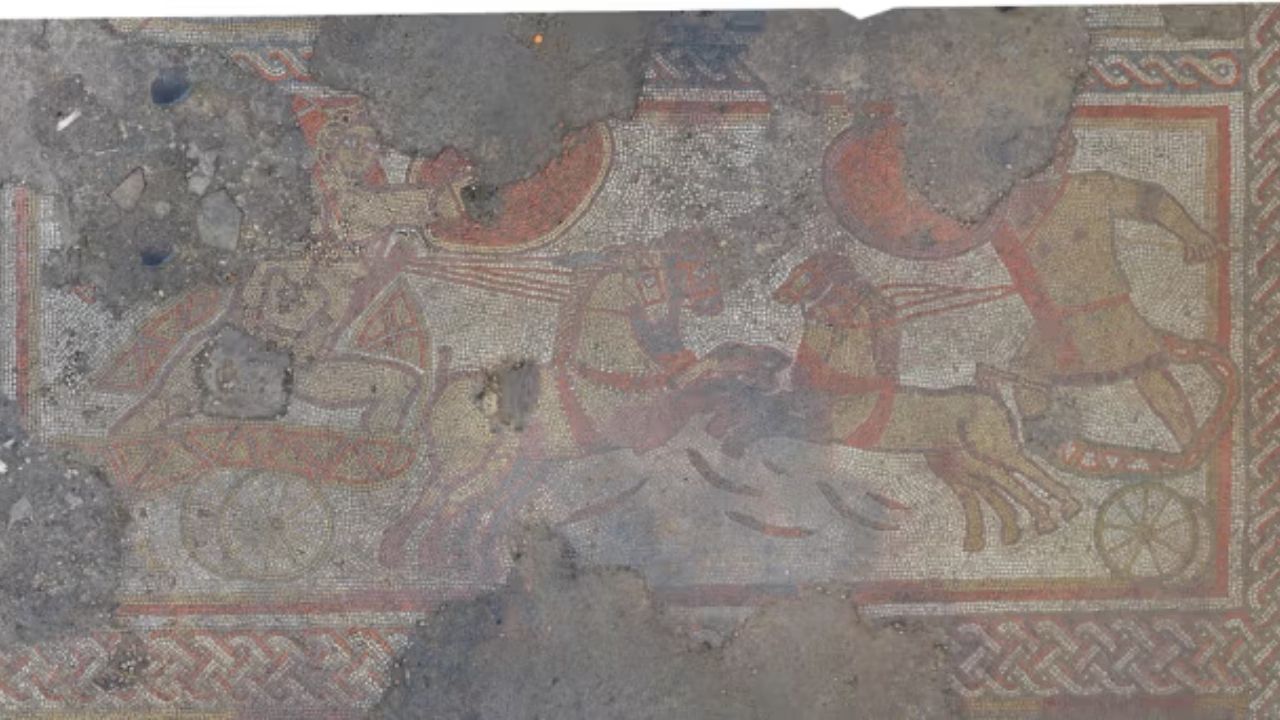
The mosaic was relatively close to the surface, under plowed fields that had already suffered damage over time. Even deteriorated, the floor preserved enough scenes to show that it was not a common decoration, but a sophisticated work linked to classical culture.
The piece measures approximately 7 meters by 11 meters and would have decorated an important dining and entertainment space within a Roman villa. This detail suggests that the original owner had wealth, status, and an interest in demonstrating literary knowledge before their guests.
Achilles, Hector, and the Trojan War were on the villa’s floor
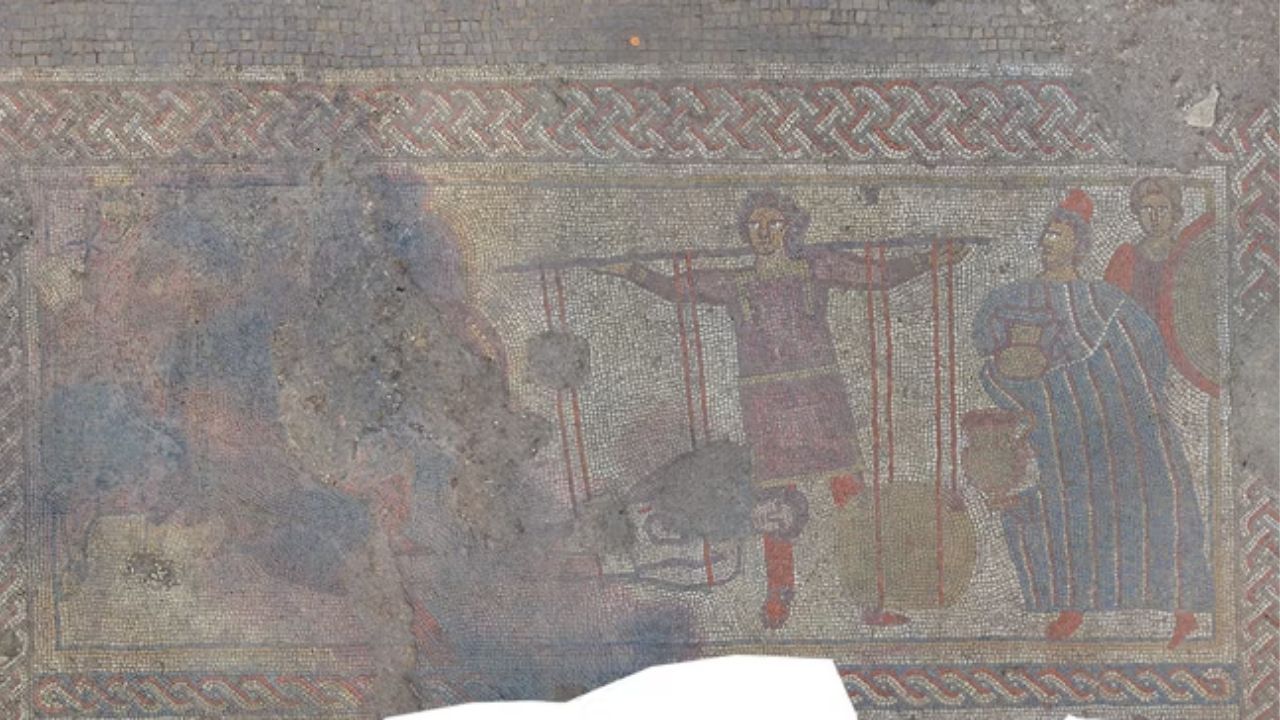
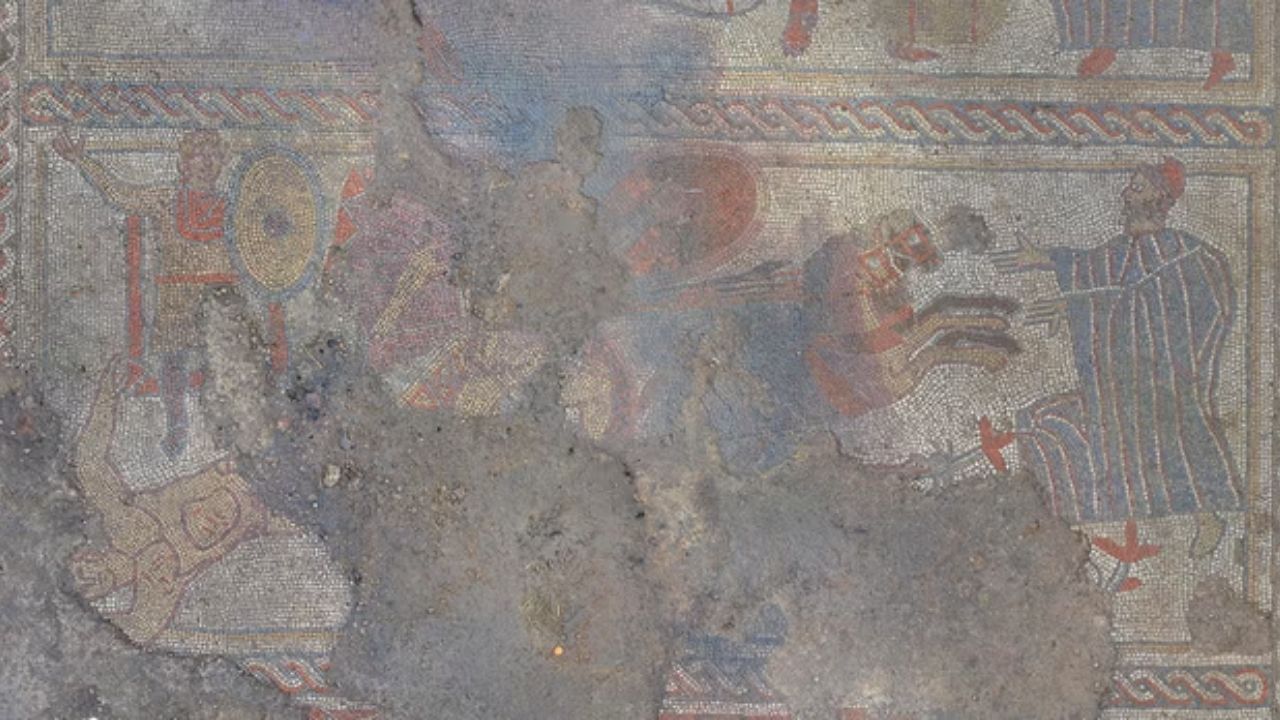
Image: University of Leicester.
The mosaic drew attention because it represents scenes associated with the Iliad, attributed to Homer, with the characters Achilles and Hector at the center of the visual narrative. The panels show moments related to the confrontation between the two heroes, including the duel and the fate of Hector’s body.
For archaeologists, the rarity lies in the fact that this type of representation had not been found before in the United Kingdom. The presence of such a specific classical scene in a villa in Roman Britain shows how local elites could symbolically connect to the Mediterranean world.
The buried villa revealed more than an ancient floor
The mosaic did not appear in isolation. It was part of a larger Roman villa complex, dated to the late 3rd or early 4th century AD, with structures not yet fully excavated. Geophysical surveys indicated constructions in the surroundings, including barns, possible storage areas, and perhaps a bathhouse.
This makes the find even more important because the site may preserve information about architecture, rural economy, and aristocratic life in Roman Britain. The wheat field hid not just a work of art, but part of an entire social scene buried by time.
Damage, burns, and bones indicate a later history
Despite the visual impact, the mosaic did not reach archaeologists intact. It shows damage caused by later constructions, fire marks, and wear caused by agricultural activities. These signs show that the site underwent changes after losing its original use as an elite environment.
Human remains found in the debris layer above the floor also suggest a late reuse of the space, possibly at the end of the Roman period or the beginning of the Middle Ages. The ancient luxurious villa may have been transformed, abandoned, or repurposed as Roman power weakened in the region.
The farmer’s discovery gained official protection in the United Kingdom
The importance of the site led to official protection by the British government, on the recommendation of Historic England. This measure aims to prevent damage caused by illegal excavations, unauthorized metal detectors, and new interferences on the site.
The mosaic was covered again for preservation, while studies continue on the findings. The decision shows that, for British archaeology, the value of the discovery is not only in the image of Achilles and Hector, but in the set of clues that the site can still reveal.
A common field turned into a window to the Roman elite
The case draws attention because it shows how a seemingly ordinary land can hide traces capable of altering the historical reading of a region. A farmer, a mark in the wheat, and a satellite observation were enough to start an investigation that led archaeologists to a buried aristocratic villa.
Now, the Rutland mosaic remains as one of the most impressive examples of how literature, power, and rural life intersected in Roman Britain. Do you think there are still many archaeological treasures hidden under farms and common fields, just waiting for a closer look to be found?