Portuguese
  Spanish


The United Kingdom chose Wylfa to install three Rolls-Royce nuclear reactors capable of supplying millions of homes for over 60 years.
For decades, the island of Anglesey in North Wales has been associated with Britain’s nuclear past. The former Wylfa plant, opened in the 1970s and decommissioned in 2015, remained a symbol of halted projects and abandoned investments.
Now, the site has been chosen to lead a new phase of nuclear energy in the United Kingdom. According to information released by Rolls-Royce SMR, the British government has decided to transform Wylfa into the home of the first small modular reactors, a technology that promises to reduce costs, speed up construction, and usher in a new generation of smaller nuclear plants, partially factory-produced and assembled on-site.
United Kingdom wants to transform Wylfa into a global showcase for small nuclear reactors
According to Great British Energy – Nuclear, Wylfa was selected in November 2025 as the first UK site for the deployment of Rolls-Royce SMR technology. The initial project plans for the installation of three small modular reactors, but government studies indicate that the area has the potential to accommodate up to eight units in the future. The choice represents a significant shift in the UK’s energy strategy.
-
12-Year-Old Indian Girl Invents FreshPaper, a Spice-Inspired Sheet That Extends Fruit Freshness by Four Times, Now Patented in the U.S.

-
South Korea Tows 18 Concrete Blocks Weighing Up to 48,000 Tons Over 36 km to Construct a 3.2 km Underwater Tunnel Between Busan and Geoje, Installed Nearly 50 Meters Deep

-
Chinese Tianwen-2 Mission Targets Near-Earth Asteroid After 1 Billion Kilometer Journey to Collect Ancient Samples, Aiming to Uncover Clues About Water, Organic Compounds, and Solar System Origins Before Heading to a Comet
-
France Constructs 900-Meter Sea Wall in Brest, Expands Port by 14 Hectares for Marine Renewable Energy Hub


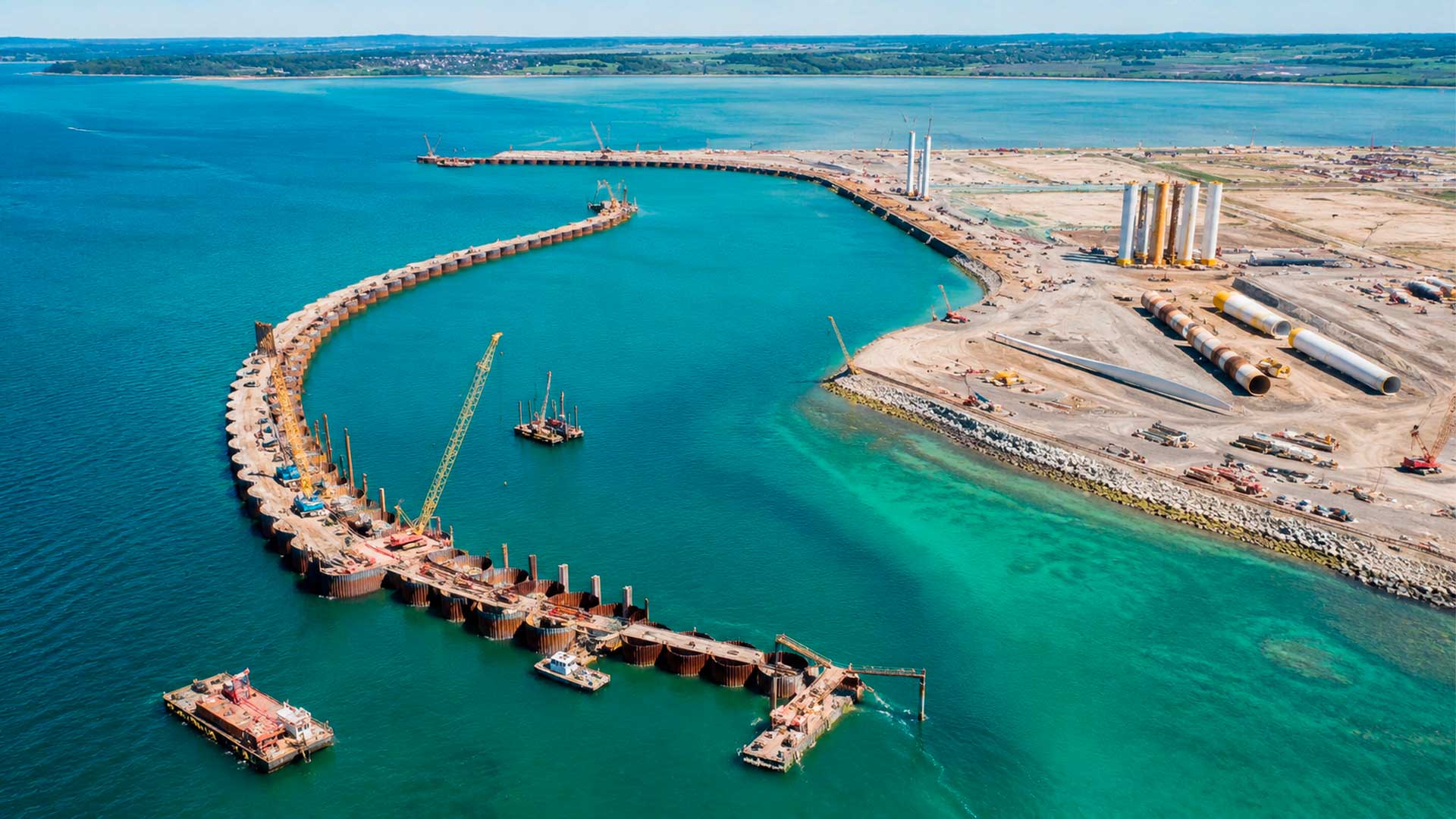
Instead of relying exclusively on large nuclear plants, which require decades of construction and massive investments, London intends to test a model based on smaller, replicable units that are potentially quicker to deploy. According to Rolls-Royce SMR, the initiative should help the UK create a national export industry for small reactors, positioning the country among the global leaders in the sector.
Three reactors can produce more than 1.4 GW of clean energy for millions of homes
According to information released by Rolls-Royce SMR, the three reactors planned for Wylfa are expected to generate at least 1.4 gigawatts of electricity, enough to supply approximately 3 million British homes.
Each Rolls-Royce unit is designed to produce about 470 MW, a capacity significantly lower than that of large conventional plants, but compensated by the possibility of series construction.
According to the Welsh government, each reactor is expected to operate for about 60 years, providing stable energy regardless of weather conditions, a feature considered strategic given the increasing participation of intermittent sources, such as solar and wind, in the European energy matrix.
Abandoned nuclear plant gets a second chance after billion-dollar failures
Wylfa was once considered one of the main British nuclear hubs. The former Wylfa Magnox plant ceased operations in 2015, leaving a partially idle infrastructure and a region awaiting new energy investments.
In the following years, the Japanese company Hitachi planned a large plant at the site but abandoned the venture after recording billion-dollar losses and permanently suspending the project in 2020. The British government later took control of the area through Great British Energy – Nuclear, allowing the site to return to the center of discussions about the future of electricity generation in the country.
Small reactors promise to speed up construction and reduce nuclear energy costs
The so-called SMRs, an acronym for Small Modular Reactors, are seen by various governments as a possible answer to the recurring delays observed in large nuclear projects. According to Rolls-Royce SMR, a significant portion of the components can be manufactured in an industrial environment and later transported to the installation site, reducing risks of delays and decreasing the complexity of civil works.
The British expectation is that the new generation of mini-plants will allow for increased production of low-carbon energy without repeating the prolonged schedules and rising costs recorded in traditional nuclear projects.
Industry experts point out, however, that the technology has not yet been commercially deployed on a large scale in the West, meaning that the first projects will also serve as a major industrial test.
Wylfa could become the laboratory for the next European nuclear generation
The project goes beyond the energy issue. According to the British government, the construction of the first reactors could generate thousands of highly specialized jobs, strengthen industrial chains, and pave the way for future exports of the technology developed by Rolls-Royce.
The bet is ambitious: to transform a practically abandoned nuclear island into one of the most important centers of the new European atomic industry. If the plan works, Wylfa could cease to be remembered as a symbol of failed projects and become the place where the United Kingdom attempted to reinvent nuclear energy for the 21st century.