Portuguese
  Spanish


Tianwen-2 reached the near-Earth asteroid after about 400 days and prepares to study the asteroid 2016 HO3. The mission seeks asteroid samples to investigate the Solar System, water, organic compounds, and the route to comet 311P in deep space with precision before the Chinese collection.
The near-Earth asteroid 2016 HO3 has become the new target of one of China’s most ambitious space missions. Tianwen-2 reached the region of asteroid 2016 HO3 after a journey of approximately 1 billion kilometers in about 400 days, arriving just 20 kilometers from the surface to begin scientific observations before attempting to obtain asteroid samples that may help investigate the Solar System.
According to a publication by the Daily Galaxy on July 6, 2026, based on information from the Xinhua agency and the China National Space Administration, the approach marks the mission’s entry into a decisive phase in deep space. The goal is to study the near-Earth asteroid up close, choose a safe area, and attempt to bring ancient material back for analysis on Earth.
A mission that left the journey and entered the most delicate phase
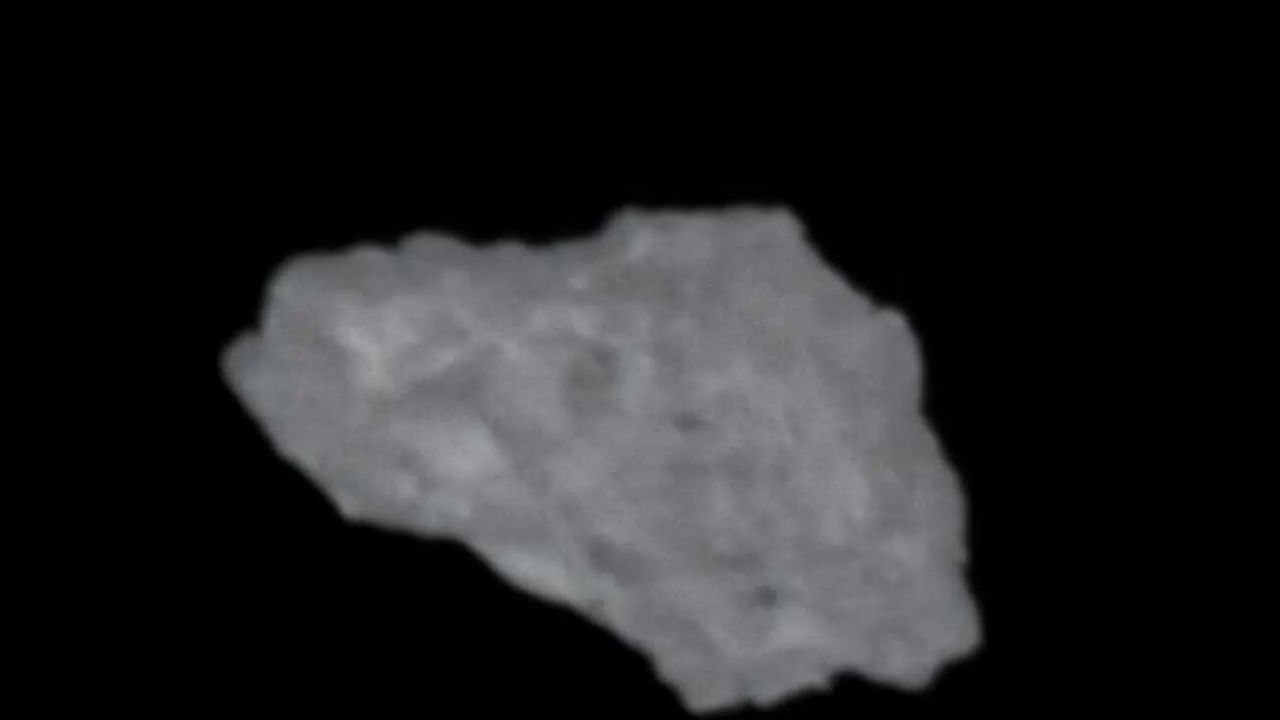
The arrival of Tianwen-2 at the asteroid 2016 HO3 not only signifies the end of a long journey through space. It marks the transition to a much more sensitive stage, where the probe needs to operate close to a small body, with extremely weak gravity and a trajectory that requires fine adjustments.
-
France Constructs 900-Meter Sea Wall in Brest, Expands Port by 14 Hectares for Marine Renewable Energy Hub

-
New Discovery Suggests Prehistoric “Hobbits” May Have Survived on Komodo Dragon Remains

-
Tiny 10-centimeter fish in Brazilian reservoirs may play a surprising role in reducing methane emissions, scientists find.
-
ChatGPT Creator Bets Big on Fusion Energy Machine Promising Unlimited Power for Microsoft by 2028, But Physicists Skeptical


The near-Earth asteroid will now be analyzed in detail before any collection attempt. The mission should observe the shape, surface, composition, and possible internal characteristics of the object, as each piece of information can influence the choice of the approach point and the safety of the operation.
Why reaching 20 kilometers is an important technical achievement
In missions close to asteroids, 20 kilometers may seem like a large distance for those comparing it to flights over planets or moons. However, on a small object like 2016 HO3, this approach represents a high-precision operation, as the probe needs to calculate movements with little margin for error.
During the approach, optical navigation systems helped refine the position of the asteroid. Previously, estimates based on observations made from Earth had much greater uncertainties. With images from the spacecraft itself, the mission began to work with more precise data, something essential to keep Tianwen-2 safe.
The near-Earth asteroid may hold very ancient clues
The scientific interest in the near-Earth asteroid 2016 HO3 is linked to the possibility that this type of object preserves materials little altered since the early phases of the Solar System. Asteroids are often treated as natural archives because they have not undergone the same intense transformations that shaped larger planets.
If Tianwen-2 manages to collect samples, scientists will be able to compare this material with already studied space rocks and look for signs about the original composition of the blocks that gave rise to the planets. The expectation is not to find a single answer, but to expand the set of clues about water, organic compounds, and planetary evolution.
China attempts to conduct its first asteroid sample collection
Tianwen-2 was launched on May 29, 2025, as the first Chinese mission planned for asteroid sample return. The plan is to study 2016 HO3, attempt to collect material, and send this content back to Earth, in an operation that requires autonomous navigation, proximity control, and high-precision engineering.
For China, the result has scientific and strategic weight. A successful collection would place the country in a select group of powers capable of reaching small celestial bodies, operating near them, and bringing samples to terrestrial laboratories. This also reinforces the expansion of the Chinese deep space exploration program.
After 2016 HO3, the route should continue to a comet
The mission does not end at the near-Earth asteroid. After the sample collection and return phase, the plan is for Tianwen-2 to head towards comet 311P, located in the main belt. This transforms the expedition into a long-term campaign, with goals beyond the first target.
This second phase enhances the scientific value of the mission because it allows for the comparison of materials and behaviors of different types of celestial bodies. While the 2016 HO3 may offer clues about near-Earth objects, comet 311P can help understand processes in more distant and dynamic regions of the Solar System.
What still needs to happen before the collection
Before attempting to touch or get even closer to the asteroid 2016 HO3, Tianwen-2 needs to gather enough data to reduce risks. The surface may have irregular terrain, loose particles, unstable areas, or characteristics that are not yet known in detail. Therefore, the current phase is one of progressive observation.
The big question now is whether the Chinese mission will be able to turn this 20-kilometer approach into an actual collection of ancient samples. If this material reaches Earth, do you think it could change planetary science more or the technological race between space powers?