






 Portuguese
  Spanish


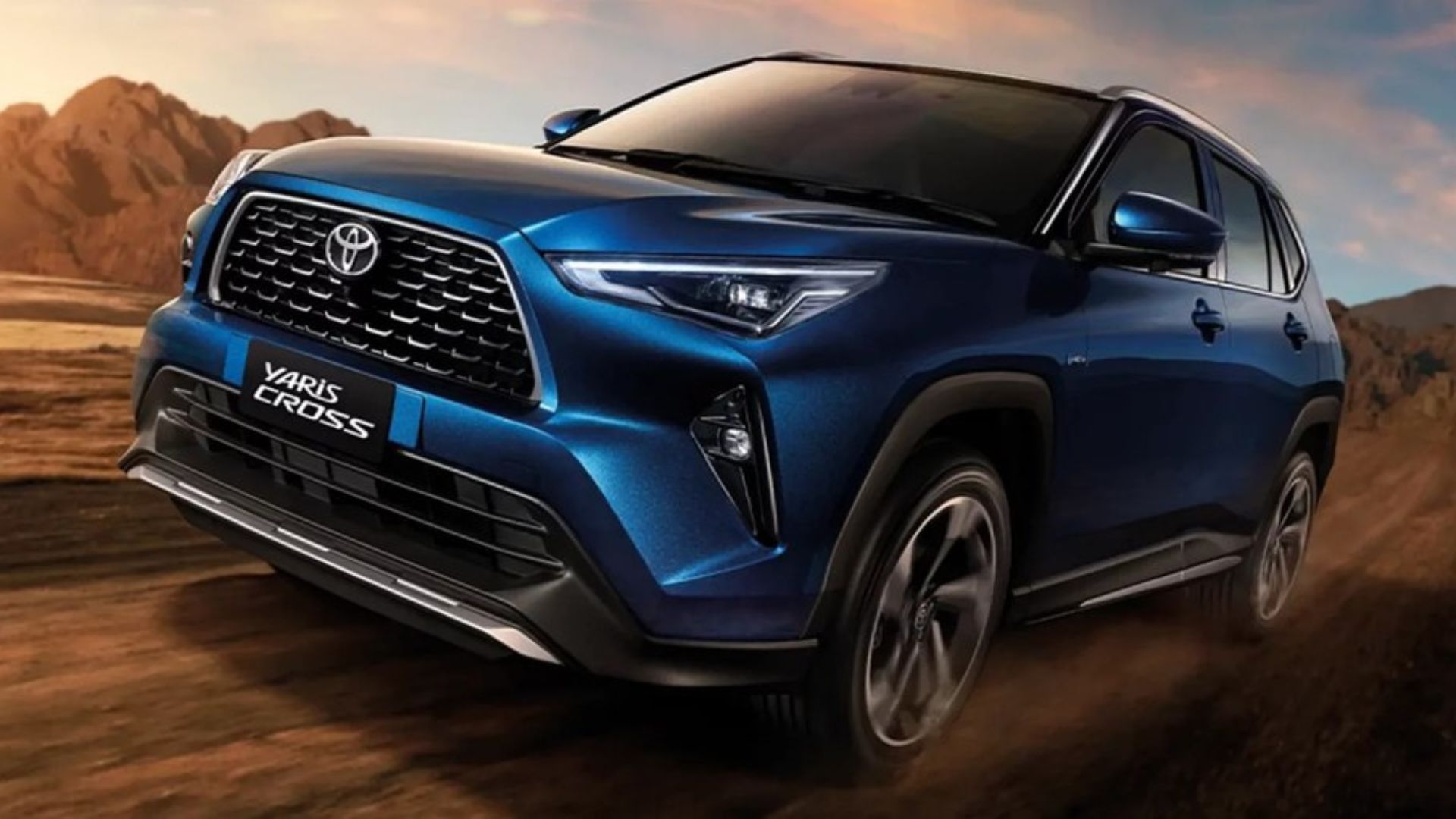


Toyota’s Flex Hybrid SUV Launches with Urban Fuel Consumption of 19.8 km/l, Acceleration from 0 to 100 km/h in 11 Seconds, and a Wide Range of Equipment, Aiming for Daily Efficiency and Direct Competition with the Honda WR-V in the Compact Segment.
The Toyota Yaris Cross Hybrid 2026 arrives in the market promising urban fuel consumption of 19.8 km/l in tests conducted with gasoline and air conditioning on, in addition to 0 to 100 km/h in 11 s and a combined power of 111 hp, in the XRX Hybrid version priced at R$ 189.990.
As Toyota’s entry-level compact SUV, the model draws attention for combining full flex hybrid powertrain and a wide range of driver assistance features, while it faces the Honda WR-V, whose suggested retail price for the most expensive version stands at R$ 152.100.
Full Flex Hybrid and Everyday Performance
The main credential of the Yaris Cross Hybrid is the combination of a 1.5 flex engine in Atkinson cycle with electric motors and a 0.7 kWh battery, an architecture that does not require external charging and aims to reduce fuel consumption, especially in stop-and-go urban traffic.
-
Chevrolet’s Parent Company to Invest Billions in Brazil to Modernize Factories, Update Cars, and Accelerate Hybrid Launch by 2028

-
Practical Driving Tests in Brazil Surge by 23.5%, Exceeding 2.2 Million by 2026, as New Rules Make the Process Cheaper and Simpler
-
Brazil’s Lula Government Allocates $463 Million Quota for Electric Car Parts, Waives Import Tax Until December, Sparking Competition Among BYD, Automakers, and Unions as Consumers Question Impact on Prices and Local Industry

-
Thinking of Installing LED Headlights? Why Replacing Halogen Bulbs is Still Banned, the Glare Risks Authorities Worry About, and How a New Proposal Could Allow Certified, Safe Installations


In practice, the performance measured on track indicates acceleration from 0 to 100 km/h in 11 seconds, a result associated with initial launch assistance from electric power, although the system prioritizes efficiency rather than power numbers typical of SUVs turbo in the same range.
In braking, measurements published by specialized vehicles indicate a longer distance than direct rivals in equivalent tests, a point noted alongside the increased weight inherent to the electrified system, although the pedal calibration and predictability of action are highlighted as a focus for daily use.
Prices and Versions of the Yaris Cross 2026

The Yaris Cross 2026 lineup is structured with five configurations, including an entry-level XR option aimed at strategies such as sales to specific audiences, and versions XRE and XRX both combustion and hybrid, with a range of prices up to the top.
In this positioning, the XRX Hybrid at R$ 189.990 stands out as a showcase of equipment and hybrid technology, while versions like the XRE Hybrid appear as a cheaper access point to the same concept, with a price difference that can weigh in the decision.
At the same time, the WR-V remains a competitor for space and family proposal, with a lower price and conventional flex engine, reinforcing the direct comparison between initial cost and operational economy, especially for those who drive more in the city.
Production in Sorocaba and Impact on Launch
The launch of the Yaris Cross in Brazil was affected by damage caused by storms in the production chain linked to the Porto Feliz factory, an episode that led to shutdowns and schedule revisions, according to reports published at the time of the event.
With the resumption and reorganization of production, Toyota announced the start of the model’s manufacturing in Sorocaba, a move that marked the transition to the market supply phase after months of anticipation and adjustments in industrial capacity.
Dimensions, Interior Space, and Trunk

The Yaris Cross sold in Brazil is described as 4.31 m long, 1.77 m wide, 1.65 m high, and 2.62 m wheelbase, measurements that position it among the largest compact SUVs and directly influence the accommodation in the second row.
The trunk has 391 liters in hybrid versions, a smaller volume than combustion configurations, a difference attributed to the packaging of the electrified system, although the result remains competitive for urban use and family routines.
Inside the cabin, usage evaluations highlight good space utilization for legs and head in the back, with air conditioning vents and USB-C ports, while the raised center tunnel may limit the comfort of a fifth occupant on longer trips.
Equipment, Technology, and Safety
The list of items in the Yaris Cross includes a multimedia center with wireless mirroring, a digital dashboard, and a package of driving assistance associated with Toyota Safety Sense, totaling autonomous braking and adaptive speed, according to product materials.
In the more expensive versions, the brand adds features like a surround view camera and blind spot alert, in an attempt to counter recurring criticisms of the interior finish, cited as simple for the top price level.
Urban Fuel Consumption, Autonomy, and Road Behavior

The data supporting the model’s discourse lies in the urban fuel consumption of 19.8 km/l obtained in tests with gasoline, a figure higher than that reported in market disclosures, reinforcing the appeal of the full hybrid in heavy traffic and low-speed scenarios.
In road simulations disclosed in the same coverage, fuel consumption was 14.4 km/l, a still high result for a compact SUV, but with autonomy conditioned to the 36-liter tank in hybrid versions, designed to accommodate the system.
During driving, evaluation reports indicate a suspension focused on comfort and a steering system easy to adapt, while the Atkinson cycle engine may raise noise during accelerations and overtaking, a feature perceived in real use, especially during overtakes.
Revisions at R$ 549 and IPVA Exemption in SP
In the after-sales service, the published reference for the first revisions indicates a cost of R$ 549 per visit, a level used as an argument to bring the hybrid closer to a more predictable ownership cost, even with a purchase price higher than rivals.
Furthermore, São Paulo legislation provides for IPVA exemption for hybrid vehicles that meet criteria such as type of engine and price ceiling, a benefit valid for the period defined by regulation and applied automatically, according to the Secretary of Finance.
Considering that the Yaris Cross Hybrid falls below the stated price limit for the state policy and uses hybrid technology with a combustion engine capable of operating with ethanol, the model also competes for the reduced annual cost for those licensing in the state.
If fuel economy and tax relief help explain the interest in the hybrid SUV, the buyer tends to weigh the difference of almost forty thousand reais for the top-of-the-line WR-V and decide where it impacts more, in the pocket or at the pump?







Meu próximo carro será um Toyota, não o Yaris Cross, mas um Toyota. Digo isto para tentar entender como comparar um híbrido com um a combustão? Seria de bom tom, comparar dois motores da mesma propulsão. Ou dois híbridos ou os dois a combustão. Seria bem mais coerente. É só a minha humilde opinião.