Portuguese
  Spanish


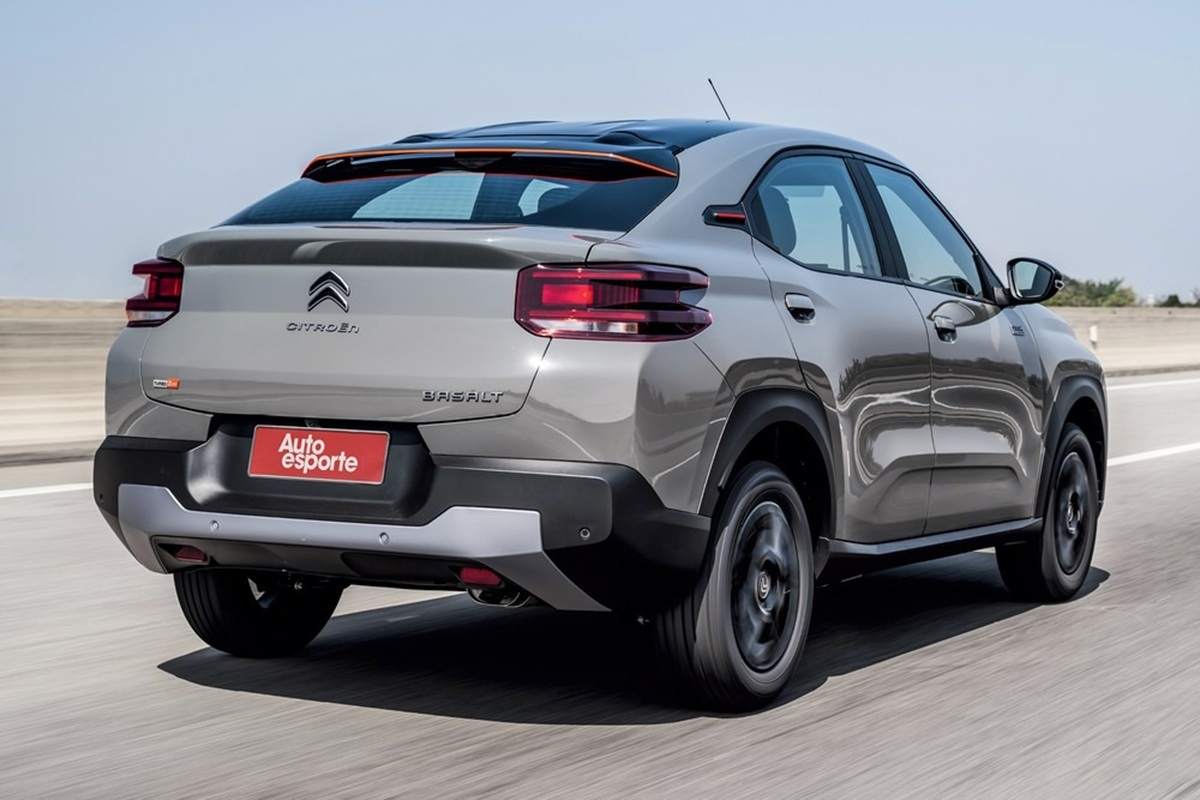

Citroën Basalt 2026 Maintains Initial Price, Gains Finish Improvements, and Offers More Interior Space than Creta and Tracker, Along with Modern Equipment.
The Brazilian compact SUV market is in a constant struggle for space, but Citroën decided to maintain an bold strategy in the 2026 lineup.
The Basalt arrives renewed, with new packages and finish improvements, but keeps the initial price of R$ 93,990, the same as the previous year.
This detail makes it the cheapest SUV in the country, an important asset in a segment where competition, such as the Hyundai Creta and Chevrolet Tracker, already operates at higher levels.
-
Practical Driving Tests in Brazil Surge by 23.5%, Exceeding 2.2 Million by 2026, as New Rules Make the Process Cheaper and Simpler

-
Brazil’s Lula Government Allocates $463 Million Quota for Electric Car Parts, Waives Import Tax Until December, Sparking Competition Among BYD, Automakers, and Unions as Consumers Question Impact on Prices and Local Industry

-
Thinking of Installing LED Headlights? Why Replacing Halogen Bulbs is Still Banned, the Glare Risks Authorities Worry About, and How a New Proposal Could Allow Certified, Safe Installations
-
2027 Toyota Corolla Cross Unveiled: New Design, Enhanced Fuel Efficiency, Reduced Maintenance Costs, Advanced Technology, Connected Services, and Up to 10-Year Warranty


In addition to maintaining the price, Citroën also bets on new versions and small changes that enhance the user experience.
The Basalt 2026 is, therefore, a rational purchase for those seeking value for money, reinforcing the brand image within the range of up to R$ 100 thousand.
New Dark Edition Version
The main highlight of the 2026 lineup is the debut of the Dark Edition, positioned above the Shine version.
This package adds a sportier and more sophisticated style, with black-painted emblems, wheels, roof, and spoilers, enhancing the look.
The strategy contrasts with the adventurous take of the Citroën C3 XTR, which also received updates in the new lineup.
Engines and Performance
Under the hood, the Basalt maintains the offer of two engine options. The entry-level Feel is equipped with a 1.0 naturally aspirated engine with 75 hp and 10.5 kgfm, considered the weak point of the range.
In tests conducted with the 2025 model, the SUV took almost 17 seconds to go from 0 to 100 km/h, a performance that earns it the title of slowest new car in Brazil.
On the other hand, the Feel Turbo, Shine, and Dark Edition versions receive the 1.0 turbo engine with 130 hp and 20.4 kgfm, paired with the CVT automatic transmission that simulates seven gears.
This configuration delivers performance more in line with the SUV’s size, while maintaining reasonable consumption figures: 12.1 km/l in the city and 13.7 km/l on the highway with gasoline. The naturally aspirated engine achieves better averages, with 13.2 km/l in urban cycle and 14.3 km/l on the highway.
Generous Dimensions and Leading Trunk Space
Despite the entry price, the Basalt 2026 impresses with its dimensions. With 4.34 meters in length and 2.65 m in wheelbase, it surpasses rivals in higher categories, such as Hyundai Creta and Chevrolet Tracker, offering more interior space.
Another strong point is the trunk capacity of 490 liters, one of the largest in the category, which enhances its appeal for families.
Equipment and Correction of a Longstanding Issue
Even in the simplest version, the Basalt delivers an interesting package of items. The entry-level model already comes with digital instrument cluster, 10.25-inch multimedia center, side airbags, alloy wheels, multifunction steering wheel, and rear parking sensor. Starting from the Feel Turbo, it also adds digital air conditioning, reinforcing the value for money compared to direct competitors.
Another highlight of the 2026 lineup is the correction of an ergonomic problem that had bothered customers since its launch.
The rear window buttons, previously poorly positioned on the central console, have finally been moved to the doors—a simple change, but one that significantly improves the driving experience.
Prices and Versions
The 2026 Citroën Basalt lineup consists of four versions, with prices ranging from R$ 93,990 for the entry option to R$ 114,990 for the top-of-the-line Dark Edition.
This variation offers consumers options according to their budget, without the model losing its main characteristic: being the most affordable SUV in the country.
Comparison with the C3 2026
While the focus is on the Basalt, it’s worth mentioning that Citroën has also updated the C3 2026, repositioning the hatch in the range between R$ 75 thousand and R$ 104 thousand.
The most notable new feature is the return of the adventurous version XTR, equipped with a 1.0 Firefly naturally aspirated engine with 75 hp and consumption of up to 14.5 km/l on the highway. Additionally, the C3 now offers the same digital cluster found in the Basalt, although limited to the more expensive versions.
Like the SUV, the C3 also received the correction in the position of the electric window buttons, although they are still not present on the rear doors.
With this, Citroën aims to address one of the most criticized points of the model and make it more competitive.
The Citroën Basalt 2026 reaffirms its position as the cheapest entry-level SUV in Brazil, a strategy that may appeal to consumers looking for a larger vehicle while staying within a budget of up to R$ 100 thousand.
The maintenance of price, combined with new features such as the Dark Edition, ample interior space, and ergonomic improvements, makes the model a solid option in the segment.
If the performance of the naturally aspirated engine remains a weak point, the turbo configuration balances the scale and ensures more versatility.
Thus, the Basalt continues to be a rational alternative amid increasingly expensive and sophisticated compact SUVs, consolidating Citroën’s proposal to deliver value for money and attract consumers in search of space, equipment, and competitive pricing.