






 Portuguese
  Spanish




Russia Shocked Analysts By Confirming That Its Most Modern Armored Vehicle, The T-14 Armata, Will Not Be Deployed For Combat. The Official Reason, The High Cost, Raises A Central Question About The Future Of One Of The Most Ambitious Military Projects In The World.
Announced as a game-changing weapon, the T-14 Armata was presented as the future of armored vehicles. However, the Russian supertank is conspicuously absent from the largest conflict in Europe in decades. An official statement from one of the most powerful figures in Russian defense finally revealed why, sparking a global debate: Is the T-14 Armata a true technological revolution or a piece of propaganda that has proven too expensive?
Why Is The T-14 Armata Not In Ukraine?
The confirmation came on March 4, 2024. During an interview, Sergei Chemezov, the head of the powerful state defense conglomerate Rostec, got straight to the point. He stated that the T-14 Armata is not in Ukraine and there are no plans to send it to the front lines. The justification given for keeping its most advanced weapon away from the battlefield was its high cost of construction, maintenance and operation.
The Innovations Of The T-14 Armata
The T-14 Armata program was born out of Russia’s need to regain technological leadership in armored vehicles, lost to Western tanks at the end of the 20th century. To that end, the project introduced radical innovations.
-
Brazilian Navy Demonstrates Strength in Naval Exercise with Over 20 Nations, Deploys Frigate Independência in Anti-Submarine and Air Defense Scenarios, and Joins Historic Formation with 26 Ships from 14 Allied Navies off the U.S. Coast

-
BAE Systems to Supply New Bofors 40Mk4 Cannons to the Brazilian Navy
-
Ukraine Bets on Swedish Gripen E Jets to Counter Russia, But 16 Fighters Won’t Arrive Until Late 2020s; Kiev to Use C/D Models for Pilot Training and Operations Amid Ongoing Missile and Drone Threats
-
End of an Era: US Navy’s C-2A Greyhound Makes Final Catapult Launch Before Retiring to Arizona Desert; Aircraft Supported Carriers in Wars and Humanitarian Missions for Nearly 60 Years


The main one is its fully automatic and unmanned turret. Unlike any other tank in service, the crew is protected in a armored capsule in the vehicle’s chassis. This design represents a tremendous advancement in safety, as it physically separates soldiers from the cannon and the ammunition storage. Additionally, the tank is equipped with cutting-edge sensors, new propulsion, and a modern combat management system.
A Timeline Of Uncertainties


The trajectory of the T-14 Armata is marked by grand promises and questionable results. Its debut in 2015 was overshadowed when one of the vehicles broke down during a parade. On that occasion, Russia announced an ambitious plan to acquire 2,300 T-14 armored vehicles by 2020, a target that was never met.
With the onset of the war in Ukraine, several claims of its use in combat emerged, both in Syria and on Ukrainian soil. However, Russian state agencies never provided videos or photos to verify the claims, fueling skepticism.
High Cost Puts The Tank’s Future In Doubt
Chemezov’s statement put an end to speculation. Although he insisted that the T-14 is completely superior to any other armored vehicle in the world, his conclusion was pragmatic. According to him, it is more practical, faster, and cheaper to buy T-90 armored vehicles or upgrade old T-72s. The decision leaves the future of the project open and prevents the world from seeing if the revolutionary T-14 Armata is indeed as lethal as its propaganda suggests.









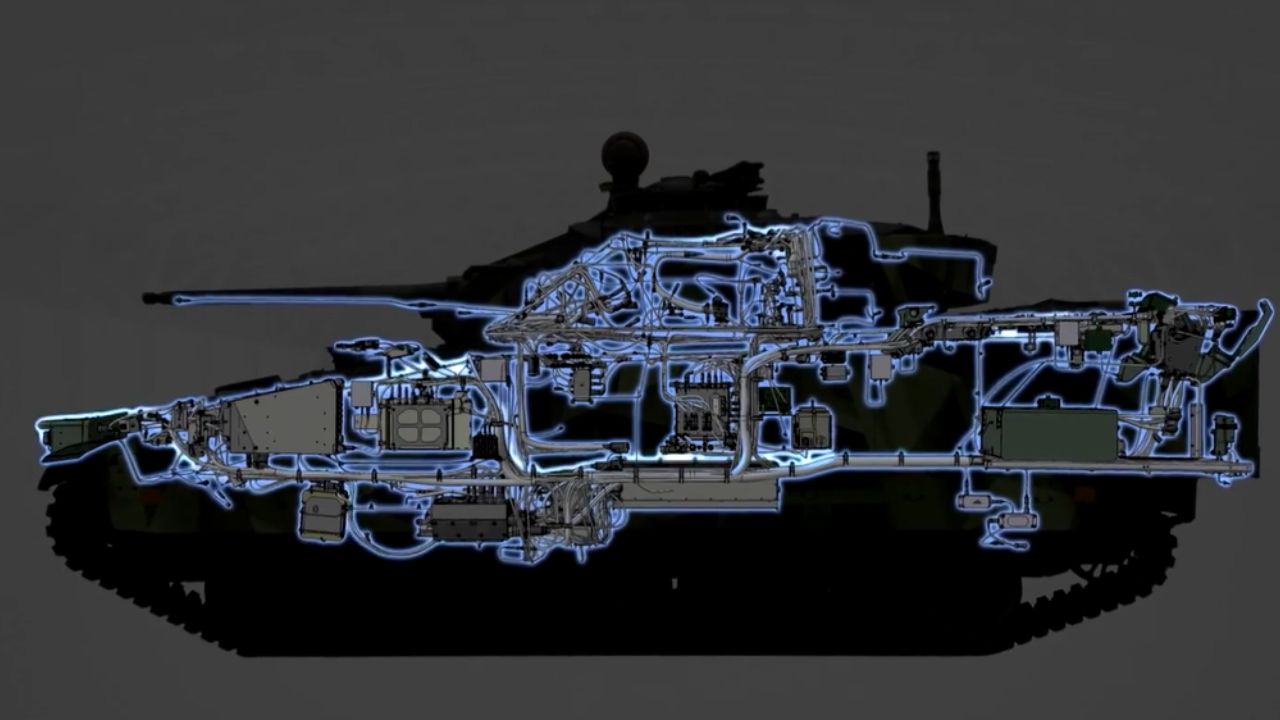
Btw, the thumbnail is a Swedish CV 90 IFV electrical system (it honestly looks like they gave a tank a central nervous system), not the T 14.
Cheio de componentes ocidentais produção paralisada e o risco de ser destruído é acabar o mito de melhor do mundo!