Portuguese
  Spanish


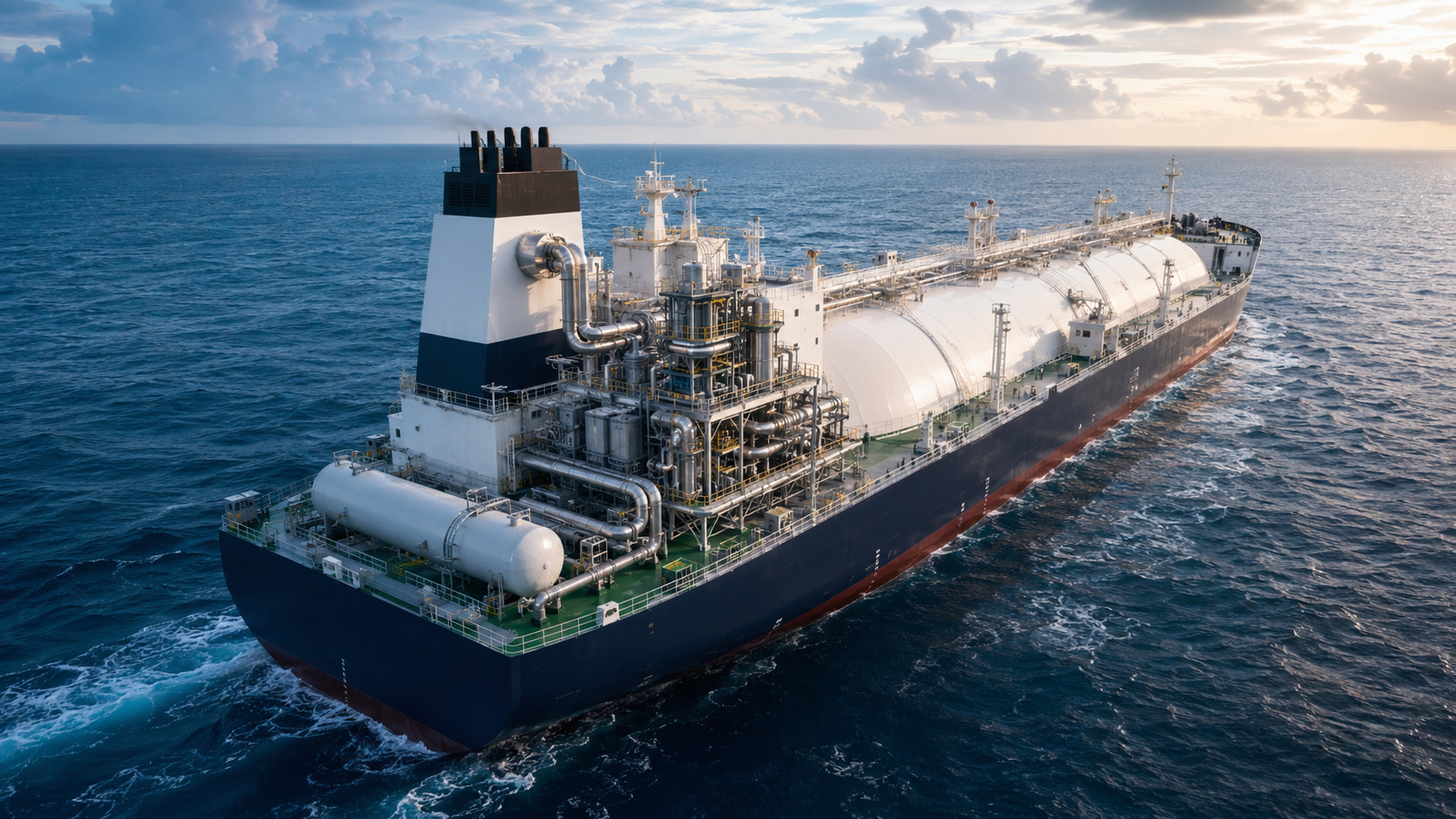

Carbon capture on ships removes CO2 from engines, transforms the gas into liquid, and keeps it in tanks until discharge. The test on Clipper Eris achieved 78% capture, but requires energy, deck space, and ports capable of receiving the material.
Instead of releasing all exhaust gases into the air over the ocean, the tanker ship Clipper Eris received a carbon capture factory on ships. The structure achieved 78% CO2 capture in a test and started storing the gas in large tanks installed on board.
The system began operating when Clipper Eris departed from Singapore in February 2025. The presentation was released by Wärtsilä, a technology company for the maritime sector, and Solvang ASA, a gas shipping company, at the technical seminar of the International Maritime Organization, a United Nations body for maritime navigation, on September 11, 2025.
It is not a filter attached to the chimney. Carbon capture on ships adds cleaning machines, a liquid that holds CO2, pipelines, cooling, and reservoirs. The process also consumes energy and uses space that would have other functions on the ship.
-
A 500 m² Automated Kite, Larger Than Many Apartments, Helps Propel Airbus Cargo Ship, Reducing Fuel Use

-
Floating Wind Farm in the Ionian Sea Alters Plans to Protect Ancient Greek Shipwreck with Over 300 Amphorae
-
Sunken Ships Near Israel and Southern France Carried Tin from Britain, Evidence of a 4,000-Kilometer Trade Route Supplying the Mediterranean 3,300 Years Ago
-
Robots Tested in the Atlantic to Inspect Offshore Turbines Without Initial Human Deployment


Why carbon capture on ships is not just a filter
The exhaust gases from the engines carry CO2, sulfur gases, and fine dust. Before separating the CO2, the factory installed on Clipper Eris treats this mixture, reduces the temperature, and removes some of the impurities.
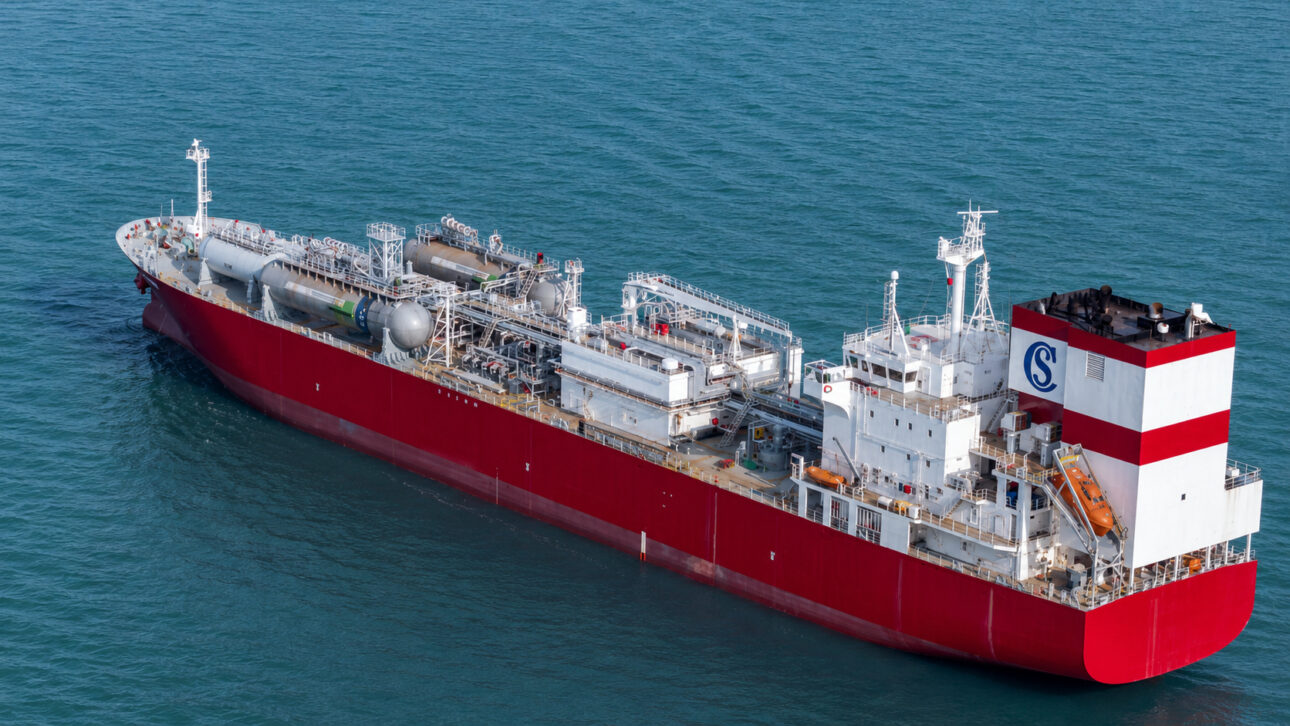
A common filter retains particles but does not solve the CO2 separation on its own. The gas needs to go through several stages until it becomes a material that can be carried on the ship without escaping back into the air.
Therefore, the structure includes cleaning and capture equipment, as well as pipelines to transport the CO2 to the tanks. The practical difference is significant: instead of only releasing the gases through the chimney, the ship tries to hold part of the CO2 before it exits.
From Smoke to Liquid CO2, How the Factory Installed on Deck Works
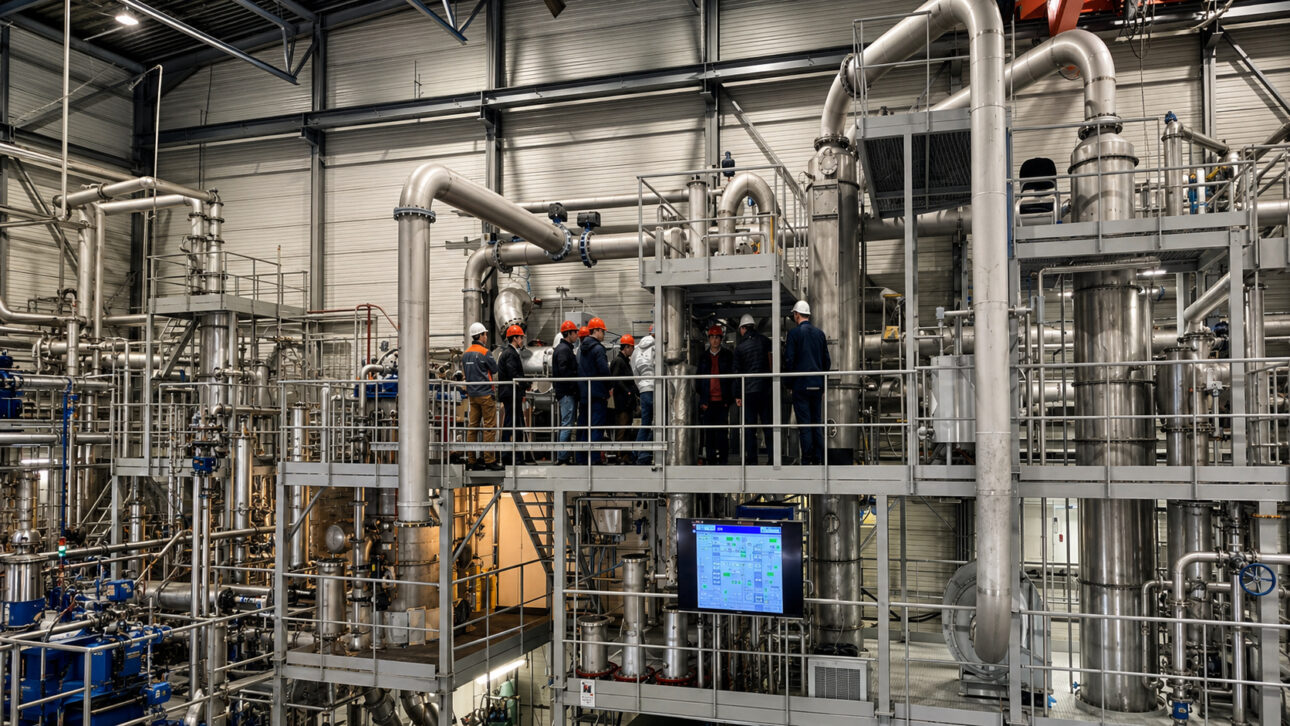
After the initial cleaning, the gases come into contact with a liquid called solvent, used to capture the CO2. The remaining part of the gases exits, while the liquid loaded with CO2 moves to another area of the system.
In this next step, the liquid is heated and releases the CO2 it had retained. Then, the gas is compressed, loses some of the water, and is cooled until it is ready for storage.
The CO2 is stored in liquid form, usually at 16 bar, a measure of pressure, and 26 °C below zero. This process explains why carbon capture on ships requires an entire factory, not just a small piece placed near the chimney.
Carbon Capture on Ships Occupies 2 Tanks of 350 m³ and Areas for Equipment
The total size of the installation was not provided in square meters. The clearest dimension appears in the 2 tanks of 350 m³ used to receive the liquid CO2, in addition to the equipment room and the area designated for gas handling.
The project considered 14 days of navigation before unloading the tanks. The operational goal was 75% capture, equivalent to about 50 tons of CO2 per day.
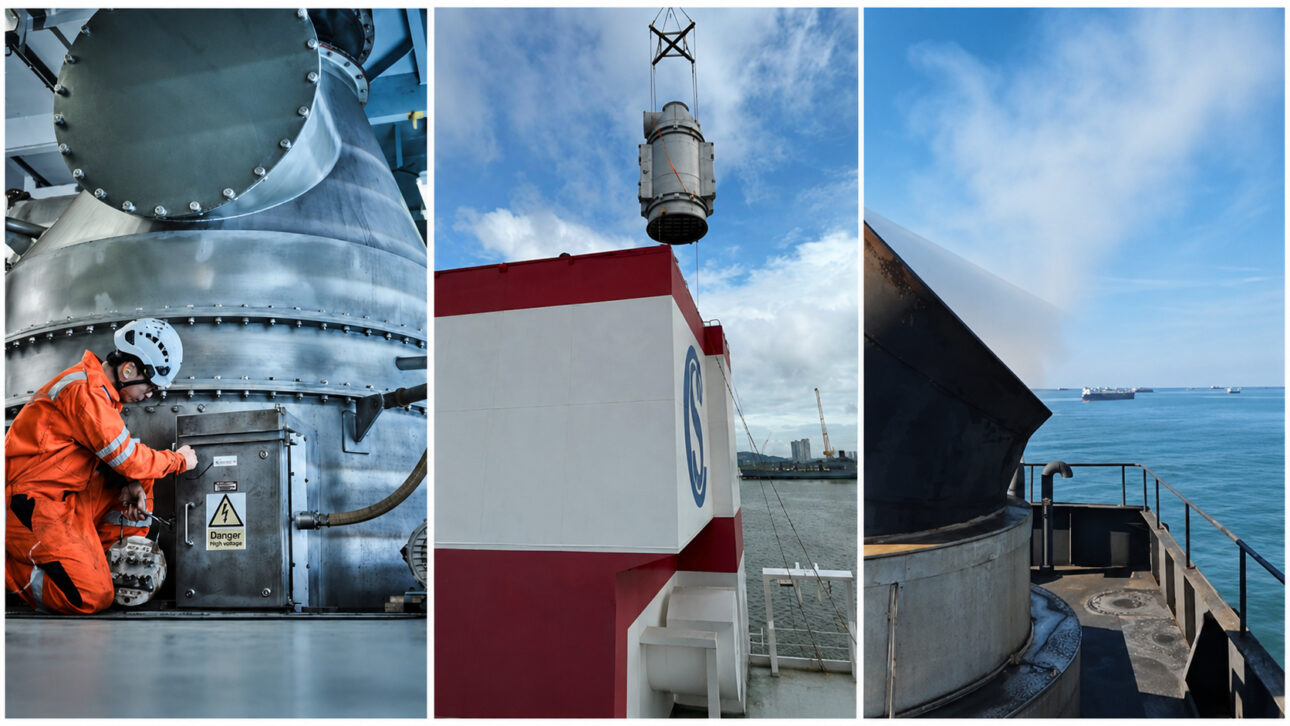
These numbers make it clear that space is not a minor detail. The reservoirs, machines, and connections need to be accommodated alongside other areas of a ship that also transports cargo.
Test in May 2025 Reached 78% and Produced 1900 kg/h of Liquid CO2
Performance tests took place from May 1 to 8, 2025. On May 2, the carbon capture unit on ships reached 78% capture and recorded 1900 kg/h of liquid CO2.
Wärtsilä, a technology company for the maritime sector, and Solvang ASA, a gas shipping company, reported that the system was still undergoing adjustments between the engine and the capture unit. The work also included tests of CO2 purity, energy consumption, and maintenance.
The result of 78% shows the performance achieved in that specific test. The rate may change because the engine’s operation and the heat available for the factory influence the separation of CO2.
CO2 needs to leave the ship at a terminal at the end of the journey
Capturing CO2 does not end the process. The gas remains in the tanks until it reaches a land terminal that can receive the material and direct the CO2 to a defined destination.
The planned route for the Clipper Eris includes transatlantic crossings, with unloading at both ends of the journey. The project also included the search for potential receivers of the captured CO2.
This creates an essential condition for carbon capture on ships. Without a structure to unload the gas, the tank capacity becomes a limit to the travel time.
Energy, maintenance, and ports define the limit of carbon capture on ships
The onboard factory uses extra energy to heat the liquid that traps the CO2, compress the gas, and perform cooling. It also depends on maintenance, CO2 quality control, and care with the liquid used in the capture.
The system can reduce a portion of the CO2 that would exit through the exhaust gases, but it does not eliminate all emissions from navigation. The total reduction of planet-warming gases also depends on sustainable fuels capable of reducing the problem before combustion.
The Clipper Eris demonstrates a full-scale installation already tested at sea. Even so, the technology only completes the cycle when there is space on the ship, energy to operate the factory, and land terminals to remove the CO2.
Carbon capture on ships transforms smoke into a cargo that needs to be handled from start to finish. The 78% test shows the system’s potential, but the tanks, energy, and land unloading define the size of the challenge.
In your opinion, is it more feasible to adapt existing ships or wait for fuels that emit less CO2? Leave your answer in the comments and share this publication.