Portuguese
  Spanish


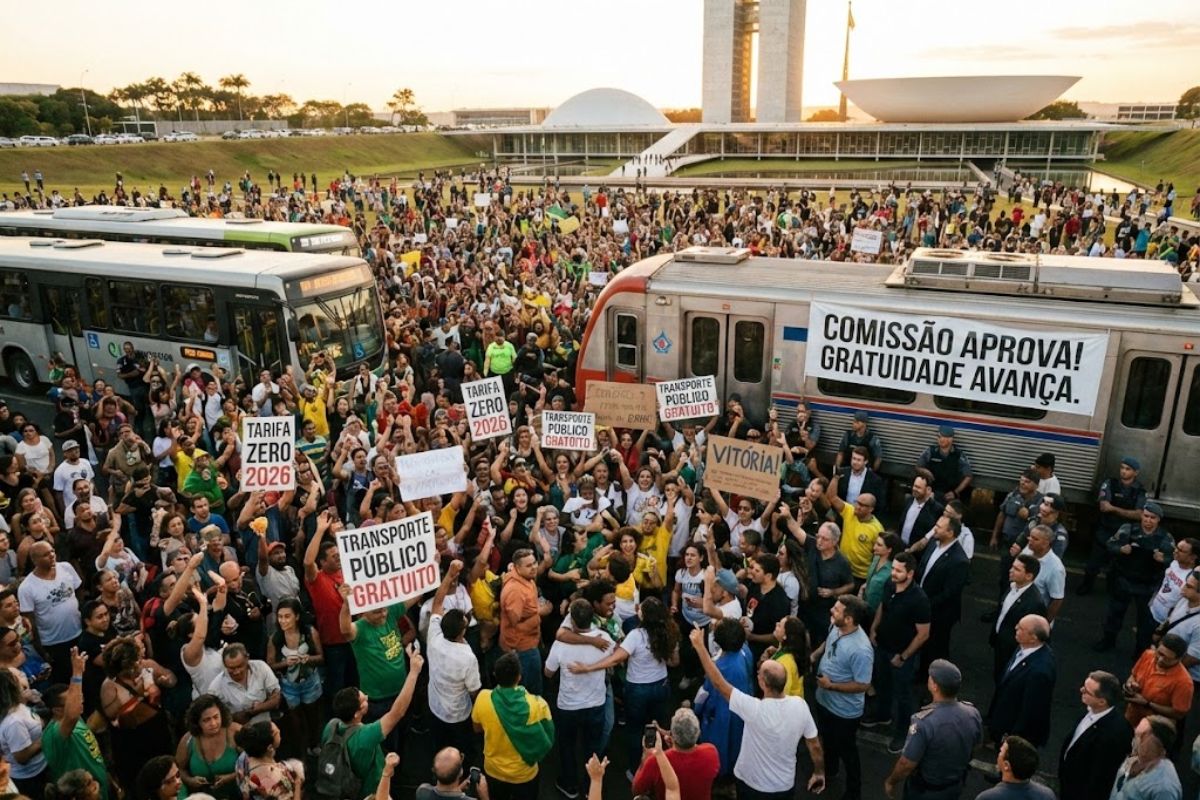

The Urban Development Committee Approved In December Bill 4436/25, Opening Legal Basis For Zero Fare On Buses, Trains And Other Modalities Starting In 2026. The Proposal By Duda Salabert Still Needs The Plenary Of The Chamber And The Senate, Focusing On Financing, Quality And National Political Struggle
The discussion about zero fare in public transport gained traction at the end of 2025, after the Urban Development Committee of the Chamber approved, in December, the Bill 4436/25, which creates legal bases for free public transportation on buses, trains, and other collective modalities starting in 2026.
Even with the advancement, the zero fare is not yet in effect. To become law, the text needs to pass through the plenary of the Chamber of Deputies and then the Federal Senate, in a process that tends to concentrate the political and economic clashes of the coming months, especially regarding financing and service quality.
What Was Approved And Why Did Zero Fare Return To The Center Of The Debate
The approval in the Urban Development Committee occurred in December and gave new impetus to the agenda of zero fare by establishing a legal framework so that states and municipalities can implement free transport without the risk of legal challenges.
-
Former Marketing Agency Owner Thrives on Foraging for 250 Days, Sampling Over 170 Plants, and Says He No Longer Remembers Supermarkets

-
IKEA’s AI Handles Nearly Half of Customer Calls, Company Reassigns 8,500 Staff as Design Consultants, Boosting Revenue by €1.3 Billion
-
Owner of Havan Visits Paraguay to Discuss Lower Taxes, Local Suppliers, and International Expansion with President

-
Brazilian Construction Retail Chain Closes After 60 Years, Begins Liquidation Sale Across Five Cities




The approved project is the Bill 4436/25. The proposal treats the change as a structural reorganization of the cost model, by dissociating the individual fare from the financing of the system, formally paving the way for Zero Fare on buses, trains, and other collective modalities.
Who Proposed The Change And What Is The Logic Behind Bill 4436/25
The Bill 4436/25 was authored by Representative Duda Salabert (PDT-MG). The central axis is to reposition public transport in Brazil as a social right, similar to essential services like health and education, reinforcing legal security for the adoption of free systems.
In practice, this means that free transportation stops being treated as a local exception or isolated municipal policy and gains specific legal basis, which can change the decision-making environment of state governments and city halls that currently avoid the model due to legal insecurity.
What Is Still Needed For Zero Fare To Become Law In 2026
Despite the approval in committee, the zero fare depends on two decisive legislative steps:
Approval In The Plenary Of The Chamber Of Deputies
Approval In The Federal Senate
The processing “will take time” and the described scenario is one of intense debate in the coming months, with political and economic disputes surrounding funding sources and the operational impact of free services on urban systems.
Expected Impacts Of Zero Fare According To The Proposal
The expectation indicated for the zero fare is that the model can:
Expand access to the population for transportation
Reduce the use of private cars
Improve traffic in large cities
Contribute to decreasing urban pollution
The central point is that having free transport tends to change the pattern of commuting, especially in areas where the fare costs limit mobility for low-income workers, students, and unemployed individuals.
Cited Experiences And The Warning About Service Quality
The material mentions that experiences already adopted in Brazilian cities indicate that Zero Fare usually provokes a significant increase in the number of passengers, with the greatest impact found specifically among low-income workers, students, and unemployed individuals.
At the same time, experts highlight two factors as decisive for the success of the model:
Maintenance of service quality, to avoid overcrowding and reduced supply
Definition of sustainable funding sources, with possibilities cited such as public subsidies, mobility funds or alternative revenues
Without these two pillars, the increase in demand can lead to operational pressure, worsening frequency, overcrowding, and predictability, reducing social support for the very zero fare.
Financing And The Political Argument Behind Zero Fare
The debate about funding appears as the most sensitive point in the legislative journey. One of the cited defenders is Representative Jilmar Tatto (PT-SP), who holds a central political argument: transportation would be the only essential service expected in the Constitution that the citizen pays directly to use.
This framing helps explain why the text tends to divide positions in Congress: on one side, the view of transport as a social right; on the other, the demand for a “clear” funding source and guarantees of quality to prevent free transportation from becoming a more crowded and worse system.
In his view, the zero fare should first advance with direct public funding or with funds and alternative revenues before promising national free services?
Follow the upcoming votes in the plenary and in the Senate, and if you use public transport, it’s worth observing how the debate on funding and quality can change the service in your city in 2026.