Portuguese
  Spanish


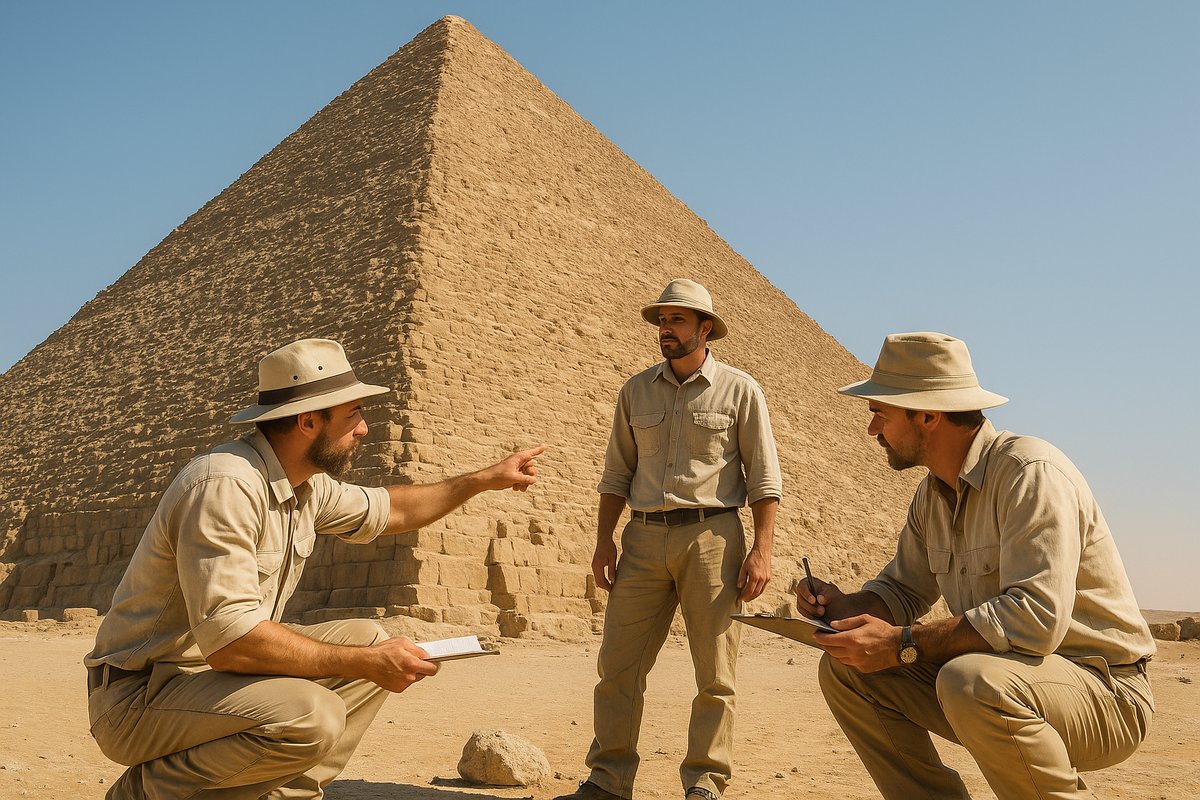

Modern Technology Reveals Invisible Detail That May Explain Why The Construction Has Survived Intact For More Than 4,500 Years In Egypt
A surprising revelation about the Great Pyramid of Giza in Egypt has intrigued scientists and archaeology enthusiasts around the world.
Researchers have confirmed that the monument, considered one of the seven wonders of the ancient world, has eight sides, not just four, as many previously believed.
Modern technologies, such as laser scanning, drones, and photogrammetry, have revealed this subtle structural detail in recent decades.
-
Brazilian Artisan Transforms Forest Waste into $400 Necklaces Sold at MASP and Exported to London

-
Retired Engineer Transforms Boeing 727 into a 99 m² Home in the Brazilian Forest

-
European Country Achieves 100% Glass Recycling and 52% Municipal Waste Recovery, Highlighting Brazil’s Challenges Despite Selective Collection in 60.5% of Cities
-
Facing extreme heat, floods, and disappearing fertile soil, Pakistan launches a “10 Billion Tree Tsunami” in three years to combat desertification, protect rivers, create green jobs, and make reforestation a national survival priority.


Aerial images have exposed depressions in the center of each face of the pyramid. These cavities divide the surfaces into two segments, forming an ingenious and nearly imperceptible octagonal structure from the ground.
Studies Indicate That Depressions Were Planned
In 2023, Kanagawa University in Japan published research indicating that these concavities did not arise from erosion or construction faults, as previously speculated.
Experts demonstrated that the pyramid’s builders purposefully created the concave sides in order to enhance the stability of the structure.
The research team concluded that this geometry better distributes compression forces, strengthening the structure against earthquakes, heavy rains, and intense winds.
Furthermore, the design optimizes the pyramid’s durability over time, which is essential to withstand the severe conditions of the Egyptian desert.
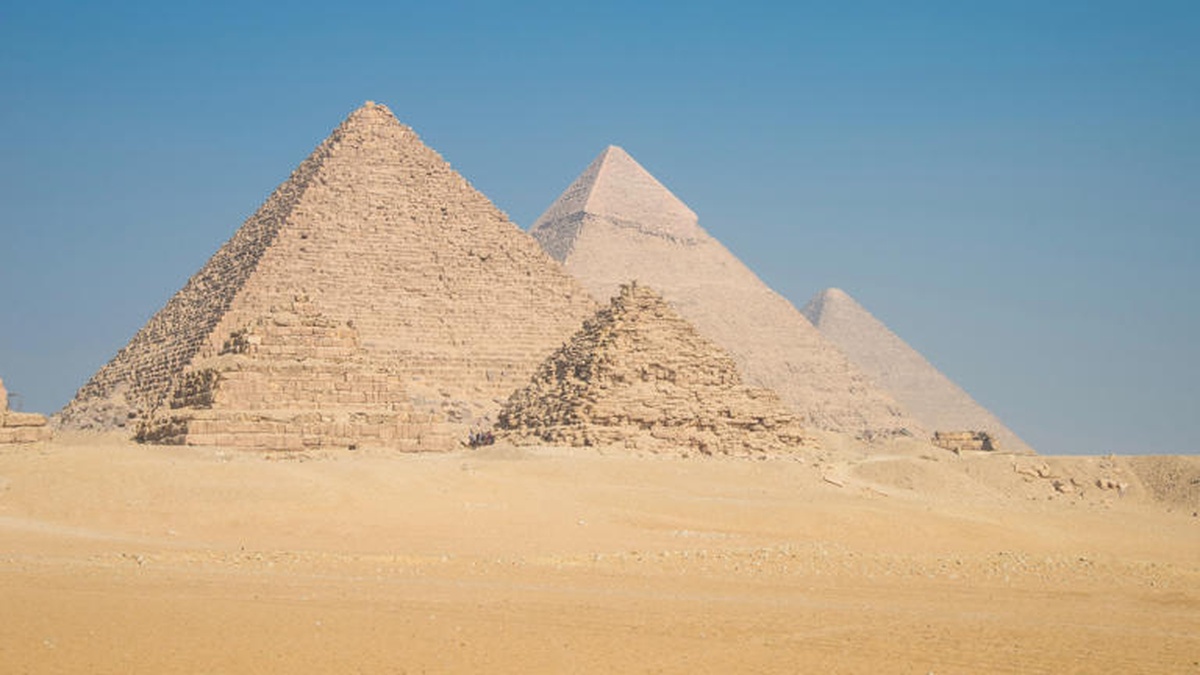
Structure Survived More Than 500 Severe Weather Events
During the reign of Pharaoh Khufu, around 2,560 B.C., Egyptian engineers built the pyramid with over 2.5 million stone blocks, each with an average weight of more than two tons.
Since then, the monument has faced over 500 severe storms, in addition to earthquakes and natural erosion.
Even after 4,500 years, the structure remains solid, which impresses engineers and archaeologists alike.
The Egyptian Antiquities Institute stated that the octagonal shape directly contributed to its durability, reinforcing the role of engineering as a decisive factor in the pyramid’s longevity.
Modern Technology Unveils Ancient Mystery
In 1883, British Egyptologist Flinders Petrie suggested that the pyramid had eight sides. However, confirmation did not come until recent decades, with advances in technology.
Drones and optical scanners captured high-resolution aerial images, which allowed for the observation of a curvature of up to two meters in the center of each face.
These depressions remained invisible to those viewing the pyramid from the ground, which explains the ignorance for so long.
By reinterpreting the shape as an architectural solution rather than an imperfection, researchers have come to value even more the technical mastery of the Egyptians.
Discovery Highlights The Technical Knowledge of Ancient Egypt
The octagonal shape has sparked international interest and revived studies on the architectural precision of the pyramids.
The Archaeology Department at Cairo University emphasized that the Egyptians, even without modern instruments, applied complex mathematical calculations and advanced geometric planning.
This engineering astonishes even contemporary standards. Therefore, experts classify the pyramid as a supreme symbol of millennia-old structural reasoning.
Moreover, the design reflects a long-term vision of the ancient engineers, who considered durability, strength, and functionality.
What Else Is Hidden Under The Stones of Giza?
The pyramid still hides mysteries. Experts continue to explore technical and structural details with increasingly precise technologies.
With each discovery, the world recognizes that the Egyptians mastered concepts of physics, geometry, and construction far beyond their time.
As new analyses advance, the question remains:
What other secrets lie beneath the stones of the world’s most famous pyramid, waiting to be revealed?