Portuguese
  Spanish


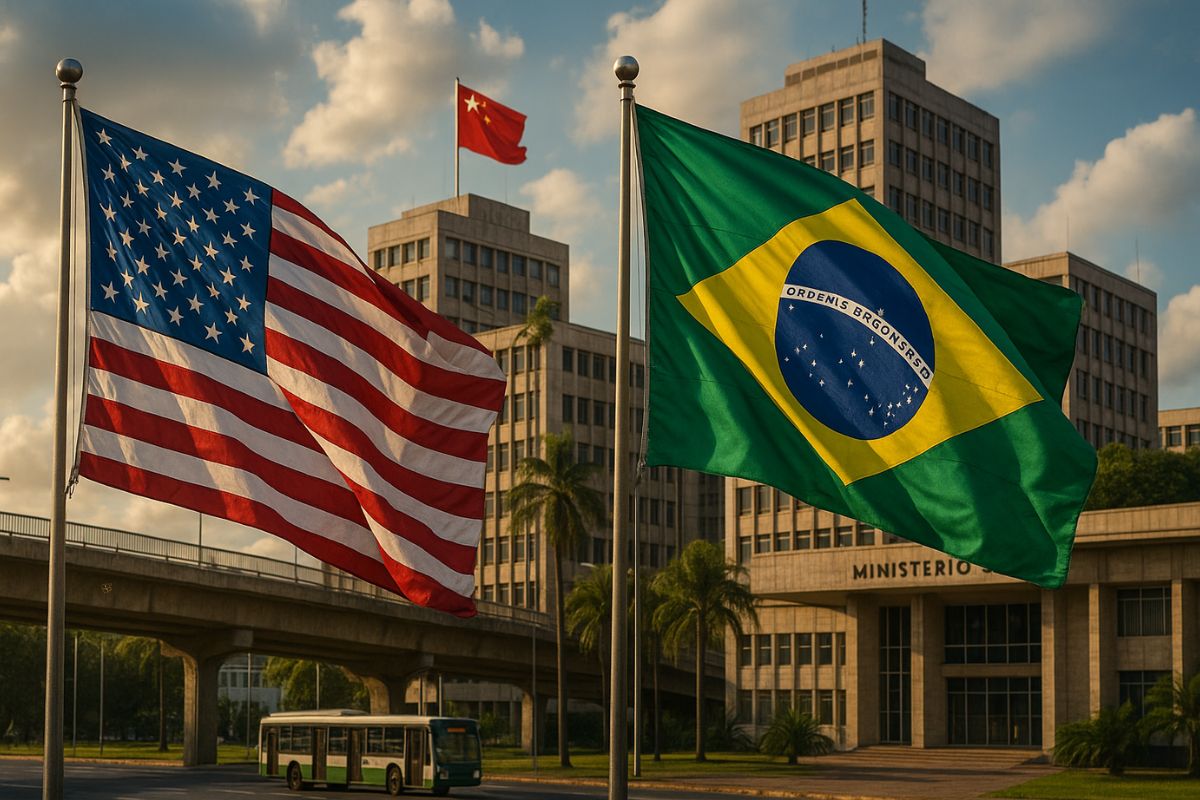


On A Visit To Washington, Foreign Minister Mauro Vieira Participates In A Deciding Conversation With Marco Rubio, Trump’s Envoy, In Search Of Tariff Relief For Brazilian Exports, While The United States Conditions Concessions On Changes In Brazil’s Posture Towards China, The Agenda Of Freedom Of Expression, And Sensitive Topics Such As Sanctions And Security Cooperation
The Brazilian government is trying to unlock an urgent tariff relief for sectors such as steel and agro-exports. In Washington, Mauro Vieira meets with Marco Rubio, chosen by Donald Trump to lead the dialogue, in an environment of tension fueled by punitive tariffs and political disputes that overflow into trade. The Brazilian mission is to reduce the immediate cost of barriers and open a channel for conflict management that avoids new escalations.
According to lawyer Davi Aragão, the American counterpart places a political price. Based on what is discussed behind the scenes, the package formats concessions around tariff relief linked to commitments for greater distancing from China, advancements in cybersecurity cooperation, and clearer positions on regional issues. The reading from Brasília is that this round has geopolitical weight and could set the stage for a high-level meeting between presidents.
Who Is Pressuring And Why
The choice of Marco Rubio, a hardline senator, signals that the White House sees the conversation as going far beyond trade spreadsheets.
-
Lufthansa CEO Jens Ritter Takes on Flight Attendant Role, Uncovers Overlooked Issue in Economy Class

-
7-Year-Old Estela Wins Ballet Qualifier; Family Crowdfunds for Argentina Finals in October

-
Before taking over as CEO of Starbucks, Laxman Narasimhan spent about six months training as a barista and committed to working a half shift each month to stay connected to the store floor.
-
After Selling Meetup for $200 Million, Founder Scott Heiferman Spent Nine Months Working at an Amazon Distribution Center to Reconnect with the Everyday Worker


For Washington, the dispute is strategic and involves reducing Chinese influence in the largest market in South America.
The envoy comes with a history of supporting sanctions and using tariffs as a diplomatic lever.
On the Brazilian side, the urgency is economic. High tariffs hit exporters’ margins, increase costs of contracts, and pressure production chains.
Diplomacy seeks to separate what is technical from what is political, but acknowledges that the table has been set with conditions.
The direction of the wind today is one of explicit linkage between trade and alignments.
What Is On The Negotiating Table
Brazil requests immediate tariff relief and predictability for 2025.
The Brazilian proposal includes a bilateral mechanism to address disputes, reduce noise, and provide transparency for potential safeguards.
The logic is simple: less surprise, more rules.
The United States links the lifting of tariffs to concrete deliveries.
Among them are commitments to diversification of critical suppliers, cybersecurity cooperation, and regional positions.
Also on the radar are topics related to freedom of expression and regulatory debates currently affecting digital platforms. The message is that tariffs have become a geopolitical currency.
The Role Of Brazil Between China And The United States
China is Brazil’s largest trading partner. Abruptly breaking ties would be economically costly, as well as unrealistic.
The point that arises in the negotiation is to calibrate dependencies, map risks, and broaden supply redundancies without blowing up strategic bridges. For Brasília, the watchword is autonomy.
In practice, this means signaling risk governance in sensitive projects, strengthening compliance in critical technologies, and broadening the investment spectrum.
Brazilian economic diplomacy seeks to sell predictability: commitment to rules, gradual opening, and defense of national interests, without joining automatic blocs.
What Changes With Immediate Tariff Relief
A quick tariff relief reduces price uncertainty, improves cash flow for exporters, and sustains jobs in industrial and agricultural chains.
The normalization of deadlines and logistics costs tends to unlock suspended contracts and reopen negotiations stalled by the tariff premium.
In the short term, the victory would be more political than accounting.
It would signal that there is still room for pragmatism, even in a global cycle of re-shoring and technological competition.
In the medium term, the continuation of this relief will depend on the fulfillment of commitments and the quality of the bilateral channel created now.
Scenarios For Brazilian Diplomacy After The Meeting
If there is tariff relief with gradual countermeasures, Brazil gains time to execute a diversification and regulatory reinforcement agenda without shocks.
The collateral benefit is reanchoring the predictability of foreign trade, a central condition for investment.
If the round gets stuck, the risk is tariff hardening accompanied by new political pressures.
In this scenario, Brazil would have to accelerate alternative markets and regional compensation mechanisms, in addition to strengthening trade defense instruments. The cost would be higher, and the maneuvering space lower.