Portuguese
  Spanish


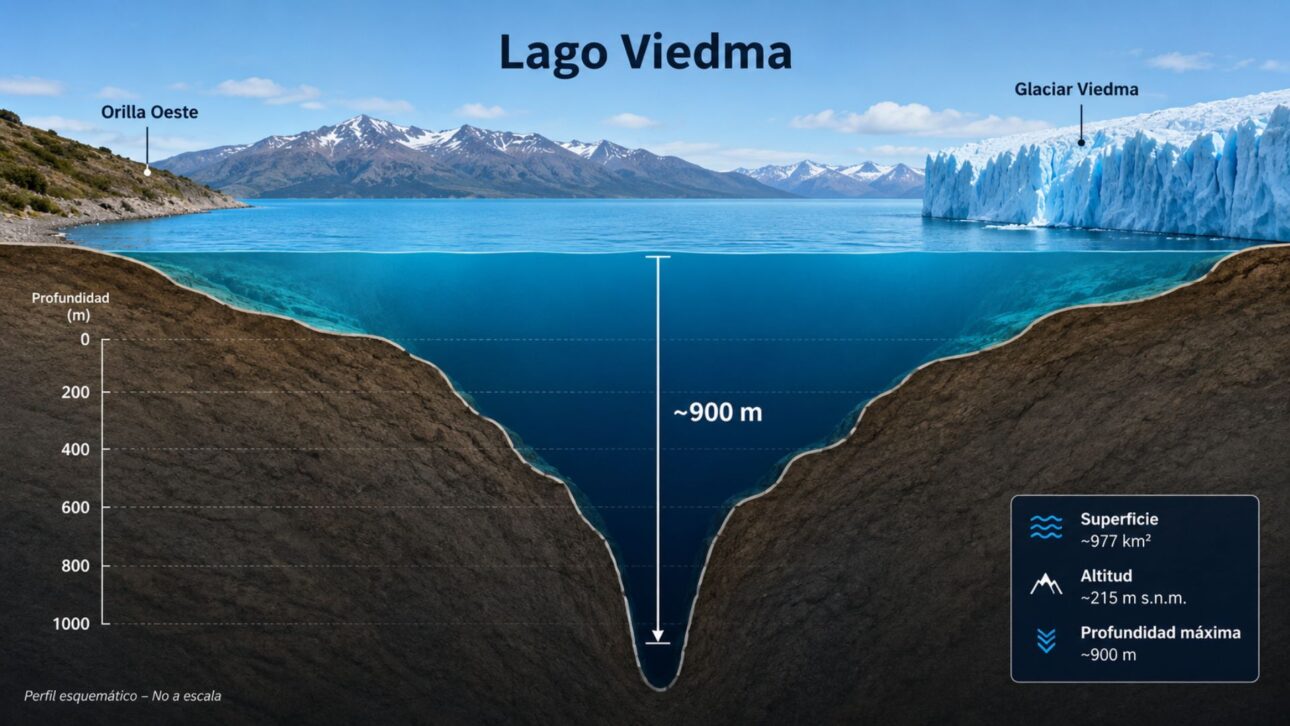
In the Argentine Patagonia, the melting set a record. By retreating more than 3.5 km, the Viedma glacier exposed a trench of about 900 meters at the bottom of Lake Viedma. Measurements by CONICET confirmed: it is the deepest in America and the fifth deepest in the world.
Beneath the ice of Patagonia lay a secret of colossal proportions. When the Viedma glacier began to retreat rapidly, it exposed a depression nearly 900 meters deep, a submerged abyss so deep it could swallow two or three skyscrapers stacked inside it. What seemed like just another mountain lake held, at its bottom, a continental record.
According to the CONICET, the national science council of Argentina, the measurements left no doubt about the size of the find. Lake Viedma, in the province of Santa Cruz, was confirmed as the deepest in America and the fifth deepest on the planet, a title that only came to light because the glacier’s retreat allowed, for the first time, mapping of areas previously inaccessible under the ice mass.
The record that was hidden under the ice
The story has the flavor of a discovery from another century, but it happened now. For a long time, much of the bed of Lake Viedma remained literally covered by the glacier’s front, out of reach of any measuring instrument. It was only with the ice’s retreat that scientists could bring their equipment there and reveal that this water concealed one of the greatest lacustrine depths in the world, a fact that rewrote the geography of the Americas.
-
Xiaomi Unveils Smart Pressure Cooker That Cooks Meat Up to 40% Faster

-
Antarctic Mystery: Study Uncovers Over 500 Hidden Earthquakes 150 km Deep, Challenging Traditional Theories
-
Excavation for Solar Park in Germany Uncovers Rare Celtic “Princely Tomb” with Elite Warrior Buried with Gold, Weapons, Etruscan Jug, and Two-Wheeled Chariot in Bad Camberg

-
NOAA Scientists Discover Mysterious, Perfectly Aligned Holes on the Mid-Atlantic Ridge Seafloor, Origin Still Unknown



The most impressive thing is that the record was not created, but unveiled. The trench of nearly 900 meters probably existed for a long time, sculpted over geological ages by the action of the ice itself, but remained hidden and unknown. By exposing this deep scar in the landscape, nature turned Lake Viedma into the deepest in America almost overnight, at least from the perspective of human knowledge about it.
How the Viedma glacier retreated and revealed the trench
The Viedma glacier, part of the gigantic Southern Patagonian Ice Field, has retreated more than 3.5 kilometers in recent years, losing about 5.5 square kilometers of ice just since 2014. This melting opened a physical and scientific window, exposing a portion of the lake that had been sealed under the Viedma glacier for an indeterminate time.
The retreat numbers show a process that has been accelerating. Estimates indicate that the glacier front retreated about 84 meters per year between 1984 and 2010, a rate that jumped to nearly 281 meters per year between 2010 and 2016, more than tripling in a few decades. It is this increasing speed of melting that directly links the behavior of the Viedma glacier to the revelation of the trench, because each meter of lost ice unveiled a new piece of the bottom to be measured.
900 meters: the trench that crowned Lake Viedma
To gauge the achievement, it is worth translating the 900 meters into concrete images. This depth is equivalent to almost a kilometer vertically, deep enough to submerge entire medium-sized mountains and leave only the summit exposed. With this mark, Lake Viedma assumed the position of the deepest in America, surpassing the depth that until then was attributed to other large lakes on the continent, including those in Patagonia itself.
More than a regional champion, the lake entered the world elite. The measurements placed Lake Viedma as the fifth deepest in the entire planet, in a list dominated by colossi like Baikal in Russia and Tanganyika in Africa. That a glacier-fed lake at the southern tip of South America ranks among the five deepest in the world is the kind of data that puts Patagonia back on the map of the planet’s great natural wonders.
How science measured: bathymetry and sonar
None of this would be possible without the right technology pointed at the right place. The confirmation of the depth came from bathymetry studies, the science that measures the depth of water bodies, conducted with sonar equipment that scanned the lake’s bottom. In 2022, these measurements determined the trench of about 900 meters with minimal margin of error, transforming a suspicion into a solid and verifiable number about Lake Viedma.
The work was the result of a significant scientific collaboration, not an isolated measurement. The research brought together experts from CONICET, the International Center for Earth Sciences of Argentina, and the University of Chile, under the coordination of names like researcher María Gabriela Lenzano. This joint effort linked the depth record to the recent behavior of the glacier, giving the CONICET announcement the rigor needed to be taken seriously worldwide.
The dark side of the record: what the melting reveals
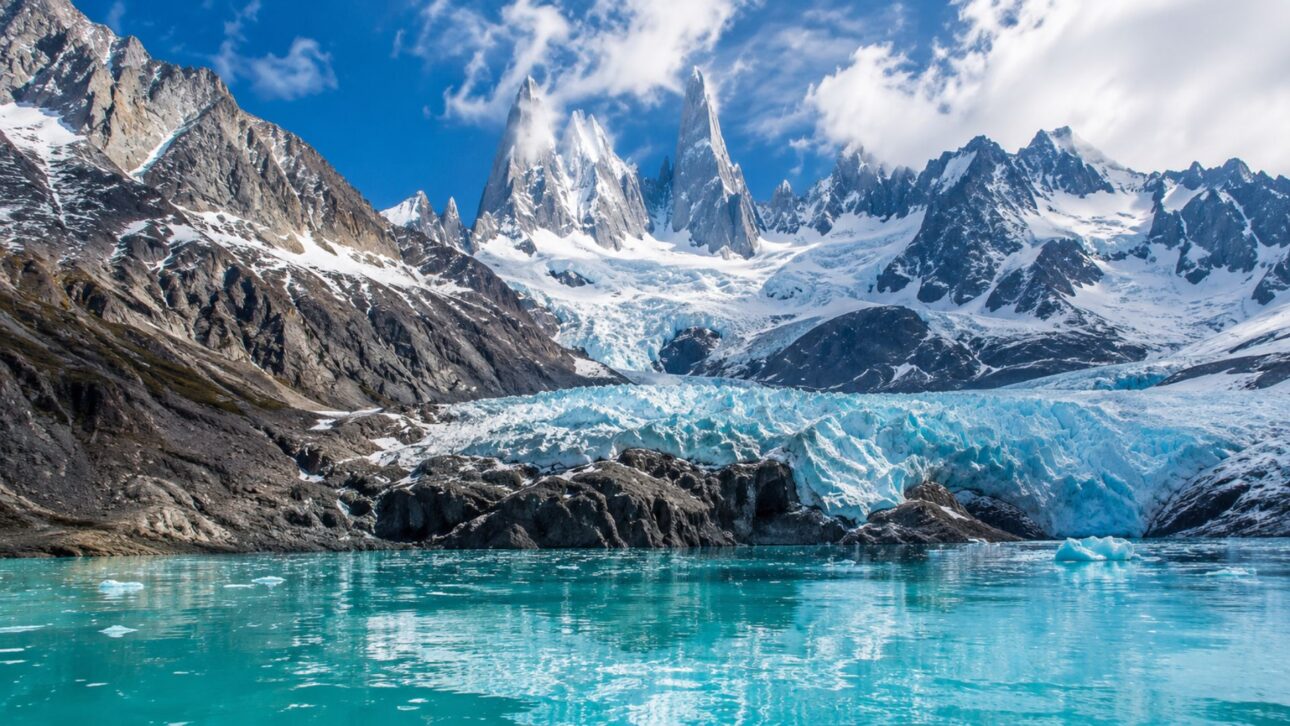
Behind the excitement of the record, there is a message that cannot be ignored. The same retreat that allowed the discovery is also a symptom of the shrinking Patagonian glaciers, a phenomenon scientists associate with global warming. In other words, the trench of Lake Viedma only became visible because the Viedma glacier is losing ice at an increasingly rapid pace, and this is the less celebratory side of the whole story.
It is necessary, therefore, to temper the celebration with a dose of reality. A fascinating scientific discovery and the advance of melting are, in this case, two sides of the same coin, and addressing only the record would be telling half the story. The deepest Lake Viedma in America is, at the same time, a revealed natural wonder and a concrete marker of the transformation that glaciers are undergoing, a reminder that not every spectacular novelty is, in essence, good news.
Why the discovery matters to science
Besides the symbolic impact, the finding has practical value for those studying the planet. Mapping the trench of Lake Viedma helps scientists understand how glaciers sculpt the landscape, how lake basins form, and how water behaves in these extreme environments. Each new bathymetry of a place like this feeds models about the Southern Patagonian Ice Field, freshwater reserves, and the dynamics of melting in the region.
There is also the gain of knowledge about one of the world’s most admired natural settings. Lake Viedma is located within Los Glaciares National Park, a protected area and famous tourist destination for its glacial beauty. Knowing that this postcard holds the deepest lake in America adds a layer of scientific fascination to an already iconic place and reinforces why Patagonia continues to be an open-air laboratory for climate and ice science.
What the Case of Lake Viedma, the Deepest in America, Shows
The revelation of the Patagonian trench is one of those stories where nature and science meet spectacularly. It shows how the retreat of a glacier can unveil a hidden record and transform Lake Viedma into the deepest in America and the fifth on the planet, a feat confirmed rigorously by CONICET measurements. Still, it’s wise to remain grounded in the face of some circulating exaggerations: numbers like a supposed exact age for the trench should be treated with caution, because what science confirmed with certainty was the depth, not a precise date for the abyss.
The balance between enchantment and caution is the most honest reading of the case. The record of Lake Viedma is real, measured, and impressive, but it was born from a thaw that also raises an alert about the future of glaciers. Still, few episodes summarize so well how the planet still holds colossal surprises: it only took the Viedma glacier to retreat more than 3.5 kilometers to reveal, under the ice, the 900-meter trench that crowned the deepest lake in America.
And you, did you imagine that one of the deepest lakes in the entire world was hidden right here, at the southern tip of South America? Comment here if discoveries like that of Lake Viedma, the deepest in America, make you more fascinated by nature or more concerned about the pace of glacier melting.