Portuguese
  Spanish


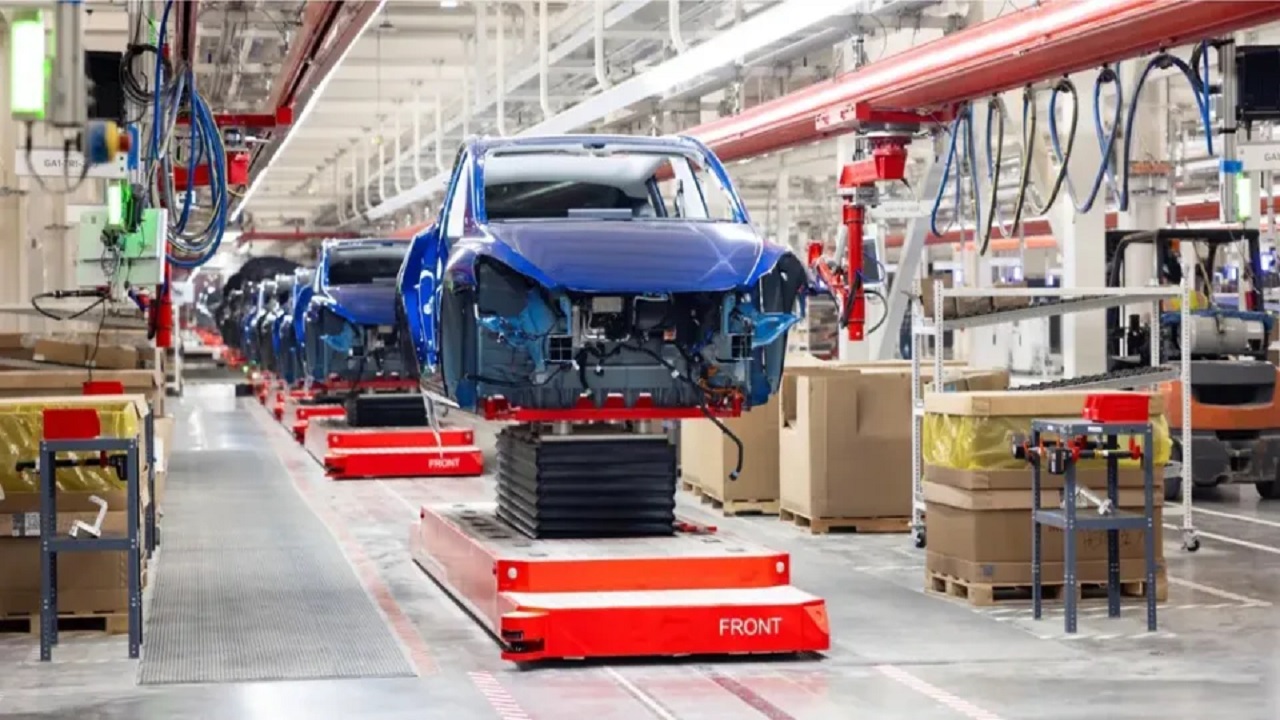

Tesla Announced It Will Use A New Type Of Magnetic Motor In Its Electric Cars To Replace Rare Earth Elements.
Tesla’s CEO, Elon Musk, revealed this week that his engineers are working on a new permanent magnet motor without rare earth elements for electric cars. Due to the difficulty in acquiring supplies and the fact that China is responsible for a large part of global production, rare earth elements are a friction point in electric car supply chains.
Understand More About Rare Earth Elements And Their Use
The importance of rare earth elements is undeniable, especially in light of the current Biden administration’s push to encourage production of materials for electric car components in the United States. However, there are still many misconceptions about what rare earth elements are and the exact quantities used in electric vehicles like those produced by Tesla.
In fact, rare earth elements are often absent from lithium-ion batteries. Electric car motors use rare earth elements instead of batteries. The most popular is neodymium, used to generate strong magnets for these electric drives, speakers, and hard drives. Neodymium magnets often contain additions of terbium and dysprosium.
-
British Factory Transitions from Mechanical Parts to Producing 420,000 Electric Power Units Annually, Supplying 70% of Ford’s Electric Cars Sold in Europe

-
BYD’s Dolphin Mini Becomes Electric Vehicle Sensation in Brazil, Surpassing 300,000 Sales with Major Factory and Retail Leadership
-
Toyota Shifts from Hybrid Cars to Electric Air Taxis with Joby’s 6-Rotor Aircraft, Capable of 322 km/h, Aiming for Mass Production to Electrify Urban Skies

-
Ferrari Unveils Limited Edition 12Cilindri Manuale: 6.5-Liter V12, 830 HP, 0-100 km/h in 2.9 Seconds, Top Speed Over 340 km/h, Only 1,499 Units Available




Not All Electric Car Motors Use Rare Earth Elements and Tesla uses them in its permanent magnet DC motors, but not in its AC induction motors. Tesla models were initially powered by AC induction motors, which do not use rare earth elements.
Nikola Tesla, responsible for developing the AC induction motor, is actually the source of the company’s name. However, when the Model 3 was launched, the company revealed a new permanent magnet motor and later began using it across all of its other vehicles.
Tesla Reduces Use Of Rare Earth Elements By 25%
Recently, Tesla announced that by improving the efficiency of their transmission system over the last 5 years, they have been able to reduce the use of rare earth elements by 25% in their new Model 3 drive units.
However, it now seems that Elon Musk’s company is trying to combine the best of both worlds using a permanent magnet motor without rare earth elements. Tesla was vague when asked about the precise materials it employs, perhaps seeing this data as a trade secret it does not wish to disclose.
Nonetheless, the first number likely represents Neodymium, and Terbium and Dysprosium may be the remaining ones. Regarding the next magnetic motor for electric cars, the company’s image indicates that it will not use rare earth elements.
Neodymium permanent magnets have been the standard for such applications, but over the last decade, research has focused on other possible materials that could replace them. Tesla has not revealed which it plans to use, but it seems close to making a choice, or at least believes that a better option will be found soon.
Tesla Studies Possibility Of Acquiring Sigma Lithium
Tesla, owned by billionaire Elon Musk, is focusing on Brazil, but not as a market for selling electric cars. In fact, the American company is studying the possibility of acquiring Sigma Lithium Corp, which is engaged in lithium extraction in Minas Gerais.
According to reports, Tesla has been evaluating the purchase of the mining company Sigma Lithium, which operates in northeastern Minas Gerais, focusing on electric car battery production. The main reason is the high global demand for lithium, essential for battery production.