






 Portuguese
  Spanish


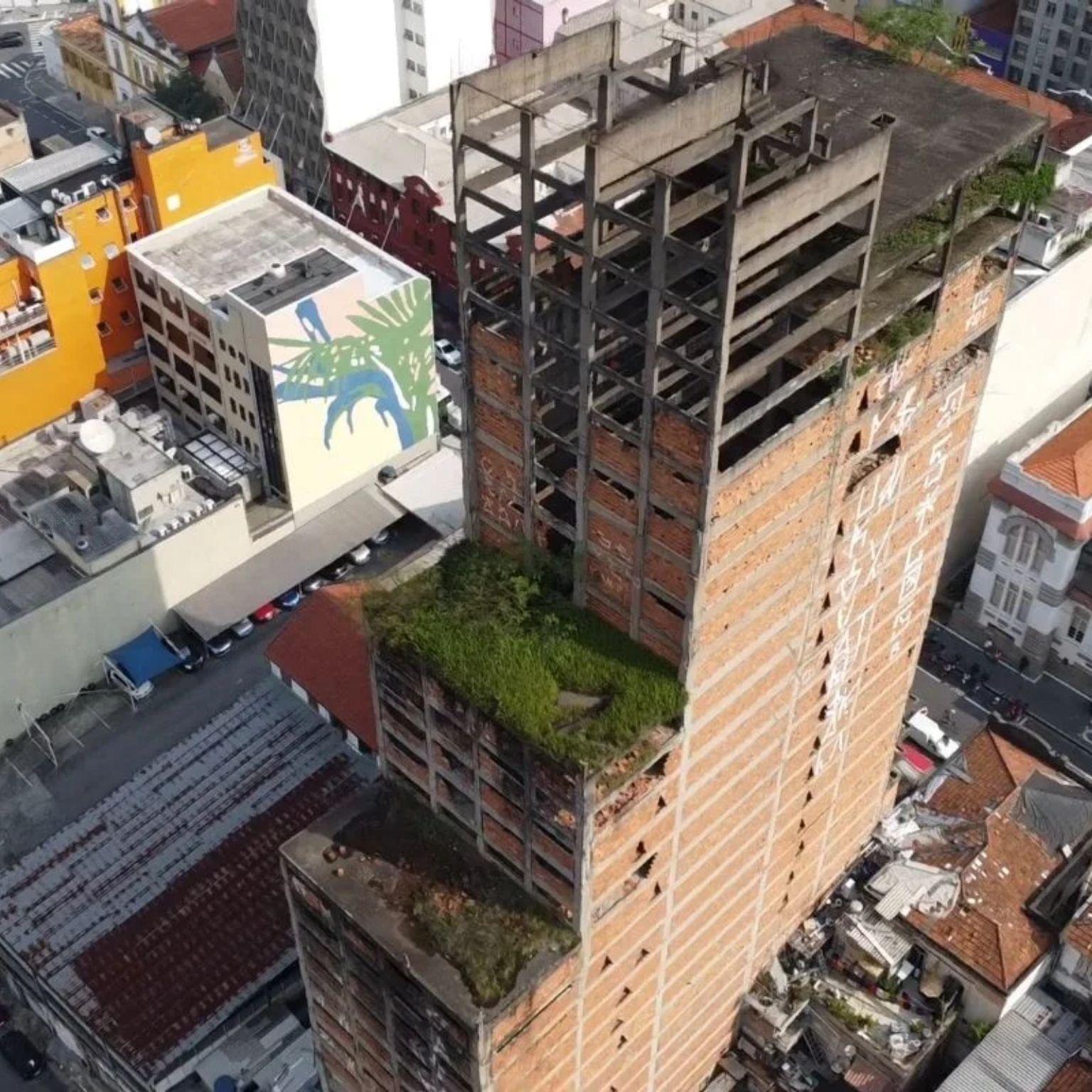

Historic building known as Caveirão begins to be manually demolished on Rua do Carmo, in the center of São Paulo, in a delicate operation that seeks to eliminate structural risk, protect listed properties, and advance urban requalification of the area
The building known as Caveirão began to be demolished this week in the historic center of São Paulo, marking a new stage in the city hall’s attempt to reorder one of the most sensitive areas of the Paulista capital. Built in 1964, the 25-story building with a basement occupies a prominent position on Rua do Carmo and was considered one of the city’s oldest urban skeletons.
The intervention involves the São Paulo City Hall, the Municipal Attorney General’s Office, and teams responsible for executing the demolition, which will be carried out manually and progressively, from top to bottom. The measure draws attention due to the size of the property, the R$ 6 million investment, and the surrounding context, which includes dense occupation, historic constructions, and listed properties, requiring an operation surrounded by care and planning.
What is the Caveirão building and why did it become a target for demolition

The Caveirão building became a symbol of urban deterioration in the capital’s center over the years. Despite being on site since 1964, the building accumulated a history of occupations and complaints related to the fragility of its structure, which increased the concern of residents and those who circulate daily through the region.
-
U.S. City Builds Tiny Home Village on Water Company Land to House 136 Homeless People: Inside the Social Housing Units

-
Woman Turns Shipping Container into Home, Embraces Rural Life to Cut Monthly Expenses to Just Over $330
-
France Revamps 530 Social Housing Units with Large Balconies and Glass Facades Without Demolishing Existing Buildings

-
Facing high rent, couple transforms parents’ garage into a fully functional apartment, creating a complete home at a fraction of the market cost.




According to the city hall, the building posed a risk not only to the central area’s revitalization proposal but also to the safety of the surroundings. The assessment was reinforced by verifications and reports that indicated a structural threat in an area surrounded by listed properties and buildings of historical value.
Why the building’s demolition is being done manually
The building’s demolition could not follow a common rapid knockdown model due to the surrounding characteristics. As there is dense occupation in the neighborhood and the presence of listed properties next to and in front of the building, the operation was planned to be manual and progressive.
In practice, this means the building is being dismantled from top to bottom, with hoardings, street organization, and high control over the work. The objective is to avoid damage to neighboring structures and reduce the risk of impact on historical constructions that are part of the Paulista center’s landscape.
The numbers that explain the scale of the operation

The building that began to be demolished has 25 floors, in addition to a basement, which helps to gauge the complexity of the work. The planned investment for the operation is R$ 6 million, a value that reinforces the scale of the intervention in a delicate urban area surrounded by restrictions.
Another relevant piece of information is the timeline. The authorization to enable the work was issued in 2025, but the actual demolition only started now. The reported forecast is for completion in November of this year, which shows that the removal of the building will be gradual and is expected to extend over several months.
The long dispute that preceded the building’s removal
The demolition of Caveirão did not happen immediately. The work was only made possible after a long legal dispute conducted by the Municipal Attorney General’s Office, which obtained authorization for the public administration to carry out the intervention.
This point helps explain why a building considered problematic for so long remained standing until now. The removal of a structure of this size, in a historic region surrounded by protected properties, required legal backing and formal authorization before any practical action could begin.
What changes in practice for those who live and circulate in the center
The removal of the building aims to increase safety, improve urban organization, and enhance the central region, according to the city hall. For those who live, work, or pass through the area daily, the main expected change is the elimination of a structure seen for years as a source of fear and instability.
Reports from residents and frequent visitors to the area indicated constant concern about the building’s condition. There was fear of collapse and discomfort with the history of occupations and irregular use of the property, which made the building a permanent focus of insecurity in the historic center.
The building’s history that influenced the decision
Over time, the Caveirão accumulated a history of occupations and came to be associated by residents with situations of urban degradation. According to reports from those who frequent the region, the building was often used as a drug point, exacerbating the perception of abandonment and risk in the surroundings.
This past weighed heavily on the decision to proceed with the demolition. More than just a building without regular use, the building began to concentrate concerns related to public safety, structural stability, and the preservation of the surrounding historical heritage.
Why the work is treated as part of the center’s revitalization
The city hall presents the demolition as a step forward in the requalification of São Paulo’s historic center. The removal of the building is not seen merely as the elimination of an old construction, but as part of an attempt to reorganize an area marked by urban decay and challenges accumulated over decades.
In this context, the demolition of the Caveirão also gains symbolic weight. The building became one of the capital’s most well-known urban skeletons, and its removal tends to be interpreted as a concrete action of transformation in a region where historical heritage, intense circulation, and the need for urban recovery coexist.
The next steps until the end of the demolition
With the work already underway, the expectation is that the demolition will proceed in a controlled manner until November. The process will continue to be executed manually, with careful monitoring to avoid impacts on neighboring constructions and to preserve the safety of the area during all phases of the intervention.
Until completion, the region should continue operating with containment measures, road organization, and surrounding protection. The city hall’s challenge will be to maintain the pace of the operation without compromising local routines and without generating additional risk in one of the city center’s most sensitive areas.
Do you think the demolition of this building can indeed mark the beginning of a new phase for São Paulo’s historic center?








