






 Portuguese
  Spanish
  3 min of reading
  0 comments


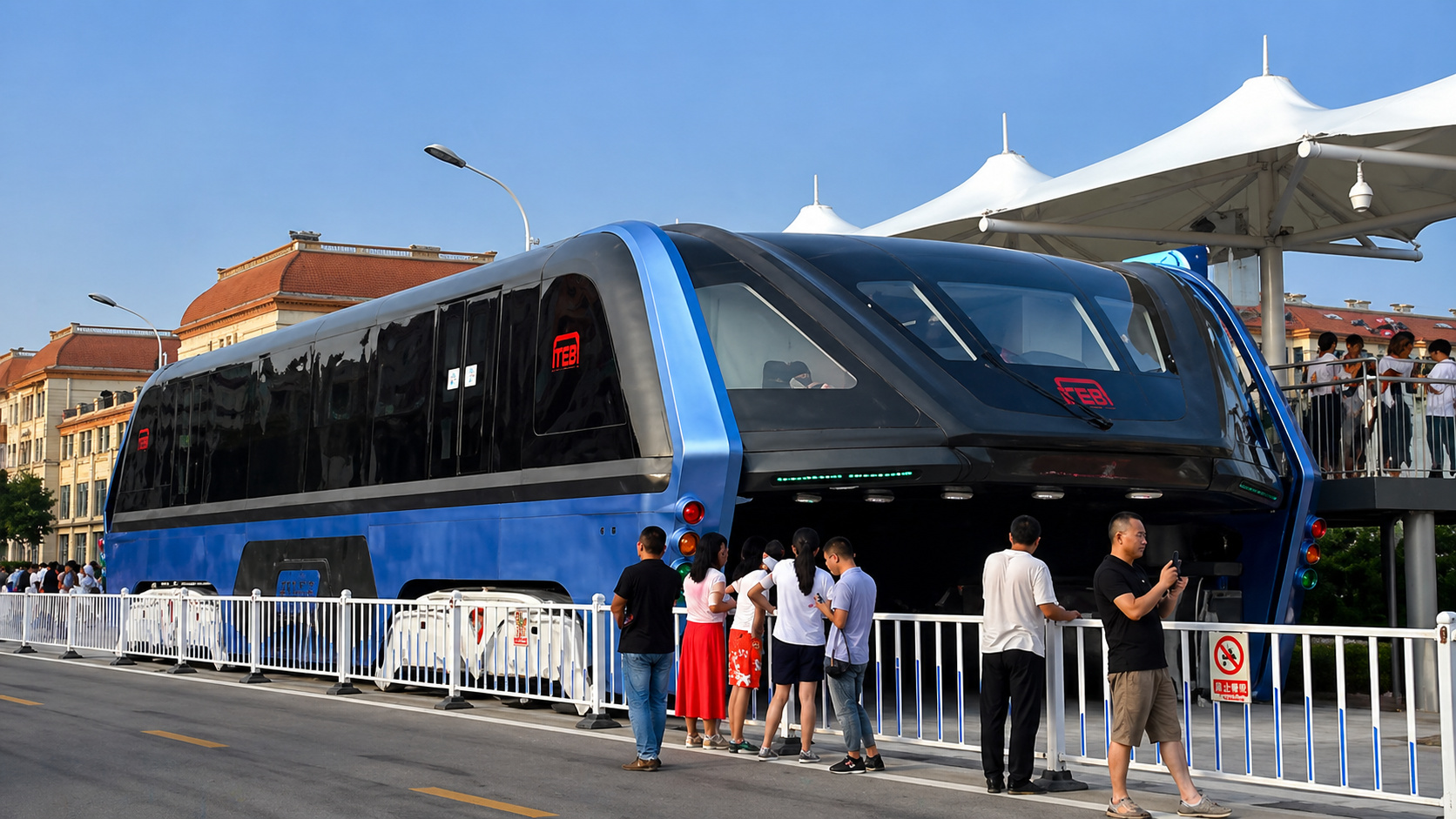
China’s giant elevated bus project drew global attention by proposing a solution for traffic jams, but was ultimately halted by technical limitations, urban risks, and real challenges that prevented its practical application
The proposal of a giant bus that traveled over cars seemed like a direct response to the traffic problem in large cities. The idea promised to reduce congestion, improve traffic flow, and transform urban mobility.
With a futuristic look and bold concept, the project gained international prominence. However, what seemed like innovation ended up becoming a clear example of failure in urban engineering, after facing difficulties that prevented its continuation.
How the elevated bus that drew global attention worked
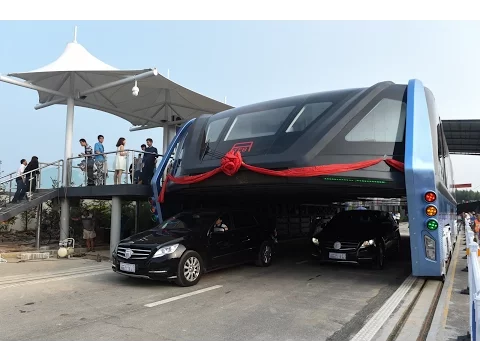
The model known as the Transit Elevated Bus was designed to circulate above cars, allowing smaller vehicles to pass underneath while passengers were transported on the upper part.
-
Federal Police involved in the case to identify the person responsible for hacking the Civil Defense system, which sent ten false alerts, frightened residents of different capitals, and turned messages about real risks into notifications with “misanthropy” and even alien attacks.

-
Extreme drought causes ghost village to reappear at the bottom of the reservoir that supplies Athens, revealing houses, a school, and ruins swallowed since the 1980s as the lake shrinks and exposes the water crisis threatening the capital of Greece.

-
An entire village lay asleep at the bottom of a lake for 3,000 years: divers suction sediments in Italy and reveal more than 600 wooden stakes, bronze tools, and traces of a Bronze Age settlement hidden underwater.
-
They call it the “Shopee house” and even cardboard, but the R$ 20,000 house is a certified Wood Frame from Alea, financed by Minha Casa Minha Vida: understand if it’s worth more than masonry.



The proposal was simple on paper, but impressive in practice. The report was published by Strait Times, an international newspaper with coverage of Asian and global news.
Images of the prototype circulated worldwide and reinforced the idea that urban transport could gain an innovative and efficient solution.

Height problems limited street use
One of the main obstacles was the insufficient height of the elevated bus, which could not accommodate all types of common vehicles on urban roads.
This detail directly compromised the project’s viability, as many cars might not be able to pass underneath safely. The practical impact was immediate, drastically reducing the possibilities of real use.
Moreover, adapting existing streets for this type of structure would require complex and unfeasible changes.
Weight and structure raised important doubts
Another critical point involved the weight of the vehicle, which raised questions about the resistance of roads and urban infrastructure.
The circulation of a bus of this size would require structural guarantees that were not clear in the project. This increased concerns about possible risks during operation.
Strait Times, an international newspaper with coverage of Asian and global news, highlighted that these limitations made the proposal difficult to apply in the real world.
Road safety became one of the biggest challenges
The operation of the elevated bus also raised doubts about traffic safety, especially in situations like intersections, curves, and lane changes.
The coexistence between the giant vehicle and the normal flow of cars could generate risks that are difficult to control. This factor increased resistance to the project.
The need for deep adaptations in cities reinforced the perception that the solution was not practical.

Project became an example of innovation that doesn’t work
The Transit Elevated Bus came to be cited as a case of an innovative idea that failed in practice. Despite the initial impact, the project could not advance.
The difference between the futuristic concept and reality showed that not all innovation can adapt to city conditions.
This episode reinforced the importance of evaluating solutions based on real tests and not just theoretical proposals.
What remains as a lesson for the future of urban mobility
The failure of the elevated bus shows that high-impact projects need to consider factors such as safety, urban adaptation, and practical functionality from the start.
Urban mobility remains an important challenge, but solutions need to be efficient and applicable in the daily life of cities.
The history of this project reinforces that bold ideas attract attention, but only advance when they truly work.
Do you believe that futuristic projects like this still have a place in cities, or are simpler solutions the way to solve traffic? Leave your opinion in the comments and share with those who love innovation.





Be the first to react!