





 Portuguese
  English
  Spanish
  5 min of reading
  0 comments


Artificial intelligence has moved from the megawatt era to the gigawatt era, and the new data centers training large models have started consuming as much electricity as an entire medium-sized city, a scale leap that has already led the industry to announce nearly 190 gigawatts of capacity spread across hundreds of projects worldwide.
The number is alarming when compared. A single complex under construction targets 1 gigawatt of power, equivalent to the consumption of a city with hundreds of thousands of inhabitants, just to keep the machines that train and respond to AI models running. And it’s not an isolated case: the entire sector has entered a race to build ever larger and more energy-hungry warehouses for energy.
I imagine the reader discovering that each quick chat with a chatbot has, behind it, a power plant working. We often talk about the cloud as if it were something light and invisible, but the cloud is actually a cluster of buildings full of hot machines that need a lot of electrical current and a lot of water to avoid melting.
Why training AI consumes so much energy
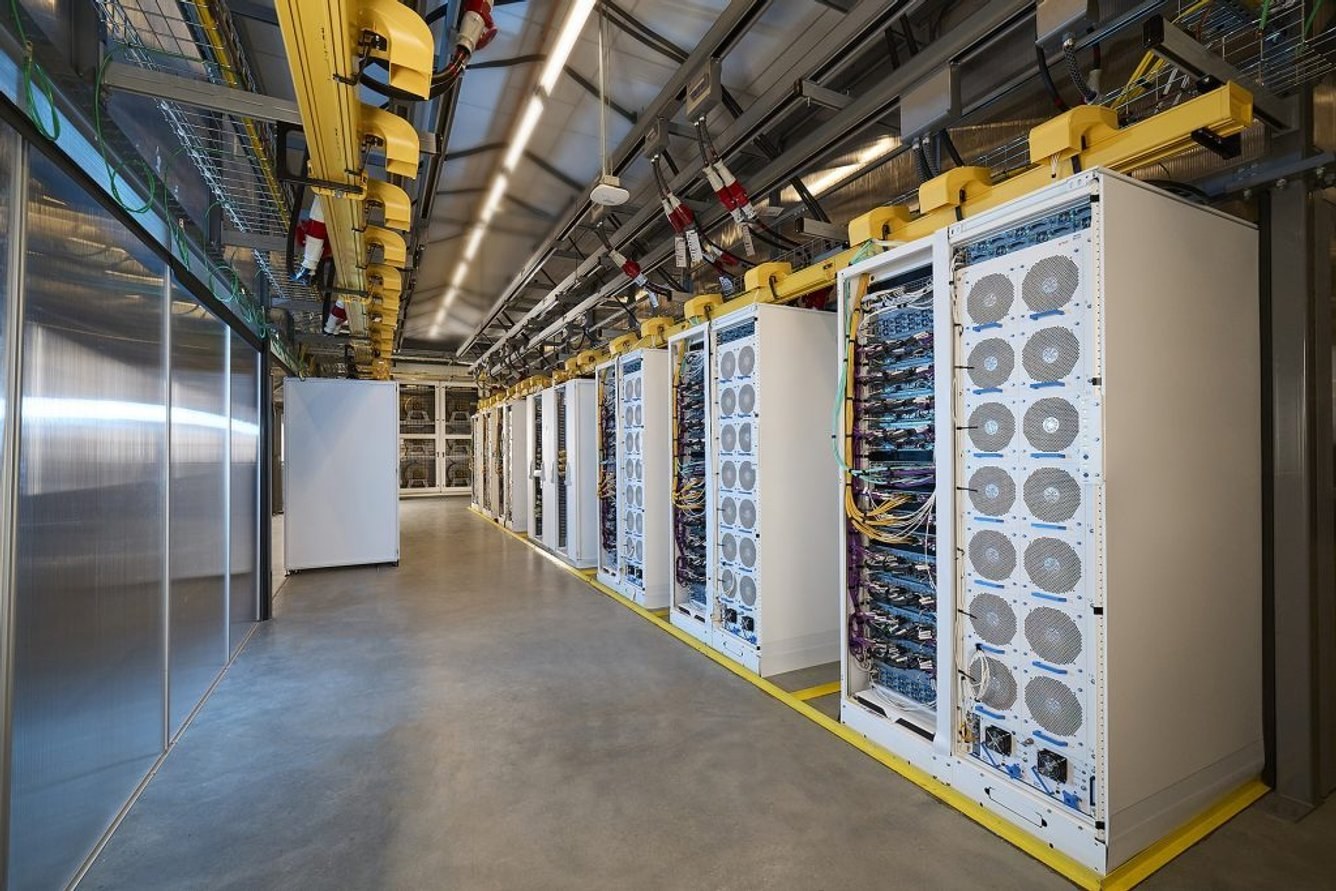
Training a large language model involves repeating a gigantic calculation billions of times, gradually adjusting a network with trillions of parameters until it learns to predict the next word. This process runs on thousands of specialized chips working in parallel for weeks or months without stopping. Each of these chips consumes energy like a small oven, and a modern data center stacks tens of thousands of them.
-
Astronomers discover black hole wind traveling at 323 million km/h, a speed equivalent to 30% of the speed of light and considered a record.

-
Researchers placed contaminated well water under a plate in the sun in Madagascar, and titanium dioxide helped eliminate indicator bacteria in 10 minutes without boiling or chlorine.

-
U.S. Department of War project promises to recharge drones in the air using radio waves so a swarm can fly without ever landing.

-
The size of a thermos, Xiaomi announces a portable coffee maker with a 7,500 mAh battery, capable of preparing up to 400 coffees, professional pressure of 20 bar, and fast charging via USB-C.


Add to this the cooling. All this electricity turns into heat, and too much heat burns the equipment. That’s why a significant portion of a data center’s energy bill doesn’t go to the calculation itself but to the systems that keep the warehouses cool, colossal fans, circulating water, and, in some cases, even immersing the machines in liquid. It’s a consumption that multiplies over the consumption.
When the industry talks about 190 gigawatts announced, it is summing up hundreds of projects at different stages, from those already operating to those still on paper. But the direction is clear: AI’s hunger for energy is growing faster than almost any sector, forcing governments and companies to rethink where all this electricity will come from.
The burden on the power grid and water
The problem has shifted from being technical to becoming one of public infrastructure. In several regions of the world, the arrival of a giant data center pressures the local power grid, delays the retirement of polluting plants, and competes for water with the population, because cooling machines also consumes water. Some cities are already halting or conditioning the construction of these complexes precisely because of this pressure.
On the other hand, technology companies are racing to secure their own energy to avoid relying on the common grid. There are agreements to purchase the entire production of power plants, dedicated solar and wind energy projects, and even bets on small nuclear reactors to exclusively power data centers. AI, which seemed like a software issue, has become one of the biggest drivers of energy demand of the decade.
The race for a place near cheap energy
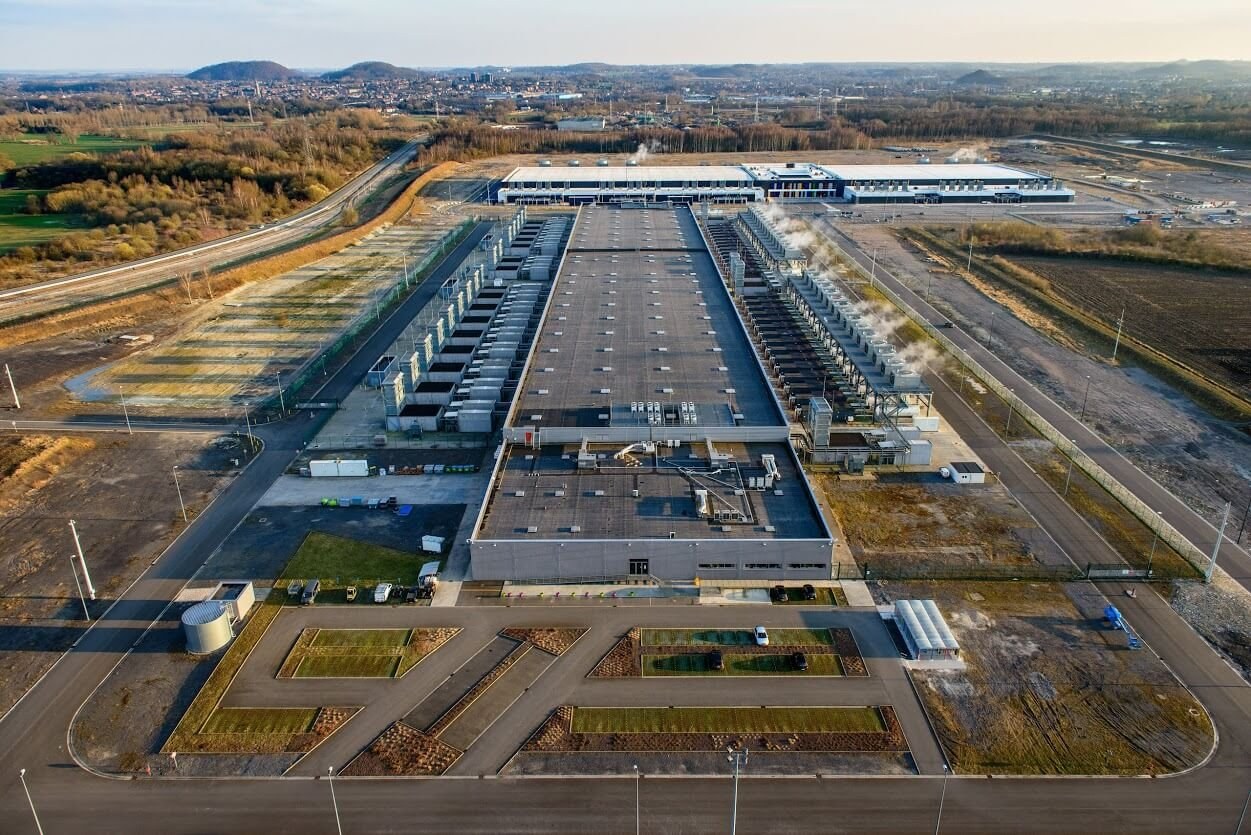
This hunger for electricity is, quietly, redrawing the map of where the internet lives. Previously, the location of a data center was chosen for its proximity to users, so the response would arrive quickly. Now, the criterion that increasingly weighs is the availability of abundant and cheap energy: regions with plenty of water for cooling, strong sun for solar panels, or a power plant willing to sell production on a long-term contract have become highly sought after.
It’s no coincidence that gigantic complexes are emerging in unlikely places, near dams, wind farms, or former industrial areas with robust power grids. Major technology companies have started behaving like heavy industry, negotiating energy in volumes comparable to a steel mill, and governments are beginning to treat them as such when planning grid expansion.
This shift brings local tension. The arrival of a data center promises jobs and revenue but also raises the electricity bill and water usage in the region, and the population doesn’t always see the return. The debate over who pays the bill for this expansion, whether the common consumer or the company profiting from AI, has barely begun and is likely to heat up in the coming years.
The invisible cost of a technology that seems light
It’s not about demonizing the tool. The same AI that consumes cities of energy helps discover medicine, predict the weather, and optimize the power grid itself. The point is to take the technology out of the realm of the abstract and see its physical body, the buildings, the chips, the cables, and the power plants that sustain what we treat as screen magic.
The uncomfortable question that remains is where all this electricity will come from in the coming years, and at what environmental and social cost. Building the data center is the easy and quick part; ensuring clean and cheap energy to power it is the real bottleneck, and it’s in this that the gigawatt era will be tested.
I confess that I changed a bit the way I use these tools after understanding the scale behind them. Not to the point of stopping, but enough to remember that nothing that seems ethereal on the internet is free for the planet. Each of these warehouses has an address, consumes rivers, and occupies the power grid of real people, and the bill for this revolution is just beginning to arrive for all of us.
Knowing that each AI response has a power plant behind it, does this change anything in the way you think about using these tools?





Be the first to react!