Portuguese
  Spanish


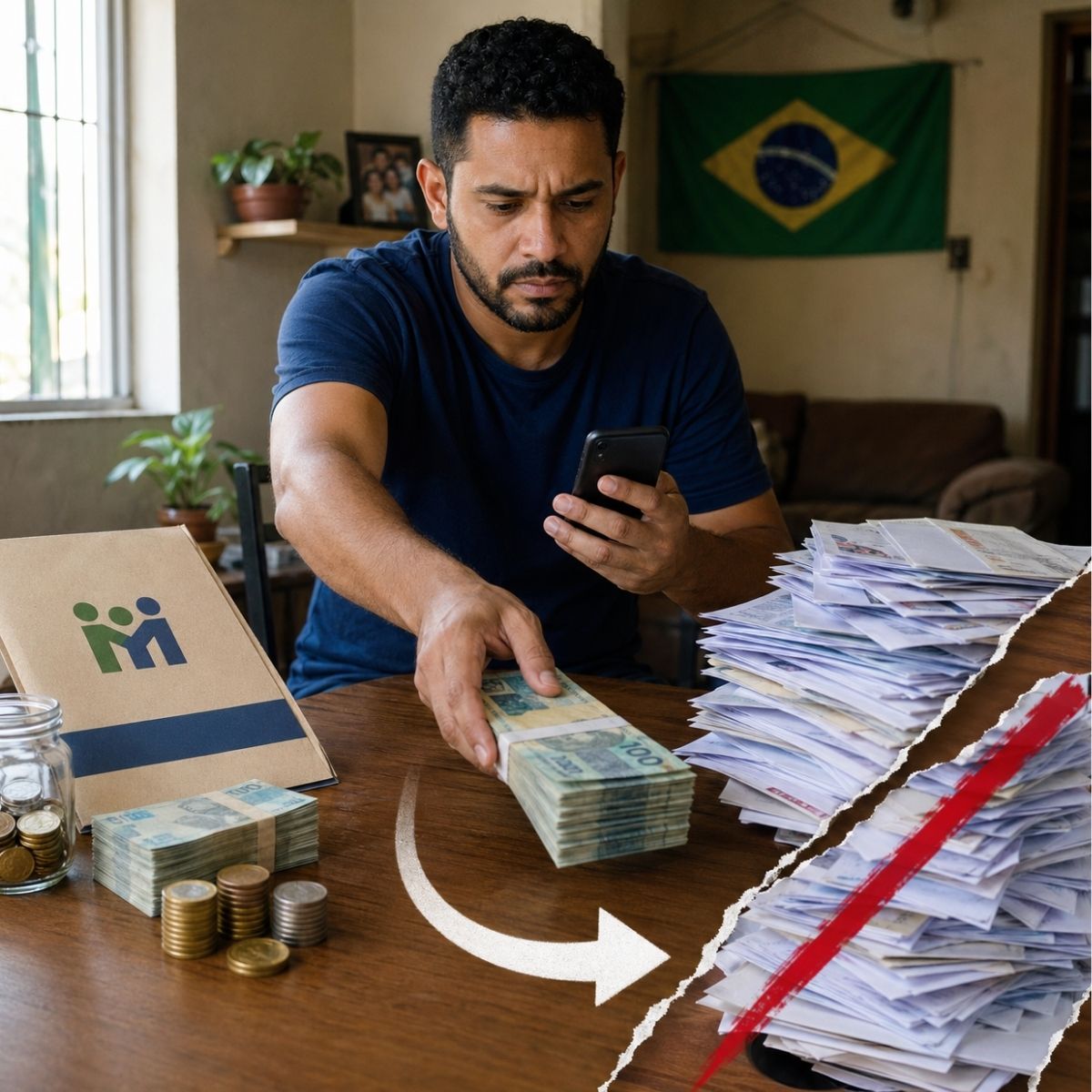

The government is preparing Desenrola 2.0, a debt renegotiation program that will allow the use of FGTS to fully pay off debts, with discounts of up to 80% and an interest rate cap of 1.99% per month, aimed at people with an income of up to five minimum wages (R$ 8,105), provided that the balance covers the entire debt.
The government is finalizing the rules for a renegotiation program that could change the lives of millions of indebted Brazilians: Desenrola 2.0 will allow workers to use their FGTS balance to pay off debts all at once, with discounts that can reach up to 80% of the original amount. The main condition is that the available balance in the severance fund must be sufficient to cover the entire renegotiated debt, because the resource cannot be used just to pay down part of the debt. In practice, if a person has debts of R$ 2,000 and an equivalent or higher balance in their FGTS, they can use the fund to eliminate the debt entirely. But if the debt is R$ 2,500 and the available balance does not reach this amount, the use will not be authorized.
The Minister of Finance, Dario Durigan, is meeting this Monday (28th) with bank representatives in São Paulo to discuss the final details of the program. One of the central negotiations is the reduction of the interest rate cap charged on debt renegotiations to 1.99% per month, below the 2.5% that was initially planned, and the government wants financial institutions to offer discounts of up to 80% on the value of the debts. In return, the Union would act as the guarantor of the operation: if the consumer is unable to comply with the debt payment agreement, the federal government would assume responsibility for the payment to the banks.
How the use of FGTS to pay off debts in Desenrola 2.0 will work
The rule defining the use of FGTS in the program is strict and allows no middle ground. The balance of the Severance Indemnity Fund (Fundo de Garantia do Tempo de Serviço) can only be withdrawn to pay debts if the amount available in the linked account is equal to or greater than the total renegotiated debt, a requirement that prevents the partial use of the resource and ensures that each operation results in the complete elimination of a financial liability.
-
Former Carrefour site in Rio de Janeiro may become affordable housing complex with 600 units after nearly 20 years of closure and legal battles.

-
Shopee Turns Instagram Posts and Reels into Shopping Showcases, Allowing Creators to Tag Products and Earn Commissions

-
Electrolux to Close Hungarian Refrigeration Plant by 2026, Impacting Over 600 Jobs

-
Brazilian Workers May See FGTS Profit Deposited by August 31, But Funds Aren’t Freely Withdrawable: Over R$14.2 Billion Distribution Awaits Council Decision, Aims to Counter Inflation, Surprising Workers with Balance Increase Without Immediate App Withdrawal




The logic behind this condition is to prevent workers from exhausting their FGTS balance without effectively resolving their debts, a situation that would leave them without the protection fund and still in debt.
The possibility of using FGTS to pay off debts even raised legal questions during the program’s development. Members of the Ministry of Finance confirmed that the authorization will be maintained in Desenrola 2.0, despite the challenges, because the government understands that allowing the use of the fund to eliminate debts is more beneficial to the worker than keeping the balance untouched while debts accumulate interest that erodes family assets.
The decision recognizes that, for many indebted Brazilians, the FGTS is the only available resource with sufficient volume to negotiate the full settlement of liabilities that have dragged on for months or years.
Who will be able to participate in Desenrola 2.0 and renegotiate debts
The program will be aimed at people with a monthly income of up to five minimum wages, an amount that in 2026 is equivalent to R$ 8,105. This income bracket concentrates the majority of indebted Brazilians, a population that frequently incurs debts on credit cards, overdrafts, and personal loans with interest rates exceeding 10% per month, which turn originally small debts into financial snowballs that a regular salary cannot contain.
Desenrola 2.0 seeks to offer this audience renegotiation conditions that the private market does not spontaneously provide, with discounts and interest rates that are only possible because the government acts as an intermediary and guarantor.
The expectation is that the program will be officially announced in the coming days. The government sees Desenrola 2.0 not only as a financial relief policy but also as a measure to improve the population’s economic perception and reduce delinquency rates that affect consumption, credit, and economic activity as a whole.
For the participating banks, the advantage is recovering part of the credits that are provisioned as losses, since receiving 20% of a debt with a government guarantee is better than receiving nothing from a debtor who is unable to pay.
What the discounts of up to 80% on the program’s debts mean
The 80% discount on the value of the debts means that a debt of R$ 5,000 could be renegotiated for R$ 1,000. For those carrying debts that have grown exponentially due to compound interest, fines, and fees, the discount represents an opportunity for a fresh start that would never be offered under normal market conditions.
The percentage is the result of negotiations between the government and financial institutions, and not all debts will necessarily receive the 80% discount: the discount varies according to the type of debt, the length of the delinquency, and the creditor’s willingness to accept the reduction.
The proposed interest rate cap of 1.99% per month for debt renegotiations is another relevant component. For debts that will be paid in installments instead of being settled with FGTS, the monthly rate defines how much the consumer will pay beyond the renegotiated amount, and the 1.99% represents a significantly lower cost than the interest rates charged in methods like revolving credit cards, which often exceed 15% per month.
The reduction of the initially planned cap from 2.5% to 1.99% is a result of government pressure on banks and could be the difference between an agreement the consumer can honor and one that results in a new default.
What happens if the consumer does not honor the renegotiated debt agreement
The government guarantee is the mechanism that allows banks to offer such favorable conditions. If the consumer renegotiates their debts in Desenrola 2.0 and fails to make the payments, the Federal Government assumes responsibility for the debt with the financial institution, transferring the risk from the bank to the National Treasury.
This guarantee is what makes the discounts of up to 80% and the reduced interest rates possible, because without it, banks would not agree to waive revenue and take on credit risk with a public that has already demonstrated an inability to pay.
For the government, the bet is that most consumers who renegotiate their debts under such favorable conditions will be able to honor the agreements. If the default rate within the program is low, the cost of the guarantee for the Treasury will be minimal and the economic benefit of reintegrating millions of Brazilians into the credit market will largely offset the investment.
If the default rate is high, the government will bear a fiscal cost that will be politically difficult to justify, which is why the rules for participation and use of FGTS are designed to maximize the probability of effective debt settlement rather than simple renegotiation without payment.
What to do to prepare before the launch of Desenrola 2.0
While the official announcement has not been made, those with debts and a balance in their FGTS can start to get organized. Checking the fund statement through the FGTS app to verify the available balance, getting the updated value of each debt from creditors, and calculating if the balance fully covers any of the debts are steps that allow the consumer to act quickly when the program is launched.
The priority should be to first settle the debts with the highest interest rates, because they are the ones that grow the fastest and consume the largest portion of monthly income.
For those who do not have a sufficient FGTS balance to fully settle their debts, Desenrola 2.0 also offers renegotiation with discounts and reduced interest rates without using the fund. The FGTS is an additional resource, not a requirement to participate in the program, and the discounts of up to 80% are valid regardless of the chosen payment method.
The expectation of an announcement in the coming days means that the window for preparation is short, and those who are ready when the system opens will have an advantage over those who need to gather information later.
And you, would you use your FGTS to settle debts or prefer to keep the balance as a reserve? Do you think Desenrola 2.0 will work? Leave your opinion in the comments.