





 Portuguese
  English
  Spanish
  5 min of reading
  0 comments


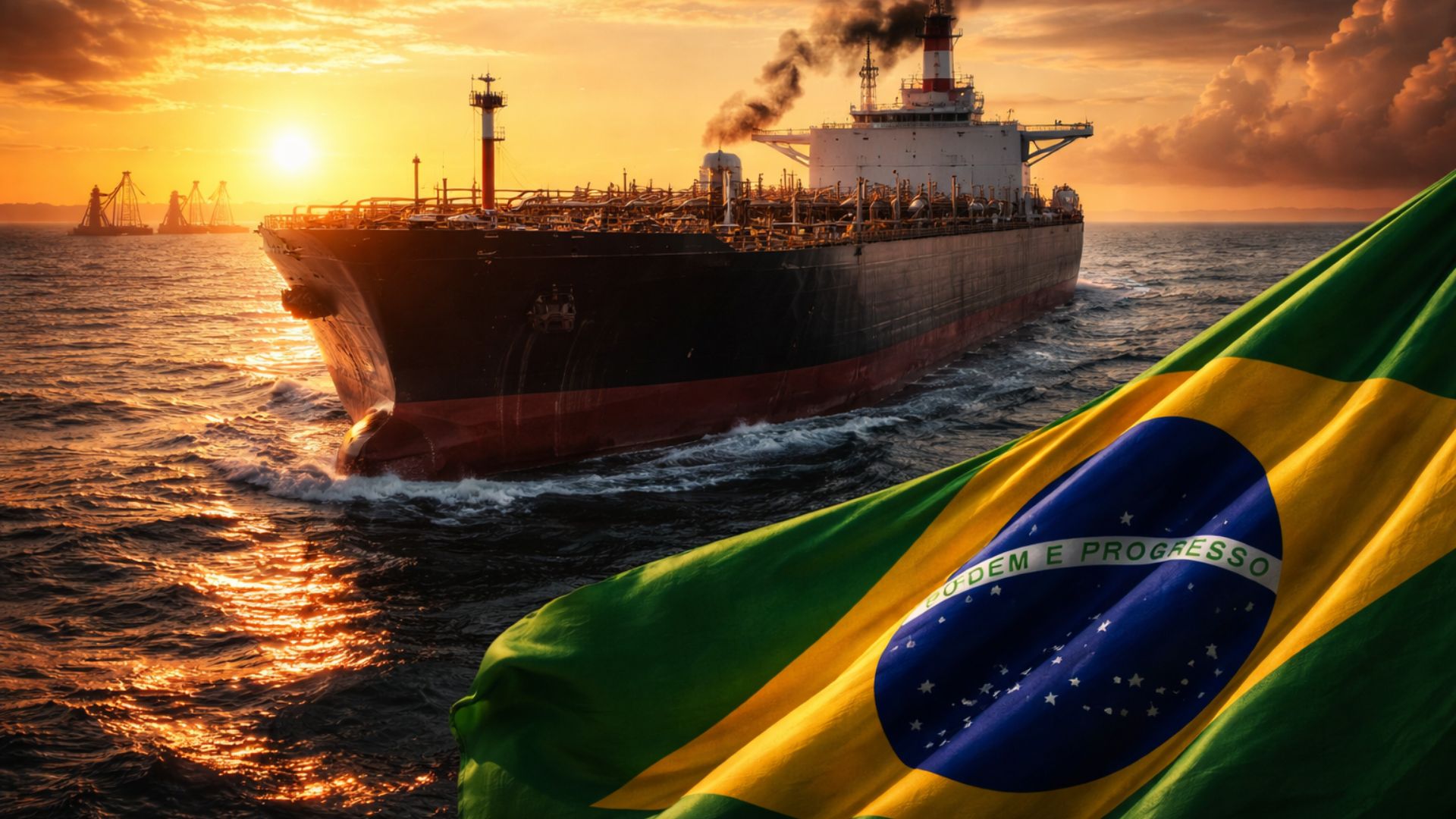
The high of oil strengthens the economy of Brazil, boosts exports, and expands the trade balance, putting the country in a strategic position in the face of changes in the global energy scenario.
The high of oil has changed Brazil’s role in the global economy and is already directly impacting the performance of the trade balance and the economy. According to projections from BTG Pactual, the country could achieve a surplus of up to US$ 90 billion, surpassing previous estimates of US$ 75 billion.
According to an article from Revista Exame, this movement represents a significant inflection. Brazil has significantly reduced its vulnerability to the appreciation of oil and has begun to benefit directly from this scenario. In practice, the country gains competitiveness, increases external revenues, and reduces risks associated with international accounts.
The change is structural and not merely conjunctural. It reflects deep transformations in the production, export, and insertion of the country in the global energy market.
-
90 billion barrels of oil, 1.669 trillion cubic feet of natural gas, and 84% of probable reserves in offshore areas are under the Arctic, and the melting ice that opens maritime routes and exposes this energy treasure is turning the North Pole into a strategic dispute between the USA, Russia, China, and Canada for oil, gas, navigation, and military power.

-
IBS and CBS regulations change credit reimbursement and raise financial alert in the oil and gas industry

-
China puts into operation the largest shallow lithology offshore field in the country, with 79 wells, heavy oil, and a production of 20,000 barrels per day.

-
Petrobras announces an investment of R$ 2.8 billion in Amazonas to expand natural gas production in Urucu and modernize the river fleet, boosting energy, logistics, and the regional economy with new vessels adapted for operation in the Amazon.




From vulnerable importer to strategic exporter in the global economy
For decades, the high of oil was seen as a risk factor for Brazil. This was because the country relied heavily on the import of fuels, which pressured the trade balance and weakened the economy.
In the early 2000s, for example, a US$ 10 increase in the price of Brent crude would cause a deterioration of about US$ 1.2 billion in the external accounts. This scenario made the country more exposed to international shocks.
The turnaround began to consolidate from 2016, when Brazil began to act as a net exporter of oil. Since then, the impact of the appreciation of the barrel has completely changed direction.
Today, the same US$ 10 increase in Brent generates an approximate improvement of US$ 5.9 billion in the external accounts, strengthening the trade balance and directly contributing to the stability of the economy.
This transformation has altered the way the country reacts to fluctuations in the global market.
Expanding Exports Support the Advancement of the Trade Balance
The rise in oil prices drives Brazil by increasing the volume and value of exports, strengthening the trade balance and consistently stimulating the economy.
The country reached a record production of about 4.1 million barrels per day in February, significantly increasing its export capacity. With higher international prices, the positive impact becomes even more pronounced.
Projections indicate a robust scenario for the coming years:
- Oil and derivatives exports may reach around US$ 78 billion
- Imports are expected to be around US$ 30 billion
- The specific sector surplus may reach US$ 48 billion
This performance helps explain why the total balance may reach US$ 90 billion.
Even with rising import costs for derivatives such as diesel, the gains from exporting crude oil outweigh these expenses. This balance reinforces the resilience of the Brazilian economy.


How the Rise in Oil Prices Impacts the Economy Beyond Exports
The effects of the rise in oil prices in Brazil go beyond the increase in the trade balance. They spread across different areas of the economy, creating a positive cycle that extends from the external sector to the internal environment.
Among the main impacts, the following stand out:
- Greater influx of dollars into the country, strengthening international reserves
- Tendency for the real to appreciate, which can help control inflation
- Increased public revenue through royalties and taxes
- Reduction of the current account deficit
According to market estimates, a 10% increase in Brent could generate a gain of about US$ 3.7 billion in external accounts and reduce the deficit by approximately 0.16 percentage points of GDP.
These effects contribute to improving the country’s risk perception and attracting foreign investments.
Structural factors that explain Brazil’s current advantage
The relationship between oil prices and trade balance has become positive due to significant structural changes. The advancement of production in the pre-salt layer is one of the main factors of this transformation. It has allowed the country to increase its competitiveness and expand its presence in the international market.
In addition, other elements help explain this new reality:
- Expansion of large-scale production capacity
- Reduction of extraction costs in strategic fields
- Increase in logistical and operational efficiency
- Growth in global energy demand
This combination strengthens Brazil’s position as a relevant exporter and amplifies its influence in the global energy landscape.
Risks and limits of the favorable scenario
Despite the benefits, the rise in oil prices also brings challenges for Brazil, the trade balance, and the economy.
The increase in international prices can pressure fuel costs in the domestic market, affecting consumers and businesses. This impact can have repercussions on inflation and the purchasing power of the population.
Another point of concern is the growing dependence on commodities. Although oil generates significant revenues, the concentration on a few products can increase vulnerability to price fluctuations.
Moreover, there are external factors that cannot be ignored:
- OPEC decisions that influence global supply
- Geopolitical conflicts that affect barrel prices
- Advancement of the energy transition at a global level
These elements show that, despite the positive moment, the scenario requires caution and strategic planning.
Projections reinforce Brazil’s role in the international scenario
With the rise in oil prices, Brazil gains prominence and strengthens its trade balance, consolidating important advances in the economy.
The projection of US$ 90 billion in surplus reflects not only the performance of the oil sector but also the country’s ability to adapt to new global dynamics.
Other sectors continue to contribute to this result, such as agribusiness and mining. However, oil is taking on an increasingly central role in generating foreign exchange.
This scenario enhances Brazil’s prominence and reinforces its relevance among emerging economies.
An economic cycle driven by the rise in oil prices and its implications
The rise in oil prices inaugurates a new cycle for Brazil, with a direct impact on the trade balance and the economy. The country begins to operate from a more comfortable position, with a greater capacity to generate surpluses and face external shocks.
The current moment reveals a more robust and less vulnerable economy. However, the challenge lies in transforming this temporary gain into sustainable long-term growth.
To achieve this, it will be essential to diversify the economic base, invest in innovation, and keep pace with the global energy transition. Oil can be a relevant engine, but it should not be the only pillar of development.
The new reality shows that Brazil has managed to leverage its competitive advantages. Now, the next step is to ensure that this progress translates into lasting benefits for the entire economy.








Be the first to react!