Portuguese
  Spanish


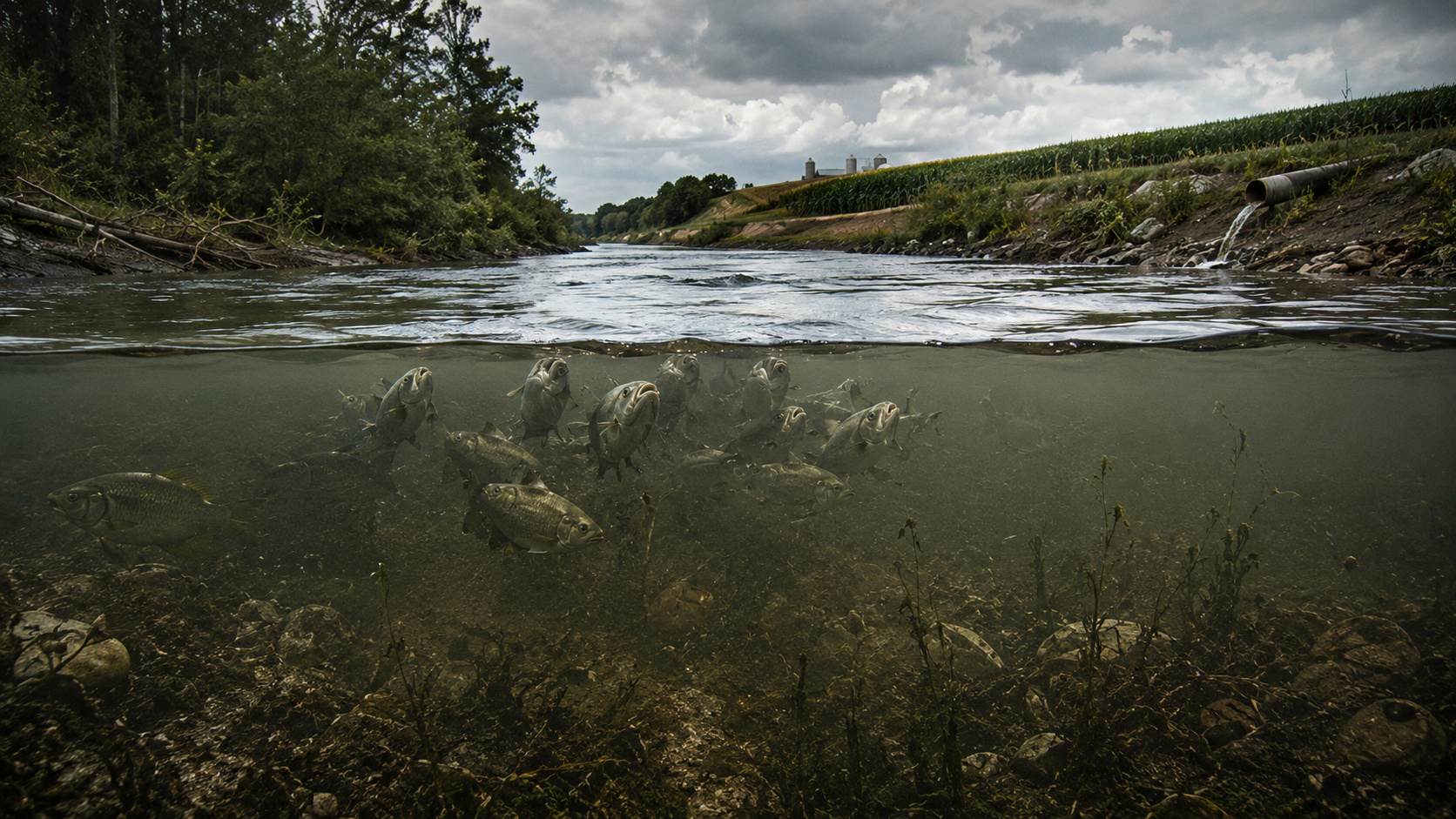


Study with more than 21,000 rivers shows global decline in dissolved oxygen in water and warns of increasing risk of hypoxia in freshwater ecosystems.
Researchers have identified a silent phenomenon that has begun to concern environmental scientists on a global scale: rivers around the planet are losing dissolved oxygen in the water, a condition that can alter entire ecosystems and threaten fish, aquatic insects, and organisms fundamental to the freshwater food chain.
The warning appears in a study published in the journal Science Advances, which analyzed data collected from more than 21,000 rivers distributed across different continents over several decades. The researchers found that a large part of these aquatic systems showed a significant reduction in dissolved oxygen since the 1980s.
Scientists analyzed more than 21,000 rivers and found a global decline in dissolved oxygen
The study evaluated environmental records collected between 1982 and 2021 in rivers spread across North America, Europe, Asia, and other regions of the planet. According to the researchers, there was a consistent trend of reduction in dissolved oxygen in a large part of the systems analyzed.
-
Nigerian Professor Invents Electricity-Free Refrigerator Using Clay Pots and Wet Sand, Extending Shelf Life of Vegetables to 27 Days; 7,000 Units Distributed in Energy-Deprived Villages

-
Flower Farms Supplying London and Amsterdam Face Backlash for Environmental Impact on African Lake, Threatening Jobs for 50,000 Workers

-
World’s Largest Container Ship Departs Shanghai with 24,000 Containers, Set to Debut in Europe in July

-
NASA Explores How Microgravity and Sensors Alter Soccer Ball Spin in Space



Dissolved oxygen is literally the “air” present within the water. Fish, crustaceans, insect larvae, and numerous aquatic organisms depend on it to survive. When levels fall below certain limits, the environment can enter a condition called hypoxia.
According to the authors of the study, the observed reduction is strongly associated with the increase in water temperature caused by global warming. The warmer the water gets, the less its natural capacity to store oxygen.
Warm water holds less oxygen, and this creates a cascading effect in rivers
The mechanism behind the phenomenon is relatively simple, but its consequences can be enormous. Cold water can dissolve and retain more oxygen than warm water.
As heatwaves become more frequent and average temperatures rise, rivers begin to lose the capacity to sustain adequate levels of dissolved oxygen.
This process generates a kind of ecological cascading effect. With less oxygen available, aquatic organisms begin to compete for limited resources, increasing biological stress within the ecosystem. In more severe scenarios, some species simply cannot survive, especially fish sensitive to prolonged hypoxia.
Researchers warn of the risk of dead zones forming in freshwater
Low oxygenation events are already known in coastal areas and parts of the ocean, where the so-called “dead zones” appear, regions practically incapable of sustaining complex aquatic life.
Now, scientists observe that similar phenomena may begin to occur more frequently in freshwater systems.

According to researchers, rivers subject to extreme heat, low water flow, and organic pollution are at even greater risk of critical dissolved oxygen drop.
When organic matter decomposes in heated environments, bacteria consume even more oxygen from the water. This accelerates the depletion of the resource available to other organisms.
The result can be fish mortality, disappearance of sensitive species, and imbalance of aquatic food chains.
The problem is not only linked to climate but also to pollution and human use of rivers
Researchers emphasize that global warming does not act alone. Urban pollution, agricultural fertilizers, sewage discharge, and changes in river flow also contribute to reducing oxygenation.
Excess nutrients favor the proliferation of algae and microorganisms that consume large amounts of oxygen during decomposition.
Dams, reservoirs, and reduced natural flow can also decrease water circulation, hindering the replenishment of atmospheric oxygen in the system.
In many cases, different factors end up acting simultaneously: warmer water, less flow, more pollution, and increased biological activity consuming oxygen. This transforms some rivers into progressively more vulnerable environments to ecological collapse.
The loss of oxygen threatens aquatic species and can affect fishing and supply
The drop in oxygen affects not only large fish. Insect larvae, small crustaceans, mollusks, and microorganisms fundamental to the balance of rivers also suffer direct impact.
These organisms sustain entire food chains. When they disappear, the effect can spread to larger species and alter the complete functioning of the ecosystem.

In some regions, severe hypoxia events have already been associated with mass fish deaths during periods of extreme heat.
In addition to the environmental impact, scientists warn of economic consequences involving inland fishing, water quality, and the stability of water systems used by human populations.
Climate change is altering rivers in more complex ways than previously imagined
For many years, the climate debate focused mainly on air temperature, ice melting, and sea level rise. Now, researchers observe that freshwater systems are also undergoing profound transformations, often invisible to most of the population.
The reduction of dissolved oxygen shows how climate change can alter basic chemical properties of water and directly impact organisms that depend on these environments.
According to scientists, rivers function as extremely sensitive systems to the combined changes of temperature, pollution, and human use of the landscape. This means that even gradual changes can generate disproportionate consequences over time.
The study reinforces that global warming affects not only the atmosphere but the very respiration of aquatic ecosystems
Most people associate climate change with heatwaves, fires, or extreme storms. The study on dissolved oxygen shows a much less visible problem but potentially devastating for ecosystems.
Rivers literally begin to lose the ability to sustain adequate aquatic respiration when the water heats beyond the natural balance.
Fish, insects, and microscopic organisms begin to live in environments where the “air” available within the water becomes increasingly scarce.
And precisely because it happens slowly, often without immediate signs for those observing from the surface, the loss of oxygen in rivers has become one of the most concerning environmental alerts recently identified by scientists.