Portuguese
  Spanish


The new move by Antaq comes amid the growth of cargo handling at Brazilian ports, advancement of dredging in Paranaguá, and increased pressure for modernization of national maritime infrastructure.
The National Waterway Transportation Agency (Antaq) approved an important revision of the regulations related to the exploitation of port areas in Brazil. The decision comes at a strategic time for the maritime and logistics sector, precisely when Brazilian ports are experiencing a phase of operational expansion, increased cargo handling, and a growing need for infrastructure modernization.
The information was released in May 2026 by specialized media in the port and maritime sector, based on data presented by Portos do Paraná and the regulatory structure linked to Antaq itself. Meanwhile, dredging and maintenance operations in strategic channels reinforce the national effort to enhance Brazilian logistical competitiveness.
-
Brazil’s Port of Santos to Receive New $1.1 Billion Container Terminal, Tecon Santos 10, Set to Begin Operations in 2029

-
Ports without drivers and cabins already move containers like automated factories: robotic cranes, autonomous electric vehicles, and software transform giant terminals into 24-hour logistics machines.
-
About 300 American ports still breathe diesel from trucks, cranes, and locomotives, but they are now trying to electrify heavy machinery to clean the air for 31 million nearby residents.

-
A 220-meter giant powered in part by solar energy and lithium batteries has just unloaded nearly 5,000 Chinese cars at the Port of Itajaí. It is the first of ten Grimaldi super ships and the first in the world prepared to run on ammonia as fuel.


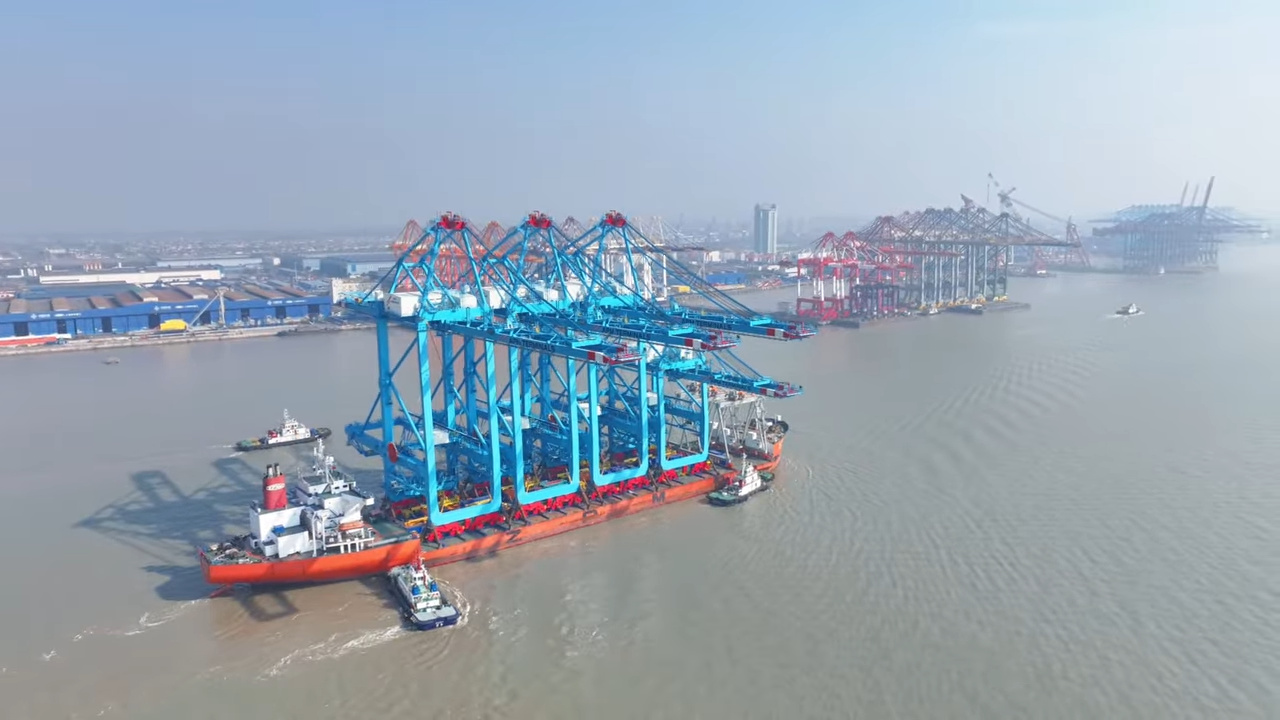


Furthermore, experts assess that the update of the rules may accelerate new private investments in port areas, improve operational efficiency, and increase the capacity to receive large vessels.
Dredging in the Paranaguá Channel reinforces the importance of port infrastructure
While the regulatory review advances, one of the main ongoing port operations is taking place at the Port of Paranaguá, in Paraná. According to information released on May 18, 2026, the maintenance dredging campaign of the channel is expected to continue until the end of June.
The operation began at the end of April and uses the dredger Vox Amália, a vessel from the Dutch company Van Oord. The main objective is to ensure navigability and operational safety of the waterway access to the port, considered one of the most important in Brazil.
According to Julia Teresa Bruch, maritime engineering coordinator at Portos do Paraná, the port authority needs to maintain the operational draft at 13.3 meters. This control is essential to ensure adequate depth for vessels using the channel.
Over time, sediments accumulate at the bottom of the channel. As a consequence, the available depth gradually decreases, which can compromise maritime traffic and reduce the logistical efficiency of the port.
In this sense, preventive dredging avoids operational restrictions and ensures adequate conditions for the continuous flow of cargo ships.
Port of Paranaguá sets historical record for cargo handling

The operational numbers reinforce the strategic importance of the Paranaguá Channel for Brazilian logistics. In 2025 alone, 2,892 ships accessed the Paraná ports using the maritime access channel.
The stretch is over 40 kilometers long and represents one of the main maritime routes for export and import in the country.
According to Portos do Paraná, operational efficiency allowed for a historic movement exceeding 73.5 million tons of cargo. The result placed the port complex among the most significant in Latin America.
Furthermore, constant maintenance of the channel helps to avoid logistical bottlenecks. This becomes even more important during periods of increased agricultural, industrial, and mineral exports.
The dredger Vox Amália operates 24 hours a day throughout the campaign. All work cycles strictly follow the environmental standards provided for this type of maritime activity.
During the operation, teams remove accumulated sediments from the entrance of the Paranaguá Channel to the Antonina turning basin.
The vessel used is of the Hopper type, has a Dutch flag, and can dredge up to 18,000 cubic meters of sediments per operational cycle.
Antaq review may open space for new private investments
The review approved by Antaq comes precisely at a time when the Brazilian port sector seeks to expand its international competitiveness.
Experts assess that regulatory changes can facilitate concessions, improve port operation contracts, and accelerate logistics expansion projects in different regions of the country.
Moreover, investors closely monitor any changes involving port area exploration rules, as this directly impacts the legal security and economic attractiveness of the sector.
In recent years, Brazil has significantly increased investments in port infrastructure. This includes terminal modernization, dredging, operational automation, and storage capacity expansion.
According to information published by specialized media in the maritime and port sector, the expectation is that the combination of new Antaq rules and operational investments will further increase national logistics efficiency.
Meanwhile, operations like the dredging of Paranaguá show that Brazilian maritime infrastructure remains a fundamental piece for economic growth and the strengthening of exports.
The dredging campaign carried out by the Itiberê Dredging Consortium continues within the so-called environmental window, complying with the technical and environmental requirements set by the competent authorities.
Furthermore, the advancement of port modernization can directly benefit sectors such as agribusiness, industry, mining, and foreign trade, which heavily depend on the logistical efficiency of Brazilian ports.
As reported by Portos do Paraná and publications specialized in maritime logistics, the sector is experiencing an important structural transformation phase in 2026, driven by both operational investments and regulatory adjustments promoted by Antaq.
Do you believe that the modernization of Brazilian ports can transform logistics and reduce transportation costs in the country?