






 Portuguese
  Spanish


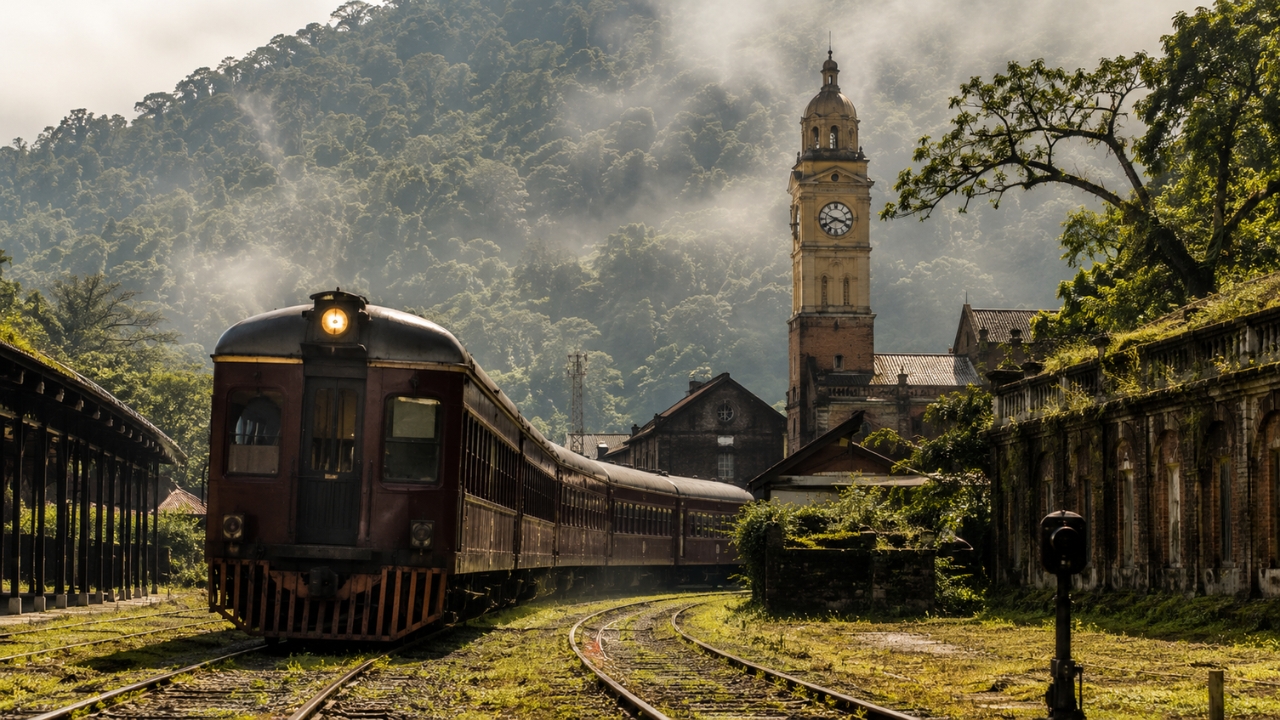

Paranapiacaba brings together railway history, English-influenced architecture, museums, Atlantic Forest, and a tourist itinerary that transforms the arrival through the mountains into an experience marked by heritage, fog, old tracks, and Paulista memory.
At the top of the Serra do Mar, in Santo André, Paranapiacaba preserves one of the most remarkable railway histories in Brazil. The village was built by the São Paulo Railway in the 19th century to house workers of the Santos-Jundiaí railway, an essential link between the interior of São Paulo and the Port of Santos.
Today, what began as a work structure has become a tourist experience. According to CPTM, the Tourist Express takes visitors 48 km to Paranapiacaba, in a composition linked to railway memory, with refurbished cars and locomotives from the 1950s on the route informed by the company.
The data is impressive because the tour not only shows a beautiful landscape. It helps to understand how a village planned for railway operation ended up becoming a historical heritage site, a tourist destination, and a symbol of the relationship between transportation, coffee, architecture, and the Serra do Mar.
-
After a 4-year journey across the Americas, couple settles in southern Brazil, transforms rusted shipping container into a home, facing real risks and close calls along the way.

-
Rio de Janeiro Resident Transforms Home with Green Roof, Cutting Indoor Temperature by Up to 15°C and Offering a Simple Solution to Extreme Heat

-
How to Use Brazil’s New ID to Access Premium Features on Gov.br: A Step-by-Step Mobile Guide
-
Alaska’s 14-Story Begich Towers Houses Nearly Entire Town, Including Post Office, Market, and School


The village was born to keep the railway running
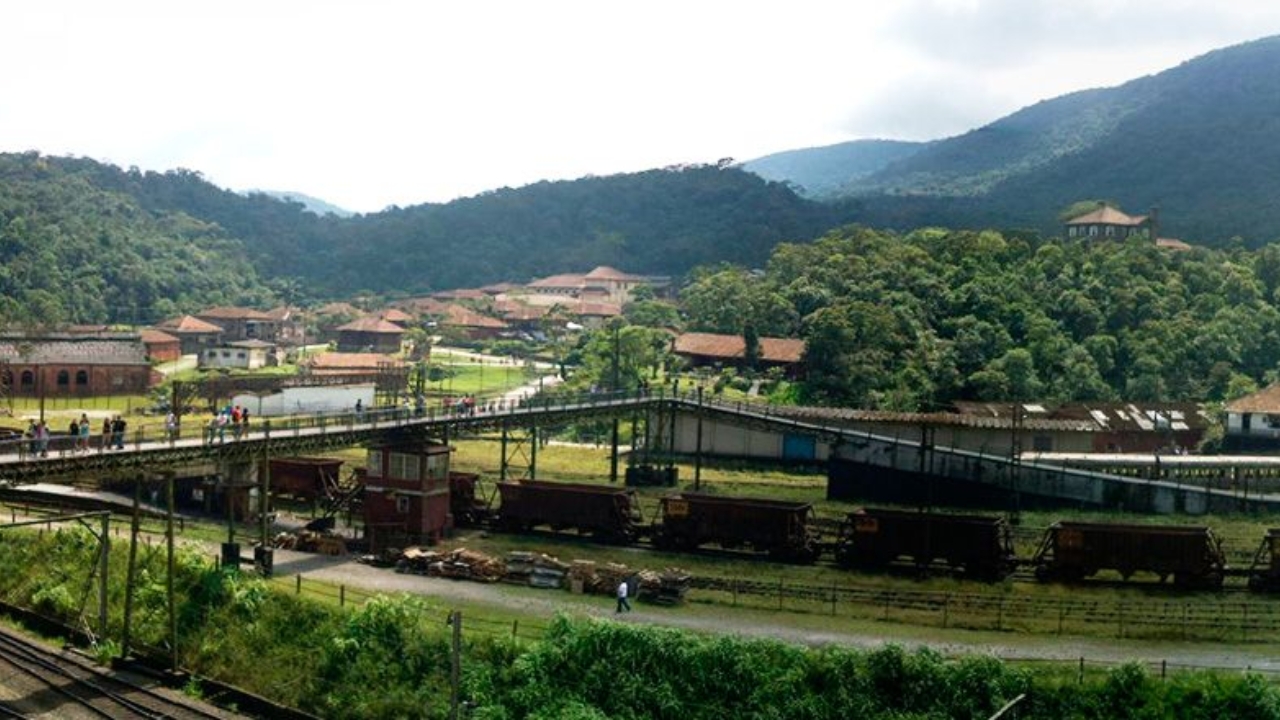
The history of Paranapiacaba is directly linked to the construction of the first São Paulo railway. According to the Santo André City Hall, the nucleus began in 1860, during the work that would connect the Port of Santos to the São Paulo plateau.
The railway began operation in February 1867. Before it, coffee transportation depended on mule troops and long journeys. With the tracks, the connection between Jundiaí, the plateau, and Santos took on another scale.
The São Paulo Railway needed workers close to the operation. Therefore, the village was created as a functional structure, aimed at those who kept the railway alive in a difficult, humid, and strategic area of the Serra do Mar.
UNESCO also highlights this role. According to the organization, Paranapiacaba is located at 796 meters altitude and emerged at the top of the mountain as part of a decisive railway system for the São Paulo economy.
Old houses and fog reinforce the image of an English village
What draws attention in Paranapiacaba is not just the railway. The Lower Part preserves wooden constructions with English characteristics, built to meet the logic of a planned workers’ village.
The Santo André City Hall describes the place as a “little piece of England on Brazilian soil.” The comparison appears in the architecture, the old houses, and also in the constant fog that usually covers the village, reminiscent of the famous English “fog.”
Between 1896 and 1901, according to UNESCO, the village was expanded during the duplication of the railway and the implementation of the second funicular system. The core began to follow European urban and sanitary standards of the post-Industrial Revolution period.
This detail changes the visitor’s perception. Paranapiacaba is not just a charming village with old tracks. It was designed to function as a human and urban cog of a railway that carried an important part of São Paulo’s economy.
The tourist train travels 48 km to the Serra do Mar
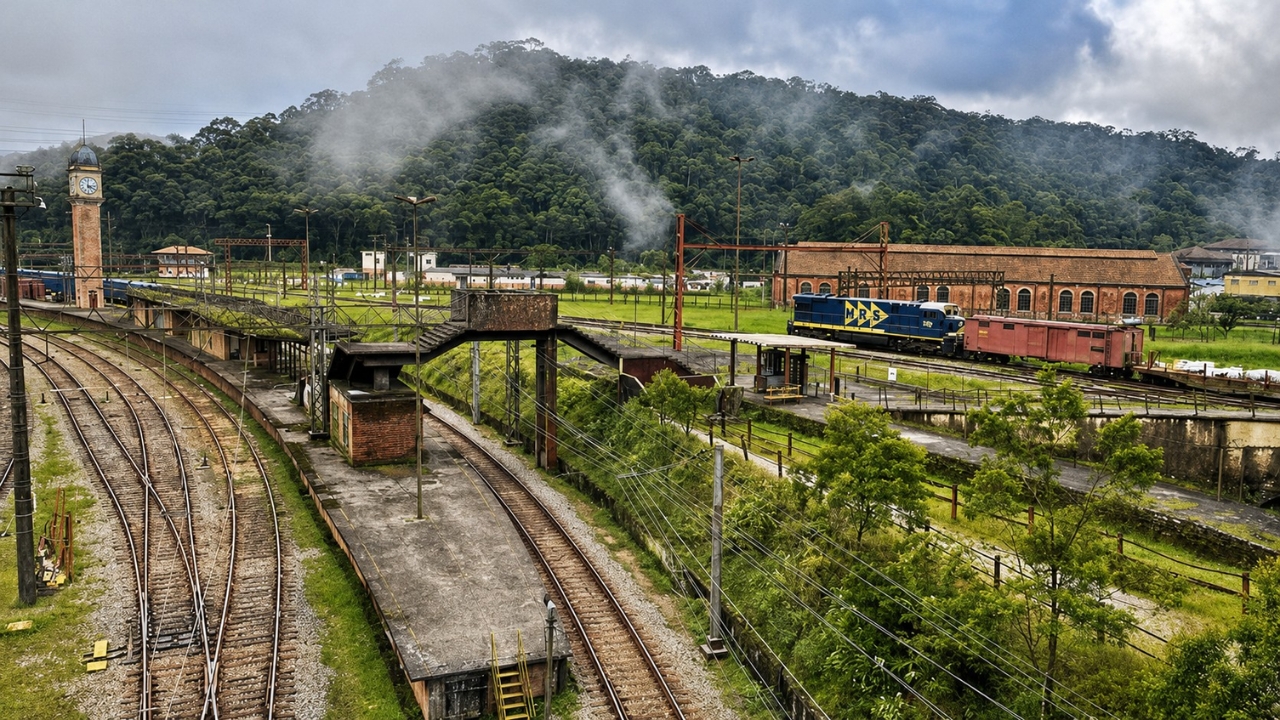
The CPTM Tourist Express has transformed railway memory into a weekend trip. The company informs that the route to Paranapiacaba departs from Estação da Luz or Estação Prefeito Celso Daniel-Santo André.
The journey covers 48 km along the current Line 10-Turquoise and lasts about 1 hour and 30 minutes. The experience is enhanced by the old composition, presented by CPTM as part of the attraction of the trip.
On the general service page, CPTM informs that the Tourist Express has existed since 2009, with routes to Paranapiacaba, Jundiaí, and Mogi das Cruzes. The composition has 352 seats and reserved space for wheelchairs.
The tourist operation shows how the tracks have ceased to be just transport infrastructure. In this case, they have also become memory in motion, connecting the center of São Paulo to a village that still preserves marks of the 19th century.
Listed heritage puts Paranapiacaba on another scale


Paranapiacaba does not rely solely on visual appeal to be relevant. The Santo André City Hall informs that the technological heritage and the surroundings of the village were listed by Condephaat in 1987, by Iphan in 2002, and by the municipal body Comdephapaasa in 2003.
The village also entered the Brazilian indicative list of UNESCO as a candidate for World Heritage. For the organization, the ensemble involves cultural landscape, railway heritage, Atlantic Forest, and historical systems of the Serra do Mar.
Iphan also reported recent restoration actions in the village. Among the spaces mentioned are the auditorium on Dr. Marum Street, the toy library of Cine Lyra, and the Lyra Serrano football field. According to the organization, investments in Paranapiacaba exceed R$ 30 million, including resources from the New PAC.
This ensemble helps explain why the village remains relevant. It is not just a tourist spot. It is an urban, railway, and environmental document still in the process of preservation.
Museums, clock, tracks, and Atlantic Forest complete the itinerary
The Santo André City Hall lists several attractions in the village, such as Cine Lyra, Bom Jesus de Paranapiacaba Church, Bom Jesus Cemetery, Railway Yard, Funicular Museum, Fox House, Market and Caminhos do Cambuci Fair, Castle Museum, and Nascentes de Paranapiacaba Park.
The Funicular Museum is described by the City Hall as the largest open-air railway museum in Brazil. The Castle Museum, built at the end of the 19th century, served as the residence of the railway’s chief engineers and now houses an exhibition on local history.
Nature also plays a role in the itinerary. The Nascentes de Paranapiacaba Municipal Natural Park has 426 hectares of Atlantic Forest and is named after the springs of the Rio Grande, the main tributary forming the Billings Reservoir.
The trails, according to the City Hall, can only be accessed with accredited environmental monitors. This detail reinforces that Paranapiacaba is tourism, but also a sensitive preservation area.
In the end, the strength of Paranapiacaba lies precisely in this mix. The village shows how a railway created to move coffee left houses, tracks, museums, workers’ memory, natural landscape, and a tourist experience that continues to attract visitors. More than a trip through the mountains, it reveals how part of São Paulo’s history can still be read on the tracks.


