






 Portuguese
  Spanish


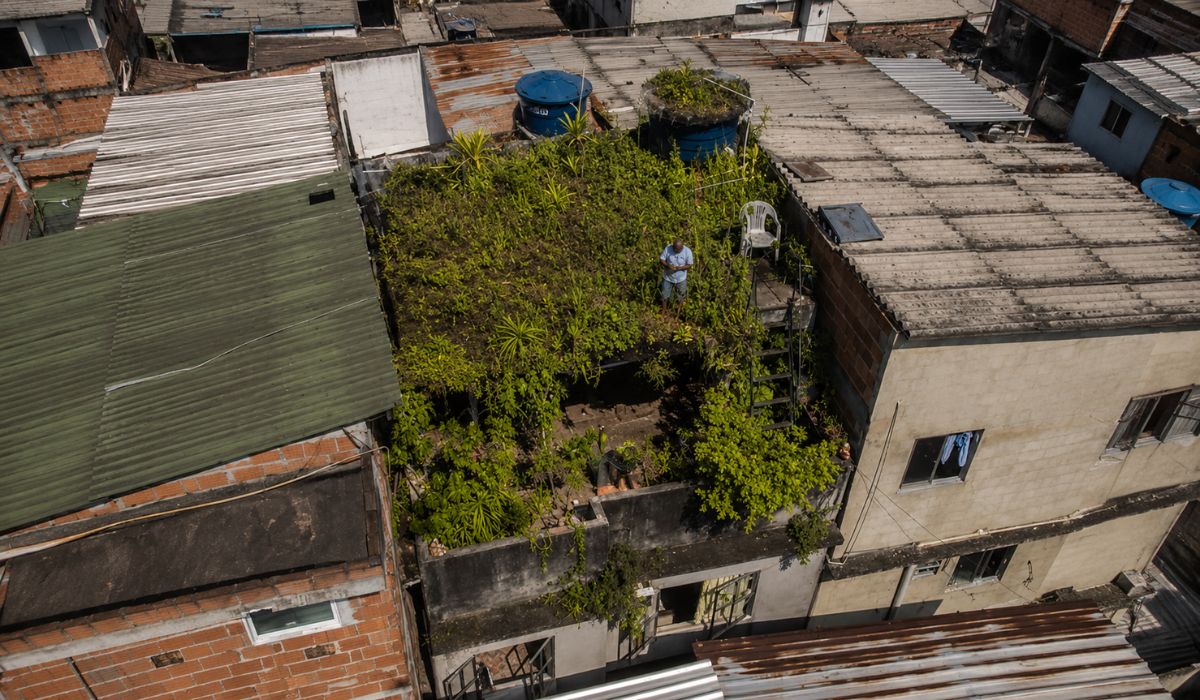

A house in Parque Arará, in Rio, has attracted attention by replacing the conventional roof with vegetation and showing how a simple solution can help tackle urban heat.
A roof covered with plants in Parque Arará, in the North Zone of Rio de Janeiro, has been cited as an example of an affordable alternative to reduce heat inside the house.
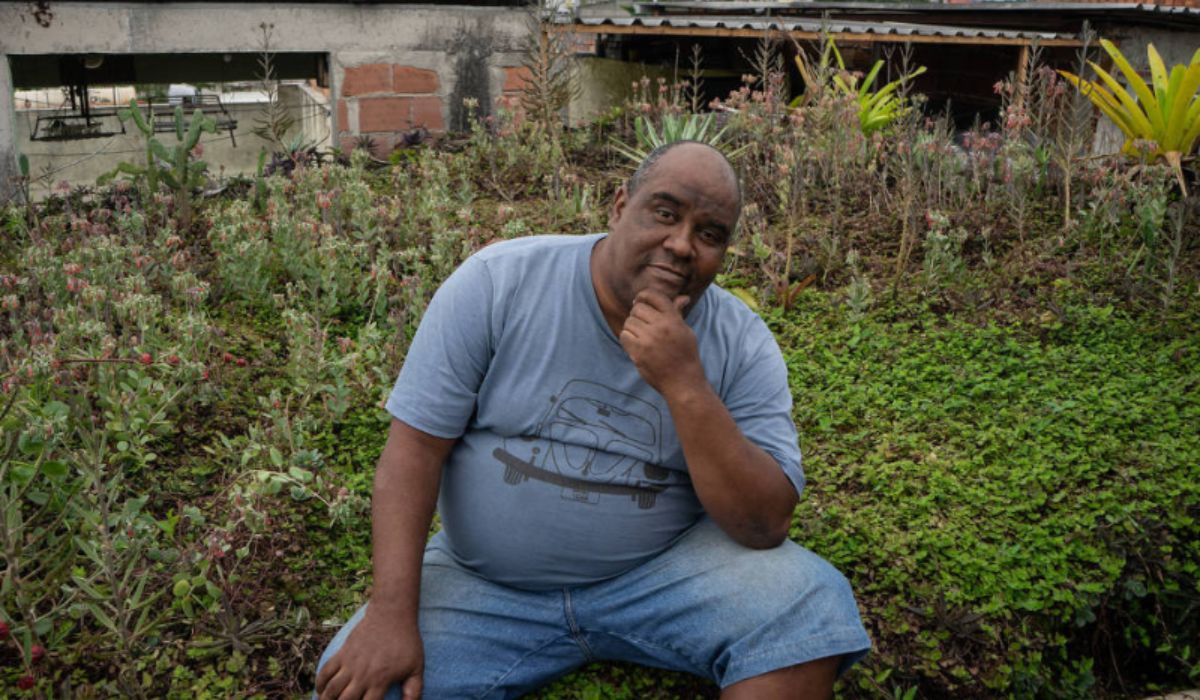
The initiative is by Luis Cassiano Silva, known as Sanduba, a resident of the community and creator of the Teto Verde Favela project.
The solution gained visibility because, according to records about the project, the temperature difference between the house with a green roof and a neighboring residence reached 15 °C in measurements reported by the project itself.
-
How to Use Brazil’s New ID to Access Premium Features on Gov.br: A Step-by-Step Mobile Guide

-
Alaska’s 14-Story Begich Towers Houses Nearly Entire Town, Including Post Office, Market, and School
-
Tiny Floating Home Combines 25 Square Meters, Electric Motor, Recycled Wood, and Button-Operated Roof
-
Brazilian Farmer Revives Corn and Soybean Production with Crop-Livestock Integration in Mato Grosso After Frost Setback


Green roof in Parque Arará
The idea was born from a common problem in densely populated urban areas: the heat accumulated in buildings during days of strong sun.
In Sanduba’s case, the discomfort with the temperature inside the house led to the search for an alternative that did not rely solely on fans or air conditioning.
Instead of keeping the conventional roof exposed to the sun, he started testing a structure with vegetation on the roof.
The project became known as Teto Verde Favela and was developed in Parque Arará, a community characterized by little greenery and a high concentration of buildings close to each other.
This type of environment tends to favor the so-called heat islands, a phenomenon where urbanized areas become warmer due to the excess of concrete, tiles, asphalt, and low presence of green areas.
In the case of Teto Verde Favela, the vegetation acts as a protective layer.
It reduces the direct incidence of the sun on the roof and helps keep the internal environment more pleasant throughout the day.
How plants help reduce heat
The functioning of a green roof follows a simple logic.
While common tiles absorb and transfer some of the heat into the house, the vegetation creates a natural barrier between the sun and the building structure.
This plant layer helps retain some of the solar radiation, reduces direct heating of the roof, and promotes heat loss through the evaporation of water present in the substrate and plants.
In practice, the roof stops being just a surface exposed to the sun and starts acting as a small suspended green area.
Installation, however, requires more than just placing soil and plants on the house.
A system of this type needs to consider waterproofing, drainage, structural weight, and the correct choice of species.
In the Parque Arará project, information released by Virada Sustentável indicates that Luis Cassiano received technical support from Bruno Rezende, a green roof specialist from the Rio de Janeiro Botanical Garden Research Institute, to develop a technique adapted to the local context.
The proposal used materials and plants resistant to the sun, without compromising the structure of the houses, according to the publication.
This point is important because a green roof in a community needs to be designed for the reality of the homes, which were not always designed to receive additional weight.


Why the solution draws attention
The main result reported by Sanduba was the drop in temperature inside the residence.
The difference of up to 15 °C made the house more comfortable and helped turn the project into a reference for other residents.
The experience also draws attention because it combines science, climate adaptation, and low-cost solutions.
Instead of relying solely on electrical equipment, the vegetative cover uses nature itself as part of the response to heat.
This aspect is relevant in areas where energy consumption weighs on family budgets.
When a house becomes less hot, the need for fans and air conditioners may decrease.
Besides thermal comfort, green roofs can help retain some of the rainwater, reduce immediate runoff, and increase the presence of vegetation in regions with little free ground space.
The vegetation also contributes to improving the thermal sensation in the surroundings, especially when several houses adopt similar solutions.
Even so, the results depend on the type of construction, solar incidence, ventilation, the species used, and how the system was installed.
Therefore, the experience of Parque Arará should not be treated as a one-size-fits-all formula, but as a practical example of possible adaptation in urban areas vulnerable to heat.
What to observe before installing
Despite the visual and environmental appeal, a green roof requires planning.
The first step is to assess whether the house structure can support the weight of the installation layers, especially when the substrate gets wet after rain.
It is also necessary to ensure proper waterproofing.
Without this step, moisture can cause leaks, mold, and damage to the construction.
Another consideration involves drainage.
Water needs to drain in a controlled manner to prevent accumulation on the roof.
The choice of plants also influences the system’s performance.
Heat-resistant species, with simpler maintenance and adapted to the local climate, tend to work better on roofs exposed to intense sun.
In the case of urban communities, the solution needs to be even more careful because many houses were built progressively, with extensions made over the years.
Therefore, any intervention on the slab or roof should consider technical guidance whenever possible.
Simple technology against heat islands
Sanduba’s experience shows how environmental solutions can arise from everyday problems.
The starting point was not a sophisticated laboratory, but the discomfort caused by the heat inside the house.
Even so, the result engages with topics discussed by urban planners, researchers, and urban climate specialists.
Hotter cities, with less vegetation and an excess of surfaces that absorb heat, tend to intensify thermal discomfort.
In communities with closely spaced houses, little shade, and limited air circulation, this effect can be even more noticeable.
The green roof emerges in this context as an alternative that combines climate adaptation, domestic comfort, and more intelligent use of urban surfaces.
It is not about replacing all infrastructure solutions with individual initiatives.
The experience, however, helps to show that small interventions can have a concrete effect on everyday life when they are designed for the local reality.
In Parque Arará, the project also gained educational value.
By showing how the vegetation cover works, Sanduba helped bring residents closer to the discussion about heat, vegetation, energy, and sustainability.
This approach makes the topic easier to understand.
Instead of talking about climate change in an abstract way, the experience shows the direct impact of a solution within a home.
An idea that can inspire other homes
The Teto Verde Favela continues to draw attention because it translates a technology known in large urban centers to a popular reality.
Green roofs are used in different countries and in various architectural projects, but adapting them for community homes requires creativity, technical care, and materials compatible with the residents’ budget.
Luis Cassiano’s initiative shows that the discussion about thermal comfort doesn’t need to be restricted to modern buildings or expensive works.
With study, guidance, and adaptation, vegetation can move beyond occupying only parks and gardens to become part of the constructions themselves.
The case also helps raise an important issue for Brazilian cities.
In a scenario of more frequent heat and increasingly dense urban areas, simple, safe, and replicable solutions can make a difference in the routine of many families.


