Portuguese
  Spanish



Toyota System Records Unusual Situations on the Roads and Foresees Payment to the Driver, with a Focus on Improving Safety and Assisted Driving Technologies.
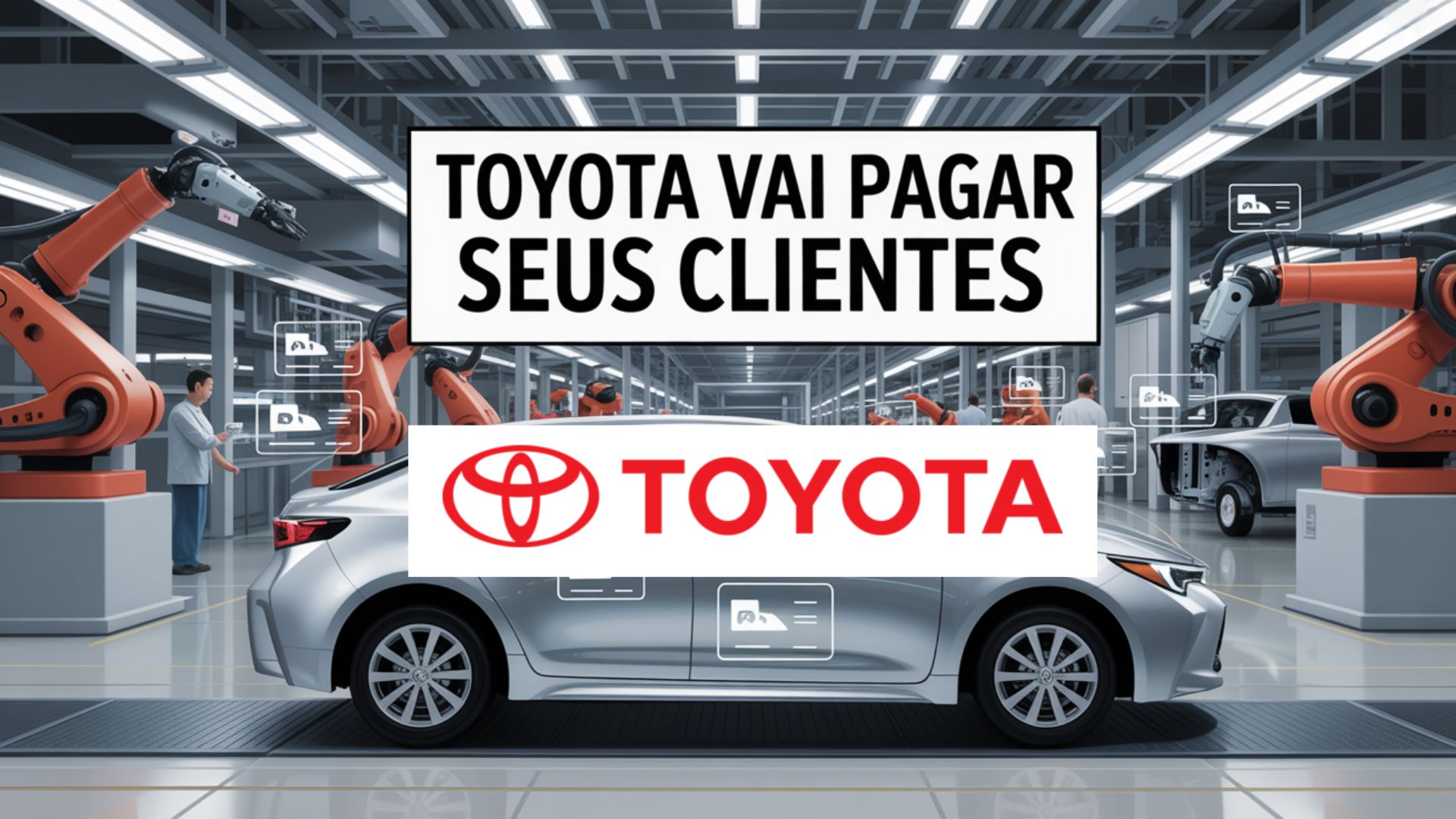
Toyota has registered a patent that describes a compensation system for drivers who allow the transmission of data collected by their vehicles in unusual situations, useful for improving safety and assisted driving technologies.
The proposal arises at a time of increased scrutiny over data collection practices in the automotive industry, following investigations involving General Motors in the United States.
Toyota Patent and Evaluation of Collected Data
The model presented in the documentation indicates that, whenever the car registers an event classified as relevant for artificial intelligence training, the driver could receive a value proportional to the utility of the information.
-
Owner of Havan Visits Paraguay to Discuss Lower Taxes, Local Suppliers, and International Expansion with President

-
Brazilian Construction Retail Chain Closes After 60 Years, Begins Liquidation Sale Across Five Cities

-
Brazil Approves Landmark Bill Requiring Workplace Adaptations for Autism Inclusion

-
Brazil’s Micro-Entrepreneur Program May See Major Changes: Income Cap Could Increase to R$ 130,000, Annual Inflation Adjustments, and Allow Hiring of an Additional Employee



According to the patent, the evaluation occurs automatically: the data is sent to the automaker’s servers, compared to an internal value table, and if deemed suitable for research and development criteria, generates financial compensation.
When they do not meet the technical requirements, they are discarded.
According to Toyota, the goal is to use records from rare situations, which still pose challenges to current driver assistance systems.
Among the scenarios cited in the documentation are unexpected animal crossings, potholes in poorly mapped roads, objects fallen on secondary roads, and specific occurrences in certain countries, such as tow truck interventions in areas of Japan.
These data, according to the technical description, contribute to refining models used in features like automatic braking, obstacle detection, and assisted steering.
The relevance of this type of record, as stated in the patent, lies in the fact that security algorithms depend on a wide variety of real contexts to identify patterns and react predictably.
Experts in autonomous driving assert that unpredictable events—known in the field as “edge cases”—still represent one of the main challenges for the advancement of these systems, because they do not occur frequently enough in controlled tests.
Explicit Consent and Driver Control
The document also highlights the role of consent.
The driver would need to explicitly authorize the transmission of data, with the option to activate or deactivate sharing at any time, including before starting the trip.
Toyota indicates that the system should allow granular control over the transmission of information, something mentioned by industry analysts as essential in light of recent discussions about privacy in connected vehicles.
The debate gained momentum after the case involving General Motors, whose telemetry program was questioned in the U.S. for allegedly sending detailed driving data to third parties without adequate clarity for consumers.
The episode resulted in agreements with authorities and intensified pressure for greater transparency, leading automakers to review their data collection and sharing policies.
Automotive Data Market and Industry Interest
In addition to the regulatory aspect, market studies indicate that automotive data has become a strategic asset.
International research estimates that this segment could generate hundreds of billions of dollars by the end of the decade, driven by the expansion of connected cars and the growing adoption of advanced driver assistance functions.
Analysts say that automakers, technology companies, and insurers see the data generated by vehicles as an important foundation for developing new services.
However, Toyota’s patent does not equate to the immediate adoption of the system. There is no official announcement regarding the implementation of the proposal or forecast for commercial launch.
Intellectual property documents usually describe concepts that may or may not be turned into products, and experts remind us that some of these technologies are registered preventively for future use.
Should the model be applied, privacy experts believe that factors such as clarity in communication, data usage limits, and the possibility of immediate revocation of consent are likely to influence acceptance by drivers.
The potential for compensation is also seen as a point of concern, as values were not specified in the documentation and would depend on the type of data captured.
With the advancement of assisted driving systems and the increasing connectivity of vehicles, companies in the sector are evaluating different ways to address consumer concerns about privacy and information control.