Portuguese
  Spanish


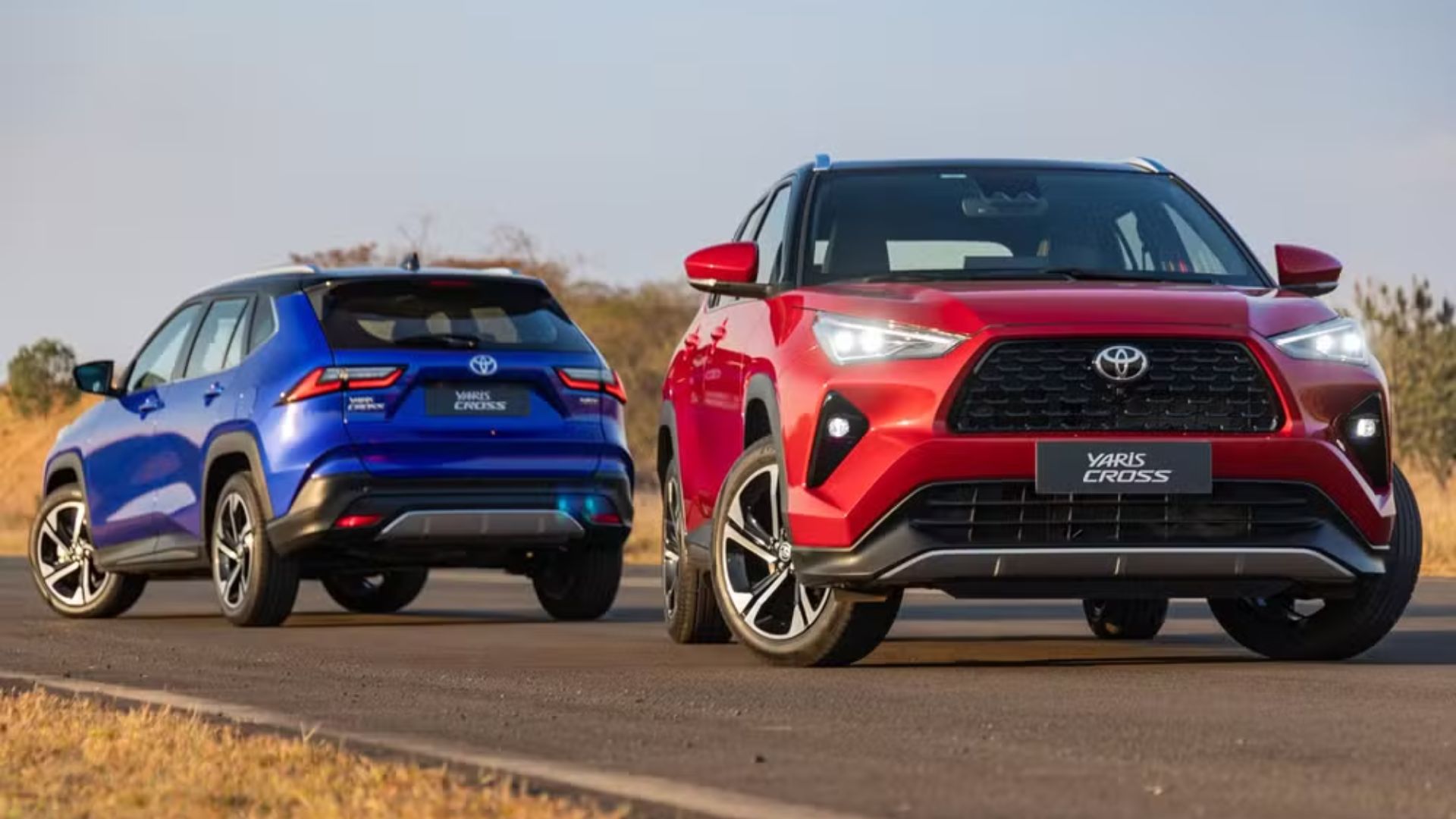


Regional Crash Test Results Highlight Differences Between Versions Sold in Brazil and Other Latin American Countries, Influencing Final Safety Rating of the Compact SUV, Despite More Complete Package in the Brazilian Market and Good Performance in Consumption and Technology.
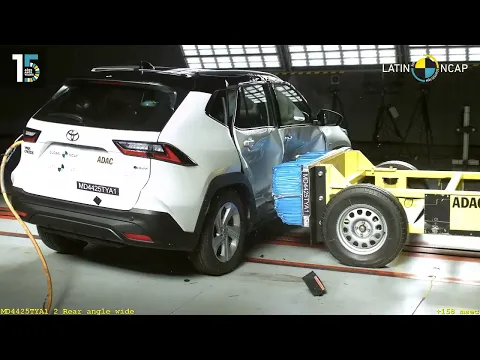
The Toyota Yaris Cross, recently introduced to the Brazilian market, received two stars in the crash test of the Latin American and Caribbean New Car Assessment Program, Latin NCAP, in a result published on December 11.
The score, from zero to five, considers the model’s performance in occupant and pedestrian protection, as well as the availability of driving assistance technologies in the countries of the region.
Despite the utility vehicle being sold in Brazil with a more complete assistance package, Latin NCAP evaluates the car based on the configuration and availability of equipment across the versions marketed in Latin America and the Caribbean.
-
End of an era in Brazil: beloved sedan by Brazilians is discontinued despite having a 2.0 engine with 151 hp, CVT transmission, 466-liter trunk, and up to 650 km of range.

-
New Law Proposal in Brazil Could Heavily Penalize Drivers: Dangerous Overtaking May Become a Serious Offense with Fines Increased Tenfold and a 12-Month License Suspension; Update on 2026 Progress

-
Electric Revolution: Watts W125 Motorcycle Offers 160 km Range, 90 km/h Speed, and Affordable Price Starting at $3,000
-
General Motors Replaces Over a Thousand Workers with 50 Cobots at Electric Vehicle Plant, UAW Union Criticizes Move Amid Industry’s Automation Push


In practice, items that appear as standard in one country may not meet minimum presence criteria in other markets, which weighs on the final result.
Results of Toyota Yaris Cross in Latin NCAP
In the Latin NCAP breakdown, the Toyota Yaris Cross achieved 77% in adult occupant protection.
The index for child occupant protection was 69%. Meanwhile, protection for pedestrians and vulnerable users stood at 56%. In terms of safety assistance, the score was 58%.
The report states that, in the frontal impact, the head and neck protection for the driver and passenger was considered good.
Nevertheless, the driver’s chest received a marginal rating.
In the case of the passenger, the chest protection was rated as adequate.

The structure of the passenger compartment was considered stable and capable of withstanding larger loads.
Side Impacts and Structural Evaluation
In the side impact, the document records good protection for the head, abdomen, and pelvis.
In the side test against a pole, the chest again showed marginal protection.
The abdomen was rated as adequate. The head and pelvis received a good rating in this scenario.
Assistance Equipment Weighs on Final Score
One of the most sensitive points for the final score was the safety assistance section.
In the report, Latin NCAP notes that autonomous emergency braking in urban environments appears as optional, but does not meet the availability requirements set by the program to be considered in the assessment.
This factor limited the score in this area.
This type of rule seeks to reflect what effectively reaches consumers in significant volume in the region.
The program does not consider only the existence of the equipment but its presence in a significant portion of sales.
Latin NCAP has previously stated that certain systems, when optional, must be available in a minimum percentage of the versions sold.
Difference Between Brazil and Other Latin American Markets
In the case of the Yaris Cross, reports published alongside the result highlighted the differences between markets.

In Brazil, the model is advertised with a broader set of assistances from the entry-level versions.
In other Latin American countries, some of these features appear as optional.
This disparity directly influences the regional score.
Five Stars in ASEAN NCAP and Different Criteria
The contrast with another recent test helps explain why direct comparison is not always straightforward.
On August 1, 2025, the Yaris Cross evaluated by ASEAN NCAP, the Southeast Asian program, received five stars.
The total reported score was 83.02 points.
Nevertheless, the protocols have their own scopes, weights, and criteria.
A top score in one program does not guarantee the same rating in another.
Differences in versions, requirements for regional availability, and distinct weights for each item explain the divergent results.
Pedestrian Protection is the Weakest Point
The lowest average of the Yaris Cross in Latin NCAP appeared in the category of protection for pedestrians and vulnerable users, with 56%.
The report describes good and adequate protection in most head impact areas.
The performance was lower in the windshield and front column regions.
These areas received ratings that varied from marginal, weak, and poor.
This type of assessment has gained greater weight in the more recent protocols.
The aim is to also consider the risks for those outside the vehicle.

How is the Toyota Yaris Cross Sold in Brazil
In Brazil, Toyota announced the Yaris Cross on November 19, 2025. The model arrives with four versions.
The start of deliveries is scheduled for February 2026.
The brand reported that the SUV is produced in Sorocaba, in the interior of São Paulo.
In the official communication, Toyota highlighted fuel consumption of up to 17.9 km/l in the city and 15.3 km/l on the highway for the hybrid versions.
This information helps contextualize the recurring mention of numbers like “32 km/l.”
This level appears associated with measurements reported in other markets.
In Brazil, the official index considered is from the PBE/Inmetro.
Engines, Transmission, and Equipment in the Brazilian Market
In the combustion versions, the Yaris Cross uses a 1.5 flex engine. The power reaches 122 hp with ethanol.
The maximum torque is 15.3 kgfm and the transmission is an automatic CVT type.
In the full flex hybrid versions, the model combines the 1.5 flex engine with an electric system.
The reported combined power is 111 hp and the system uses a Hybrid Transaxle CVT transmission.
In the Brazilian market, all versions come with six airbags as standard.
The standard package also includes autonomous emergency braking, adaptive cruise control, and lane-keeping assistance.
More expensive versions add blind spot alert, cross-traffic alert, and 360° camera.
With the Latin NCAP result released and the arrival at dealerships approaching, how much weight do Brazilian consumers tend to place on the regional safety rating versus the package of equipment offered specifically in the national market?