Portuguese
  Spanish


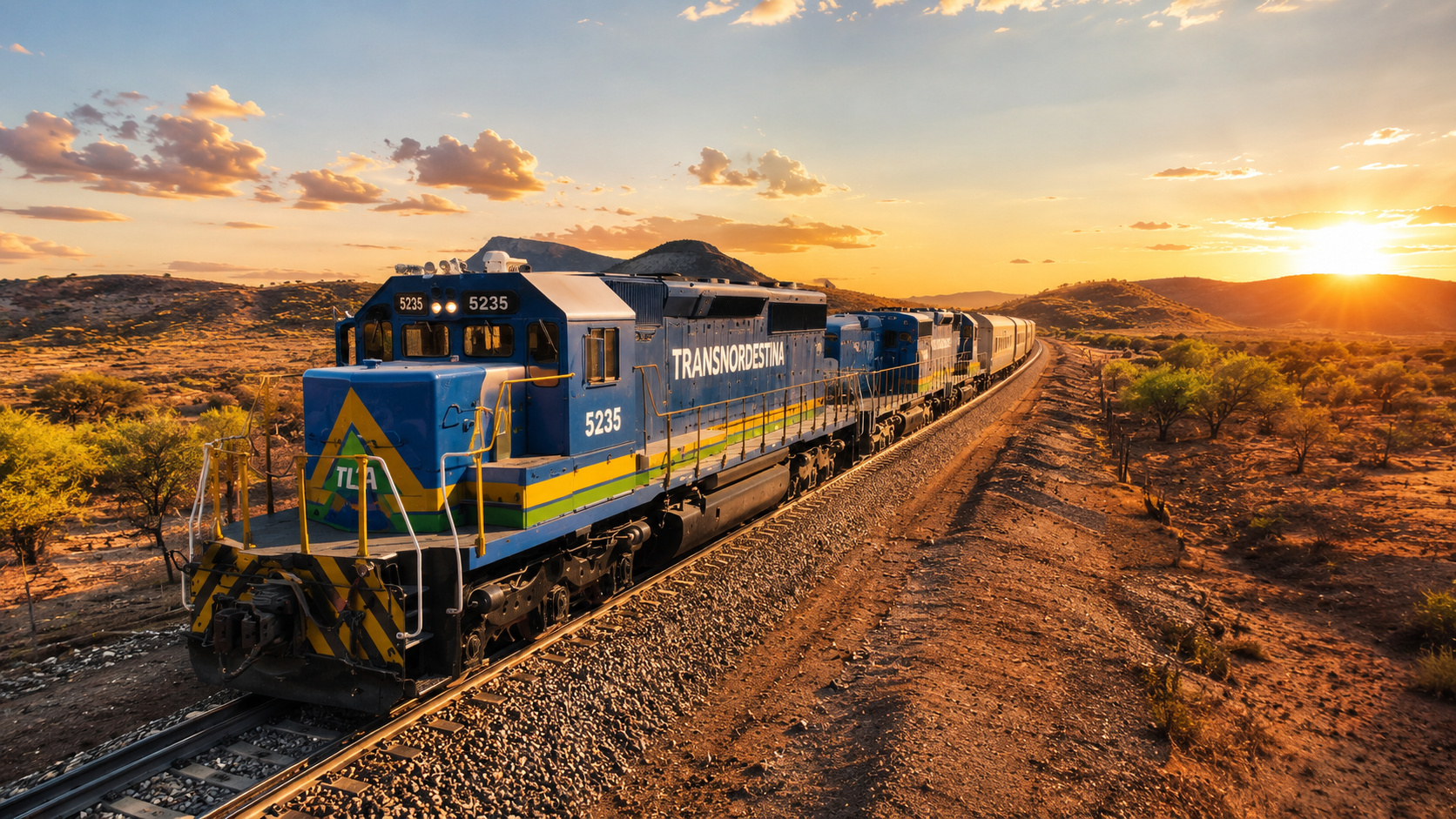


Banco do Nordeste increases investment in Transnordestina to accelerate the railway, strengthen rail transport, and boost exports.
The Transnordestina has gained momentum with the release of an additional R$ 41.2 million by Banco do Nordeste (BNB) for the continuation of the railway works. According to the Bank’s own publication on May 11, the new disbursement corresponds to the third installment released in 2026 and is part of the investment package aimed at completing one of Brazil’s largest logistics projects.
Just this year, Banco do Nordeste has already directed more than R$ 300 million to the project. It is expected that around R$ 1 billion will still be released by December, as the services progress. In 2025, the project had already received R$ 1.7 billion in resources from the Northeast Development Fund (FDNE).
With 1,209 kilometers in length, the railway connects Eliseu Martins, in Piauí, to the Pecém Industrial and Port Complex, in Ceará, crossing 53 municipalities. The project is considered strategic for expanding rail freight transport, reducing logistics costs, and strengthening Brazilian exports.
-
Netherlands Builds Road from 218,000 Recycled Plastic Cups and 500,000 Bottle Caps, Featuring Smart Sensors and Promising Triple the Lifespan of Traditional Asphalt

-
Brazil to Convert 80 Public Properties into 11,000 Affordable Homes Across 44 Cities to Address Housing Shortage

-
Brazilian Company Develops Wall Panels from Recycled Refrigerator Foam with Comparable Thermal and Acoustic Performance

-
Brazil’s São Paulo Region Unveils Latin America’s Largest Timber Shopping Mall, Built in 7 Months, Capturing Carbon and Preventing 900 Tons of Emissions


Banco do Nordeste accelerates investment in Transnordestina
The new contribution is part of the R$ 3.6 billion addendum announced by the Federal Government at the end of 2024 to ensure the continuation of Transnordestina’s works. The resources come from the FDNE and follow the pace of execution of the railway project.
Transnordestina Logística S/A (TLSA), the concessionaire responsible for the section, continues to carry out the railway’s implementation work. The main objective is to connect the Northeast’s production regions to the Port of Pecém, considered one of the country’s main export corridors.
The Financial and Credit Director of Banco do Nordeste, Wanger de Alencar, highlighted that the railway is already beginning to stimulate new businesses in the region. According to him, sectors related to logistics, cold storage, and service providers are closely monitoring the project’s progress.
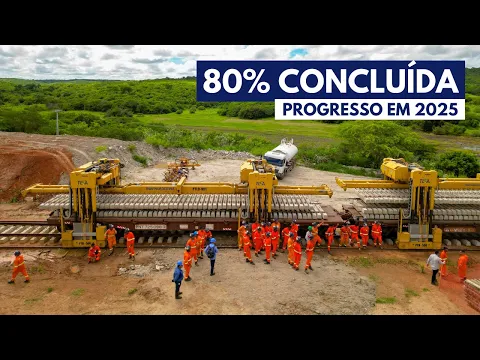

1,209 km railway promises to change northeastern logistics
The Transnordestina is seen as one of the most important infrastructure projects for the region in recent decades. The project aims to reduce dependence on road transport and increase efficiency in cargo flow.
Today, much of the Northeast’s agricultural and mineral production still depends on roads, which increases operational costs and transport time. With the completion of the railway, the expectation is to improve the competitiveness of various economic sectors.
Among the segments that should benefit are:
- Agribusiness
- Mining
- Cement industry
- Fuels
- Port logistics
- Grain export
Additionally, experts point out that rail transport has greater energy efficiency and lower cost for long distances, especially in the transport of large volumes.

Rail transport gains ground as a more efficient alternative
The growth of rail transport has returned to debate in Brazil due to the need to modernize the national logistics infrastructure. In this scenario, Transnordestina appears as a key piece to expand the economic integration of the Northeast.
The railway was planned to create a cargo corridor linking the northeastern interior to the Ceará coast. The Port of Pecém, the final destination of the line, has a strategic location for exports with easy access to European and North American markets.
In practice, the completion of the railway can bring important advantages, such as:
- Reduction in freight cost
- Greater cargo transport capacity
- Lower pollutant emissions
- More competitiveness for Brazilian products
- Integration between industrial and agricultural hubs
The expectation of the logistics sector is that the rail mode will gradually gain participation in national transport in the coming years.

Transnordestina crosses 53 municipalities and attracts new businesses
The economic impact of Transnordestina is not expected to be limited to cargo transport alone. Municipalities located along the 1,209 kilometers of the railway are also following the progress of the works with expectations of job creation and the arrival of new investments.
Companies linked to the storage, transportation, maintenance, and logistics services sector are already seeing commercial opportunities in cities near the railway route. In some regions, the project is seen as a potential driver of economic development.
Another important point is the appreciation of regional infrastructure. The expansion of the railway network can facilitate the emergence of distribution centers, industrial hubs, and logistical support terminals in the northeastern interior.
Banco do Nordeste expands participation in strategic works
Banco do Nordeste has been increasing its participation in infrastructure projects considered essential for the region’s economic growth. The institution’s involvement in financing the Transnordestina reinforces the importance of the railway within the national development strategy.
The disbursements follow a schedule linked to the physical progress of the works. According to information released by the bank itself, new resources may still be released until the end of 2026 as the project progresses.
In recent years, the Transnordestina has faced financial challenges, schedule revisions, and operational changes. Even so, the project has maintained strategic relevance due to the potential for logistical transformation in the Northeast region.
Currently, the focus remains on completing the section between Eliseu Martins and the Port of Pecém, considered the most economically important segment for freight rail transport.
What the new phase of Transnordestina can represent for Brazil
The accelerated resumption of the Transnordestina works reinforces Brazil’s attempt to expand its railway infrastructure and reduce historical bottlenecks in freight transport. The new investment of R$ 41.2 million shows that the project continues to be treated as a priority within regional development policy.
With more than R$ 300 million already released in 2026 and a forecast of up to R$ 1 billion additional by the end of the year, the railway advances as a strategic bet to strengthen exports, attract companies, and increase the economic competitiveness of the Northeast.
If the schedule is maintained, the Transnordestina could consolidate itself as one of the main logistical corridors in the country, connecting production, industry, and ports more efficiently and sustainably.
With information from Banco do Nordeste