






 Portuguese
  Spanish


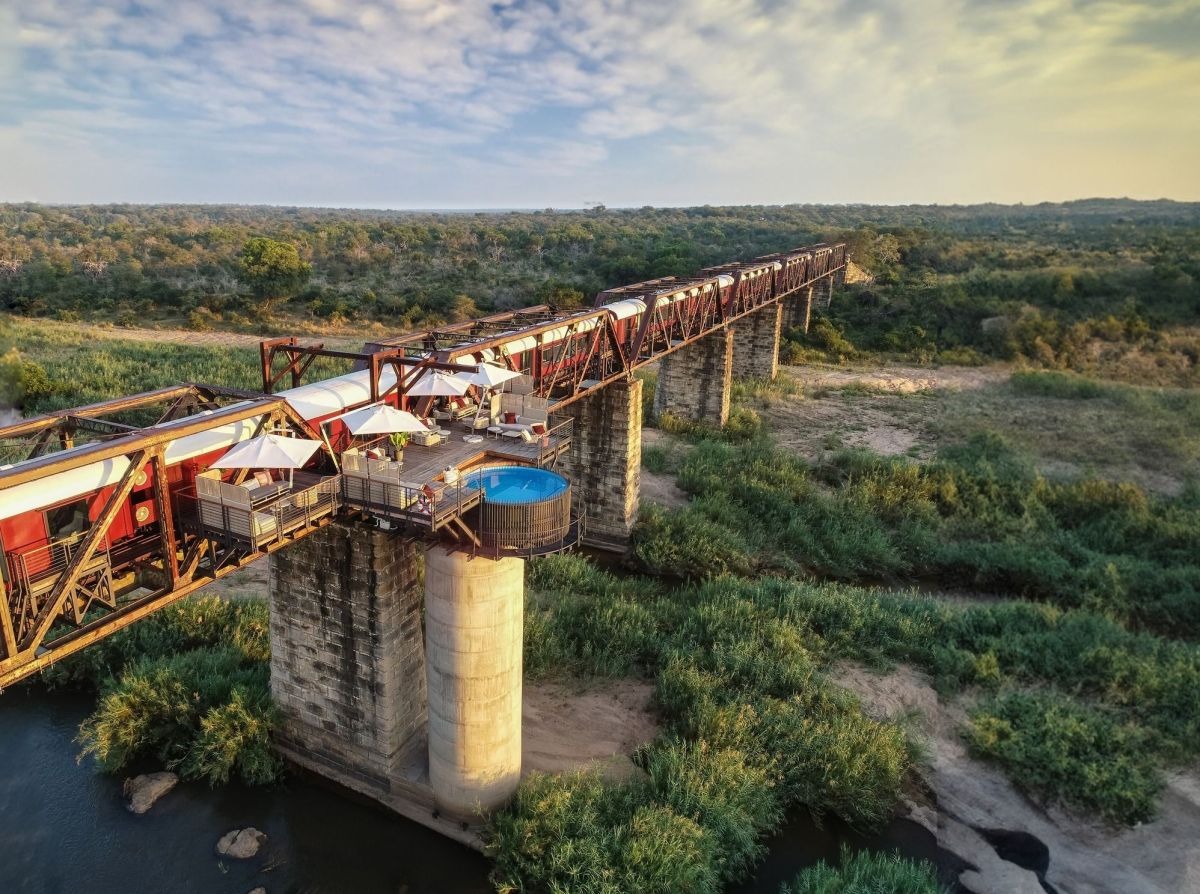


Installed on a Decommissioned Bridge, Hotel Transforms Old Cars into Luxurious Suites, with Guided Safaris, Local Cuisine, and Exclusive Views of the Big Fives
South Africa is known for offering some of the most luxurious and nostalgic train journeys in the world. However, for a growing group of travelers, the most surprising experience does not involve any movement. Instead, it takes place on tracks that remain still but lead guests to a deep dive into history, comfort, and wildlife.
Located on an old railway bridge that crosses the Sabie River, a collection of restored train cars has been transformed into a unique hotel.
There are 24 modern suites, equipped with balconies and integrated into an area with a pool, all designed to offer a privileged view of the local wildlife.
-
Security Guard Becomes Doctor at Louisiana Hospital Where He Once Worked, Studied Chemistry Between Shifts

-
Woman Rescued from Luxury Complex in Brazil Worked Without Pay for 55 Years, May Be Entitled to Over $300,000

-
Brazilians in Portugal Face Increased Police Checks as Consulate Advises Carrying Documents; Long-term Resident and Tourist Report Heightened Scrutiny in Porto.

-
Russia Proposes Bold Energy Transition Plan at BRICS, Citing $8 Trillion Annual Cost for 2050 Global Target



Among the most common sightings are the so-called “Big Fives” of Africa – lions, leopards, rhinoceroses, elephants, and buffaloes.
A Railway Past That Inspires the Present
According to Jerry Mabena, CEO of the Motsamayi Tourism Group, the owner of the establishment, the idea was born from the railway history of Kruger National Park.
In the 1920s, steam trains ran along the Selati Railway and were essential for transporting tourists to the park.
At certain times, these trains would even stop overnight exactly at the bridge where the hotel is now located.
With the construction of a new railway line on the edges of Kruger in the 1970s, the Selati and the bridge were eventually decommissioned.
Decades later, in 2016, the proposal to bring life back to the site emerged. “The idea for us was to reenact the experience one way or another,” says Mabena.
When the opportunity arose to buy decommissioned old train cars from Transnet, the country’s railway logistics operator, the project took shape.

Modern Design with Historical Soul
The interior of the train cars underwent a complete renovation. The finish is contemporary but incorporates Art Deco elements, seeking a look that does not invoke colonial style.
“We were trying to find a look that wasn’t colonial,” explains Mabena.
The suites feature floor-to-ceiling windows facing east. This allows guests to wake up with the light of dawn and observe the first movements of wildlife.
The river, always present in the landscape, serves as a true meeting point for animals, making it possible to spend hours observing nature directly from the balconies or the pool.
“Having hippos grunting beneath the cars attracts people who want to be in nature but don’t want to be immersed in it,” says Mabena, highlighting the proposal to offer proximity without sacrificing comfort.
Guided Safaris and Community Engagement
Although many guests prefer to relax at the hotel, a large number put on their boots and head out for guided safaris.
Employees like senior guide Thuli Mnisi were hired as part of an effort to engage the local community. Mnisi has worked as a guide since 2014, before joining Kruger Shalati.
“It’s totally different from other accommodations,” she asserts. “When guests visit the train for the first time, it takes your breath away, the view is unique.”
Although the park allows for self-drive safaris, Mnisi emphasizes that the experience with a guide makes a difference. “We communicate, we know where we can find the animals.”
Cuisine with Local Identity
In the hotel’s surroundings, gardeners cultivate indigenous species and maintain a garden that supplies the restaurant.
The menu highlights regional ingredients, with dishes such as crocodile carpaccio, venison, and gazelle.
For chef Vusi Mbatha, simplicity is the foundation of the cuisine. “Mother Nature is the true artist,” he says.
“It’s one of those philosophies we share: take simple ingredients and turn them into something incredible.” The proposal combines sophistication and respect for local flavors.
Rates, Opening, and Curiosities
After delays caused by Covid-19, the hotel opened its doors in December 2020 and is now hosting guests for its fourth summer season.
The double rooms aboard the train cost from 9,950 Rand (R$ 2600) per person, per night for international guests, with discounts for longer stays.
One of the seven rooms in the adjacent Bridge House is available for a lower rate. The rates include meals, some drinks, two safaris, and airport transportation.
As an additional detail, the Motsamayi Tourism Group also owns the Kruger Station, south of the bridge, where the last train to operate in the park remains.
The old Class 24 steam locomotive, decommissioned since the 1970s, now rests next to a restaurant and bar.
Mabena believes that the culture of historic trains is resurging and predicts that in the future, a steam train will once again move through the park.
Information from CNN.


