Portuguese
  Spanish


Chinese Floating Train Accelerates from 0 to 650 km/h in Just 600 Meters with Electromagnetic Levitation and 1 km Track, Setting New World Record in the Race for Future Transport
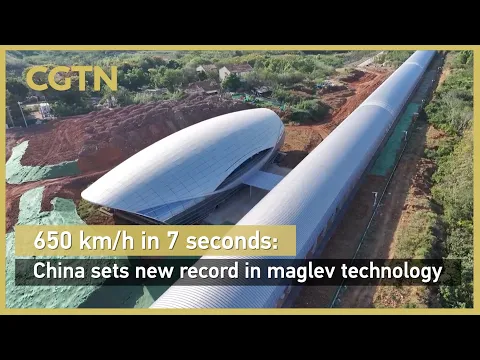
A floating train from China reached the impressive mark of 650 km/h in just 7 seconds, covering 600 meters of an experimental track that is only 1 km long.
The test was conducted at the Donghu Laboratory and published on the CGTN YouTube channel on June 18, demonstrating the revolutionary potential of electromagnetic levitation for land transportation.
The technology allows the vehicle to float just millimeters off the ground, with no physical contact, eliminating friction and enabling precise acceleration and braking.
-
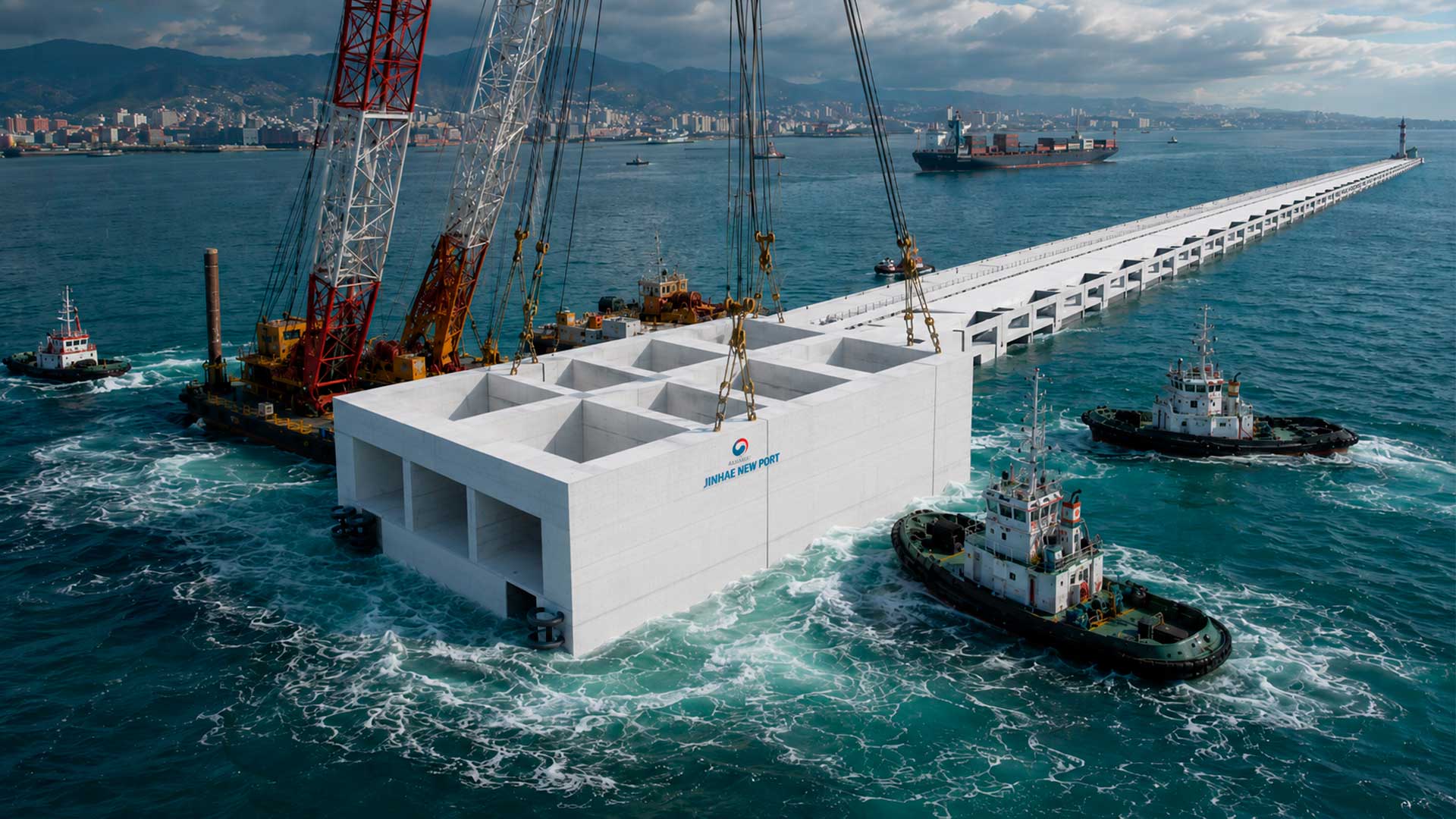
South Korea to Sink 20 Massive Concrete Coffers Off Busan Coast to Build 1.4 km Breakwater at Jinhae New Port, Part of $9.4 Billion Expansion to Rank Among World’s Top 3 Ports

-
At 54, Brazilian Artisan Turns Textile Waste into a Successful Handbag Brand, Earning Over $6,000 Monthly
-
Brazilian Entrepreneur Sells $50,000 Monthly in Sustainable Luggage Made from Recycled Bottles, Eyes International Market
-
Venice Deploys 78 Massive Steel Gates to Shield City from Extreme Adriatic Tides




Chinese Floating Train Breaks World Record by Reaching 650 km/h in Just 7 Seconds with Millimeter-Level Positioning Control
Unlike traditional models, which require long tracks to achieve high speeds, the Chinese innovation uses magnetic levitation of like poles and powerful linear motors in a space of just 1,000 meters. The floating train achieves extreme speeds without wheels, tracks, or physical contact with the ground.
The acceleration is so controlled that sensors track the position of the vehicle with an accuracy of four millimeters. And the braking system is equally advanced: the vehicle comes to a complete stop in just 200 meters after reaching peak speed.

No Wheels, No Tracks: The Floating Train Accelerates with Magnetic Levitation and Surpasses Any Ground Vehicle Ever Tested
The secret to the performance lies in the total absence of friction: the floating train from China literally floats above a magnetic guide, propelled by electromagnetic forces and facing only air resistance.
According to Li Weichao, director of the innovation center at the laboratory, this model redefines how to test and build high-speed vehicles, requiring less space and resources. Moreover, the system can be easily integrated into urban technology parks.
Test Track Prepared for 800 km/h and Technology May Reach Space Launchers and Urban High-Speed Uses
The speed of 650 km/h is not the limit. The test track was designed to support continuous operations at 800 km/h by the end of the year. In parallel, Chinese companies are also working on magnetic levitation-assisted rocket launch systems, with expected operation in 2028.
Additionally, projects with high-temperature superconductors (HTS) and low-pressure tunnels are being developed, targeting 1,000 km/h, positioning the country at the forefront of the race for a viable “hyperloop“.
China Leads the Global Race for Floating Trains While Japan, USA, and Korea are Still Testing Projects
China already operates the largest network of magnetic levitation routes in the world. The Shanghai line, inaugurated in 2004, still reaches 430 km/h, but new technologies promise to go much further. In contrast, Japan is still building its floating Shinkansen, and the USA continues only in studies.
With initiatives like the Donghu Laboratory, China is solidifying its position as the global leader in developing next-generation floating trains, reducing the cost per test and accelerating the innovation curve.
Advancements May Reduce Costs, Accelerate Testing, and Bring Floating Trains to Cities in the Near Future
The adoption of shorter tracks and modular technologies allows the floating train to be tested and adapted quickly, paving the way for practical application in urban, intermunicipal, and even intercontinental areas.
Advancements in aerodynamics, propulsion algorithms, and electronic cooling are being shared with other research centers, showing that the future of mobility may indeed be suspended in the air.