






 Portuguese
  Spanish


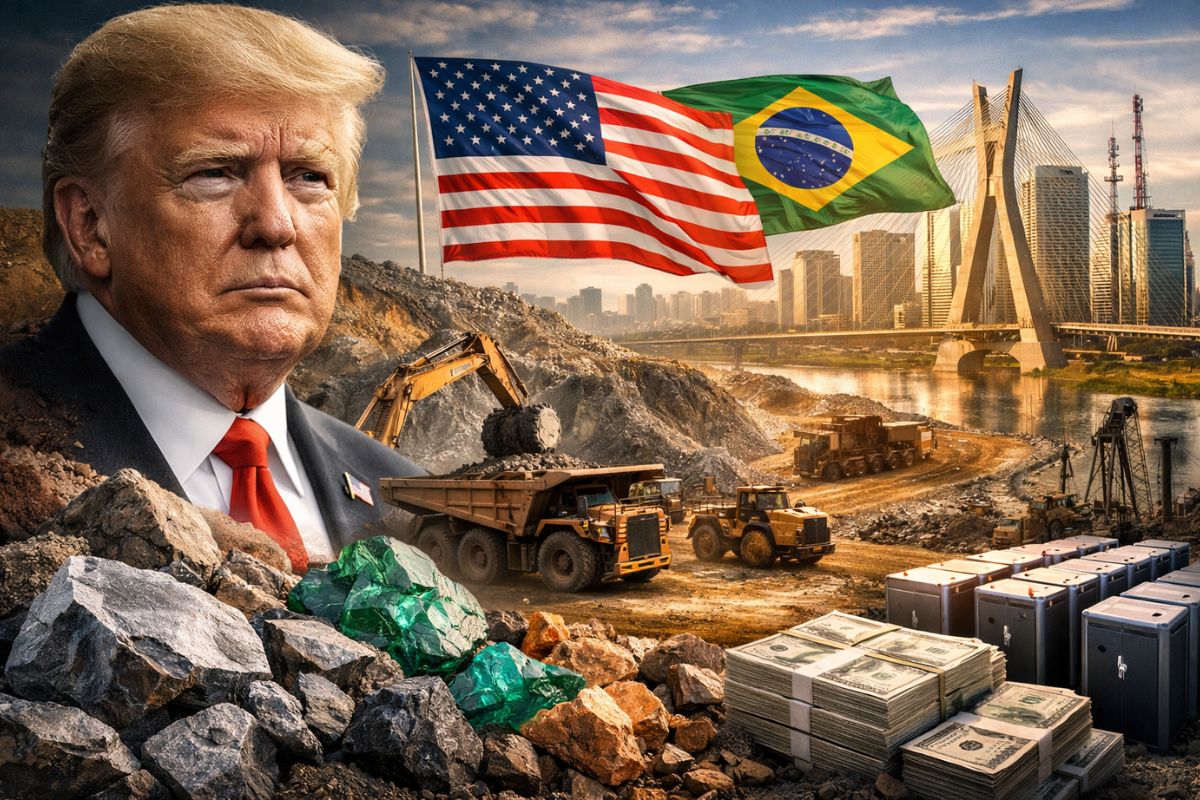


The Global Competition For Critical Minerals Enters A New Chapter As The United States Seeks To Expand Access To Brazilian Reserves, Proposing Cooperation Agreements, Billion-Dollar Financing, And Regulatory Changes That Could Facilitate Investments And Transform The Country Into A Central Piece In The Global Technology And Energy Chain.
The government of Donald Trump intensified diplomatic and economic efforts to expand U.S. access to critical minerals from Brazil, considered essential for the production of batteries, electronic equipment, and strategic technologies in the global economy.
The initiative includes organizing a major international forum in São Paulo, financing proposals that could reach US$ 600 million, and negotiations to create rules that facilitate the exploration of these resources by American companies.
Global Competition For Critical Minerals Puts Brazil At The Center Of U.S. Strategy
Critical minerals have taken center stage in the economic and technological strategies of major powers. These resources are indispensable for sectors such as electronics, renewable energy, automotive industry, and defense.
-
Belo Horizonte Becomes First Brazilian City to Fund Housing, Utilities for 100 Homeless Families with $900,000 Initiative

-
Brazilian Joins Homeownership Consortium, Faces Decade of Dual Payments Totaling $141,000, Surpassing Traditional Mortgage

-
Land Rover to Halt Production in July, Putting 371 Jobs at Risk, as Chinese Automaker Negotiates to Convert Factory to 100,000 Vehicles Annually by 2027
-
Mexican Pest Threatens U.S. Cattle Herds at Historic Lows, Potentially Boosting Brazilian Beef Exports as Burger Prices Soar


Among the most contested materials are lithium, niobium, copper, cobalt, and rare earth elements, all fundamental for batteries, semiconductors, and high-tech equipment. With significant reserves of several of these minerals, Brazil has become a natural target of international interest.
The U.S. government’s movement seeks to reduce global dependence on China, which currently dominates much of the production and processing chain of rare earth elements.
International Forum In São Paulo Will Be A Key Element Of The Strategy
One of the main moves of this initiative is the realization of the Critical Minerals Forum, scheduled for March 18, 2026, at the Amcham headquarters in São Paulo.
The event will be the largest gathering promoted by the U.S. government in Latin America dedicated to the topic of critical minerals. The expectation is to bring together representatives from the mining sector, government authorities, and investors interested in expanding mineral exploration.
Representatives from the Brazilian government have been invited to participate in discussions. However, so far, the organizers have not disclosed which authorities have confirmed their presence at the meeting.
The Proposal Includes Preferential Access For American Companies
One of the central points of the American strategy is negotiating an agreement that grants preferential access to U.S. companies to explore reserves of critical minerals in Brazil.
Among the proposed measures are steps to simplify licensing processes, reduce regulatory barriers, and create mechanisms for cooperation between the two governments to accelerate mining projects.
Another possibility discussed is the creation of minimum purchase prices, which would act as a market guarantee for investors interested in financing new mineral exploration projects.
According to the assessment from the American government, this type of mechanism could reduce financial risks and stimulate long-term investments in the sector.
Brazil Has One Of The Largest Rare Earth Reserves In The World
The international interest is also explained by the size of Brazilian reserves. The country holds the second-largest rare earth reserve on the planet, only behind China.
Rare earths are a group of 17 chemical elements essential for the manufacturing of smartphones, wind turbines, electric vehicles, military equipment, and advanced energy systems.
In addition to rare earths, Brazil also has significant reserves of lithium, niobium, and copper, minerals considered strategic for energy transition and the expansion of the global tech industry.
This combination of natural resources places the country in a strategic position in the global race for technological raw materials.
Funding Of Up To US$ 600 Million For Projects In Brazil
Another important element of the American strategy is the direct funding of projects related to the exploration of critical minerals in Brazilian territory.
The U.S. International Development Finance Corporation (DFC) and the Export-Import Bank of the United States are exploring offering up to US$ 600 million for initiatives already underway in Brazil.
These funds would be directed towards projects deemed strategic to increase production and ensure more secure supply chains for the American industry.
The U.S. government’s assessment is that Brazil has a relatively advanced regulatory environment and relevant mining operations, which would facilitate the expansion of new investments in the sector.
What Is At Stake In The Global Race For Strategic Minerals
The competition for critical minerals has become one of the main chapters of the new global economic geopolitics.
These resources are essential for the production of electric vehicle batteries, solar panels, electronic equipment, and technologies related to defense and artificial intelligence.
With the global demand for technology and clean energy growing rapidly, access to these minerals has become a strategic issue for major economies.
In this context, countries with large reserves, like Brazil, may gain even more relevance in the coming decades.
The attempt by the United States to expand access to Brazil’s critical minerals reveals how these resources have become key pieces in the global technological and economic competition.
As new partnerships and investments begin to be discussed, the country may assume an increasingly strategic role in international mining and technology chains.
And you, what do you think of this international movement around Brazilian reserves? Should Brazil facilitate agreements for the exploration of critical minerals or prioritize a more restricted development model? Share your opinion in the comments.






In terms of niche RE the Brazilian gov’ has done little yet strategically to back its own wannabees. Private Serra Verde got US backing, public Meteoric has a US LOI and Aclara talks a lot about potential US support coming, but as to actual Brazilian support…? GLTA – Rare Earths Investor (REI)