Portuguese
  Spanish


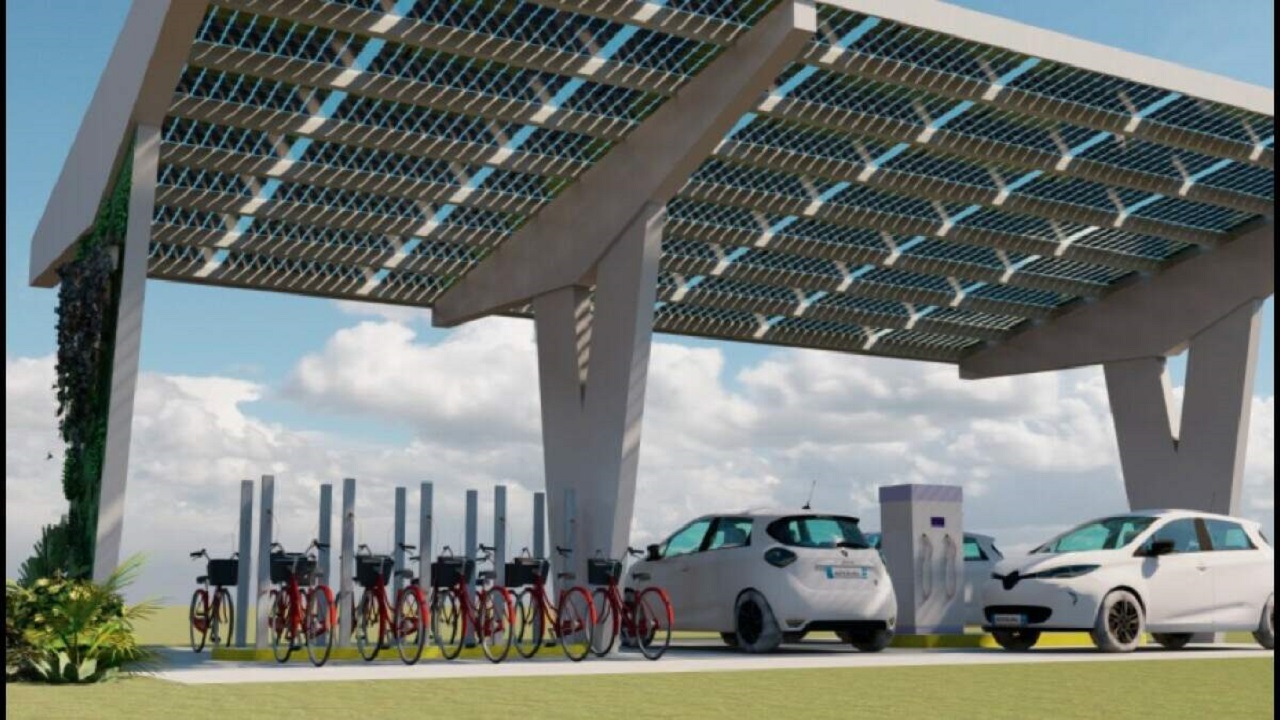

UFMS Is Working on a Charging Station That Uses Solar Energy to Power Bicycles and Electric Cars. The Institution Will Implement More Than 5,770 Solar Panels by Next Year.
A project from the Federal University of Mato Grosso do Sul (UFMS) on solar energy aims to develop a charging station to power bicycles and electric cars at the university. The proposal is funded by Global Participações em Energia S/A and is coordinated by Professor of Electrical Engineering, Ruben Barros Godoy. Information from UFMS states that the charging station will utilize solar energy and will operate wirelessly for vehicle charging. According to Edson Antônio Batista, one of the university researchers involved in the project, the operation of each power stage, as well as the system as a whole, will be evaluated in the best way through experimental results for wireless transmission of up to 5 kW.
Read Also
UFMS Charging Station Promises Two Aspects
According to Edson, the charging station project for bicycles and electric cars has two aspects, where one will use emerging commercial charging technologies in the Brazilian scenario, which UFMS is acquiring and installing for community use, and the second is the development of products such as wireless charging, for example, which has international scope.
In addition to Ruben Barros Godoy, the solar-powered charging station project also includes the participation of professors, technicians, and undergraduate and graduate students: Lucas Gutierrez da Silva, Nicholas Delben de Andrade, Moacyr Aureliano Gomes de Brito, Anderson da Silva Volpato, Sandro Petry Laureano Leme, Luis Felipe da Silva Carlos Pereira, Artur Alves de Carvalho, Fernanda Morais Balta, Matheus Arakaki de Souza, Guilherme Anderson de Bragança Fernandes, and José Luiz Moreira Júnior.
-
End of an era in Brazil: beloved sedan by Brazilians is discontinued despite having a 2.0 engine with 151 hp, CVT transmission, 466-liter trunk, and up to 650 km of range.

-
New Law Proposal in Brazil Could Heavily Penalize Drivers: Dangerous Overtaking May Become a Serious Offense with Fines Increased Tenfold and a 12-Month License Suspension; Update on 2026 Progress

-
Electric Revolution: Watts W125 Motorcycle Offers 160 km Range, 90 km/h Speed, and Affordable Price Starting at $3,000
-
General Motors Replaces Over a Thousand Workers with 50 Cobots at Electric Vehicle Plant, UAW Union Criticizes Move Amid Industry’s Automation Push




The group emphasizes that the proposal is also funded, in addition to Global Participações, by the companies: Itiquira Energética, Companhia Energética Manauara, Alcoa, Baesa, Sefac, Companhia Energética Potiguar, Grupo Equatorial, Companhia Geração de Energia Pilão.
UFMS Charging Station Will Use Remaining Energy to Reduce Electric Bill Costs
According to the researchers, the electric car charging station will encompass the modeling, design, and installation of various power stages aiming for stable operation, high efficiency, high robustness, low cost, and low charging time for electric cars.
It is also expected that the charger will allow bi-directional power flow, that is, the batteries of electric cars will be used to relieve the electric grid during peak times, to reduce electric bill costs.
According to the group, another benefit of the UFMS solar-powered charging station will be the system’s flexibility which is made with a microgrid: accumulator of the electric cars themselves, secondary accumulator, solar power generator, and the electric distribution grid itself.
UFMS Will Install More Than 5,770 Photovoltaic Panels
In addition to the charging station for electric cars, UFMS has also been investing in solar energy and is set to install 5,776 solar panels by next year. According to Augusto Malheiros, Vice-Rector of Administration and Infrastructure, the investment is R$ 8.38 million and will generate approximately 245,000 KWh per month in savings on the institution’s energy bill.
According to Augusto, the electricity is directed to the grid supplying the university center. The pandemic caused a slight delay in this installation, but it is believed that by the beginning of next year, all plants will be in operation.