






 Portuguese
  Spanish


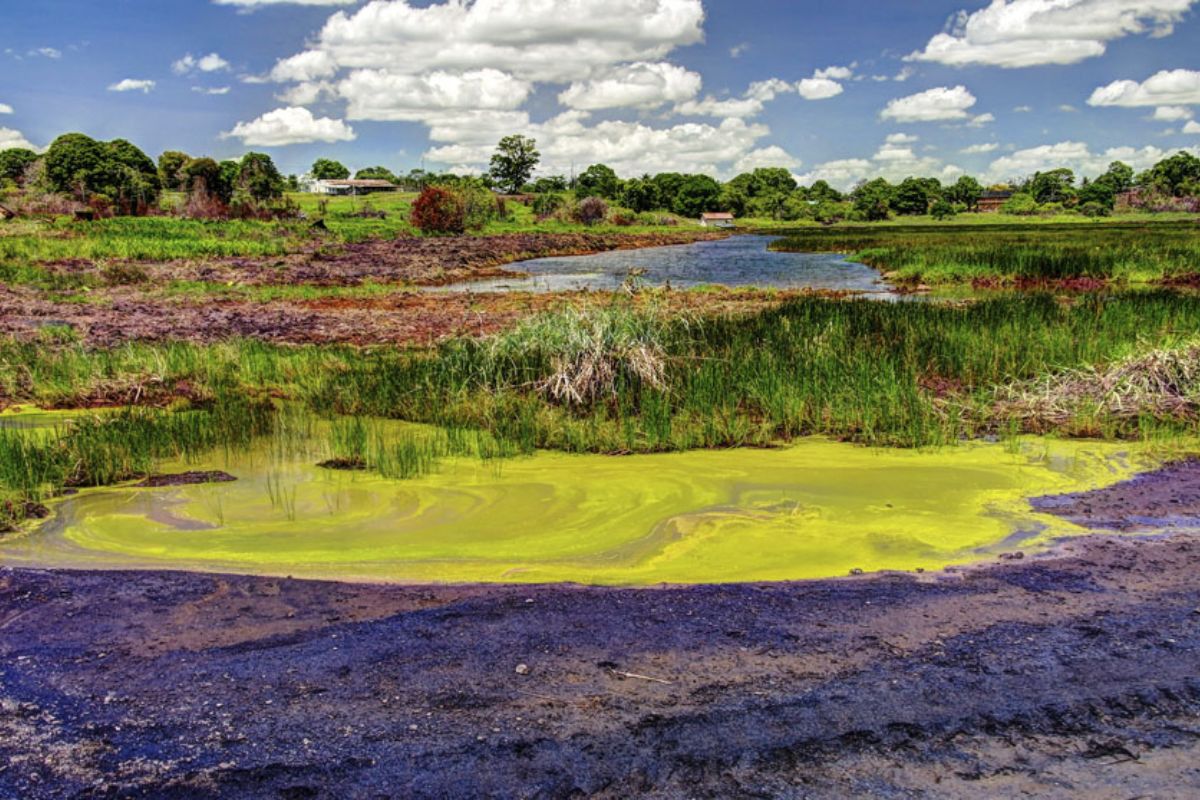


Natural Exudations of Pitch and Bitumen, Commonly Known as Asphalt Lakes, Are Rare and Visually Impressive Geological Formations. Discover How These Phenomena Arise and Where to Find Notable Manifestations in Brazil.
The image of an asphalt lake, where dark and viscous pitch rises naturally from the ground, seems like a scene from another world, but it is a real geological phenomenon, albeit very rare. These surface accumulations of extremely heavy hydrocarbons are witnesses to the complex internal dynamics of the Earth and hold secrets of millions of years of geological processes.
Globally famous sites like Pitch Lake in Trinidad and Tobago or the La Brea Tar Pits in California, these “lakes” and exudations also have their versions, sometimes more discreet, in Brazil. Let’s unveil the origin, the formation and scientific importance behind each asphalt lake or similar manifestation in our territory.
What Is an Asphalt Lake and Why Is This Natural Phenomenon So Rare?
A natural asphalt lake, or pitch exudation, is a surface accumulation of very heavy and viscous hydrocarbons that emerge from the subsurface. Its formation depends on a rare conjunction of geological factors that must persist for long periods. This includes the presence of a petroleum source rock, migration pathways to the surface, and alteration processes that concentrate the heavier fractions.
-
Top U.S. Bank Executive Fired After Dumping Trash on Street, Taking Bin Home, and Receiving Two Fines

-
Brazilian Man Arrested After FBI Alert on AI-Reported Plot to Harm Son and Attack Schools, Churches, and Officials
-
2,500-Year-Old Bronze Artifacts Unearthed by Detectorist in Eastern Poland

-
Over 5,000 Families Join Brazilian Network Providing 3D-Printed Prosthetics, Founded by Teacher Inspired by Daughter’s Limb Difference



It is important to distinguish an active asphalt lake from already consolidated deposits, such as oil sands, which are rocks impregnated with these heavy hydrocarbons. The rarity of the phenomenon lies in this complex chain of events and conditions.
The Long Geological Journey of Pitch
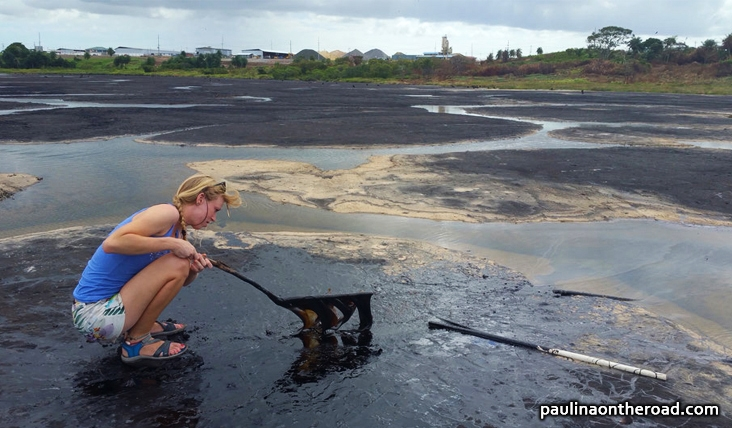
The origin of all natural pitch lies in the transformation of organic matter (plankton, algae) trapped in sedimentary rocks. Under specific conditions of burial, temperature (between 60°C and 120°C), and pressure, this organic matter generates oil over millions of years. Examples of source rocks in Brazil include the shales of the Irati Formation.
Once formed, the oil migrates through porous and permeable rocks. Geological faults and fractures are crucial, acting as conduits for these hydrocarbons to reach the surface. Upon reaching the surface or shallow zones, the oil undergoes changes such as biodegradation (microorganisms consume lighter fractions), washing by water, evaporation of volatiles, and oxidation, transforming into the dense and viscous pitch that can form an asphalt lake.
Asphalt Lakes and Pitch Exudations in Brazil
Although Brazil does not have an asphalt lake as large as Pitch Lake, several manifestations of heavy hydrocarbons are known. In the Recôncavo Basin (BA), oil exudations guided the first oil discoveries in the country.
In the Paraná Basin (SP), the bituminous sandstones of the Piramboia Formation (known as “tar sands” in areas like Guareí and Fazenda Betumita) and bitumen exudations in fractures and cavities in the limestones of the Irati Formation stand out. These phenomena are linked to the volcanism of the Serra Geral Formation, which provided heat for oil generation and migration pathways. The Jatobá Basin (PE) also features oil exudations, and there are indications in other basins such as Acre, Parecis, and São Luís.
The Historical, Paleontological, and Scientific Significance of an Asphalt Lake
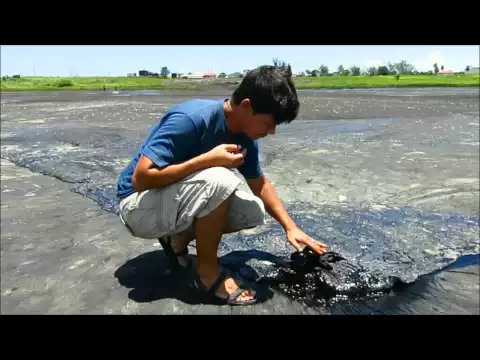

Historically, pitch exudations in Brazil were fundamental to the early days of oil exploration. Globally, sites like the La Brea Tar Pits are famous for their extraordinary paleontological value, preserving fossils of Ice Age megafauna.
Scientifically, these occurrences serve as natural laboratories to study petroleum systems, biodegradation of oil, and geological history. Many can be classified as geosites of relevance, important for geoconservation and geotourism.


