Portuguese
  Spanish


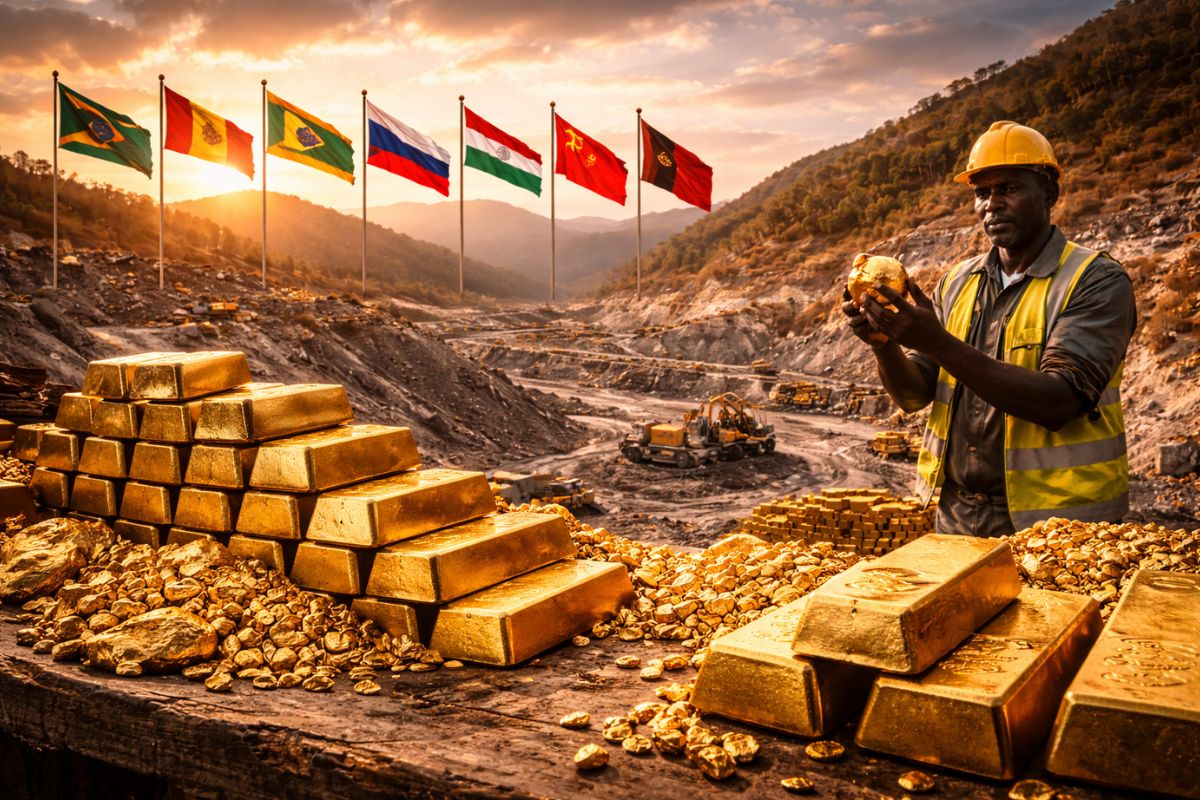

Zimbabwe, a Country with 16 Official Languages and the 2nd Largest Confirmed Gold Reserve, Has Applied for Membership in BRICS Alongside Brazil, Russia, China, India, and South Africa, Citing 1.6 Thousand Confirmed Tons and a Potential of 13 Thousand in New Areas, Targeting Investments by 2026
Zimbabwe has come onto BRICS’ radar by presenting an argument that mixes geology, politics, and money: the 2nd largest confirmed gold reserve on the African continent, with about 1.6 thousand tons, according to data attributed to the United States Geological Survey. The declared ambition is to use this mineral weight to accelerate economic development and try to sit at the table with Brazil, Russia, China, India, and South Africa.
Behind the announcement is a calculation of opportunity for 2026. The Zimbabwean government signals interest in participating in BRICS and also in the New Development Bank (NDB), seeking access to investments and technology. The lingering question, even if unspoken, is direct: how much of this potential translates into real wealth and how much stays trapped underground, in bureaucracy and the struggle for influence?
A Country That Speaks 16 Languages and Tries to Turn Plurality into Strategy
Zimbabwe appears as the only country recognized by the Guinness World Records for having 16 official languages, including Shona, Ndebele, and English.
-
Brazilian Startup Turns Coffee Grounds into Plant-Based Leather, Cutting Water Use by Over 50 Times for High-Impact Sustainable Fashion

-
Eco Invest Auction Aims to Unlock $10 Billion in Investments, Focusing on Green Fertilizers, Critical Minerals, Batteries, and AI for Clean Industry in Brazil

-
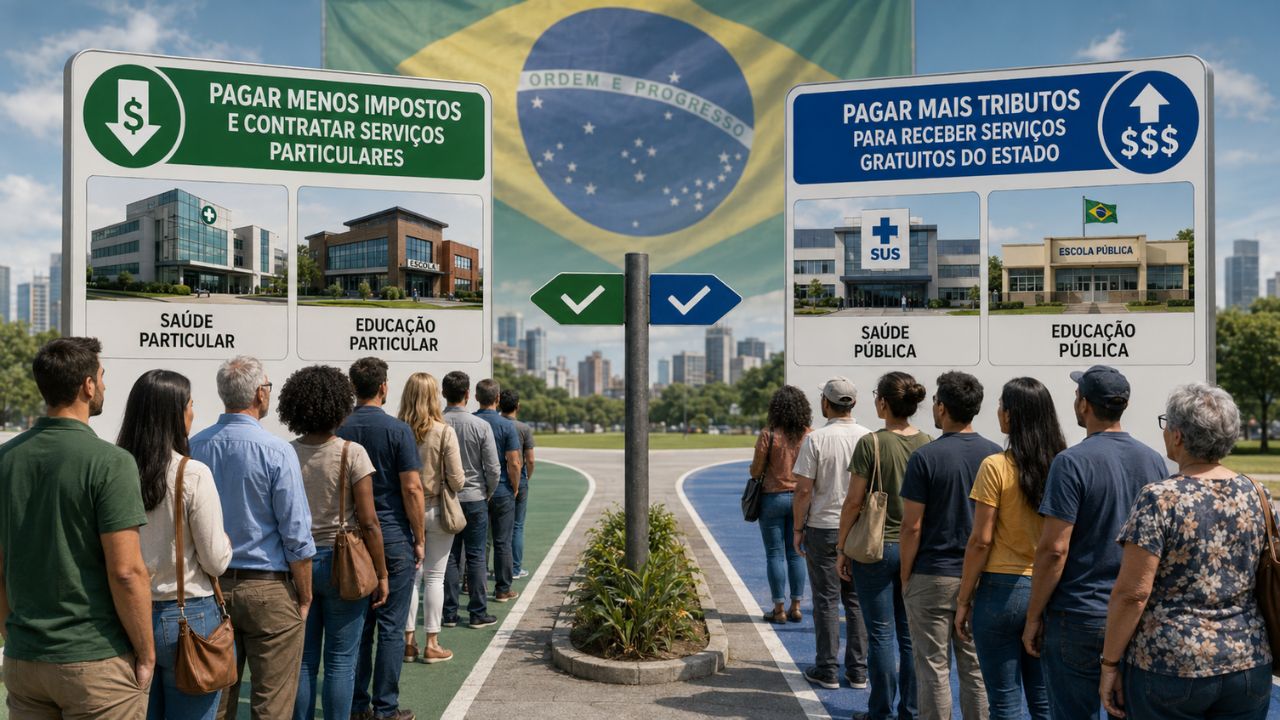
Half of Brazilians Prefer Lower Taxes with Private Health and Education, While 44% Opt for Higher Taxes for State-Provided Services, Datafolha Survey Reveals

-
Brazil’s Most Expensive Toll Rises to R$ 40.60 on Route from São Paulo to the Coast, Nearly Matching Bus Fare to Santos



This plurality is not a merely folkloric detail; it permeates education, public administration, and social coexistence, creating an institutional architecture more complex than that of countries with one or two dominant languages.
By targeting BRICS, the government seeks to convert this multifaceted national identity into diplomatic advantage, selling the image of a nation with cultural diversity and a concrete economic anchor.
The anchor is the 2nd largest confirmed gold reserve, used as a calling card at a time when blocs are seeking partners with tangible assets, not just promises.
The Gold Calculation Supporting the Request to BRICS
The numerical basis presented is aggressive and clear: approximately 1.6 thousand tons of confirmed reserves in Zimbabwe, only behind South Africa, cited with around 5 thousand tons.
Within this framework, the phrase “2nd largest confirmed gold reserve” becomes the centerpiece of the narrative, because it provides hierarchy and ranking, two elements that attract attention in economic negotiations.
The same argument opens the door to a second figure, even more striking: the potential to reach 13 thousand tons in unexplored areas.
Here lies a difference that will decide the future: confirmed refers to what has already been estimated as reserve, potential refers to what depends on exploration, investment, technology, licensing, and operational capacity to materialize.
Where the “New Gold” Would Be and Why Great Dyke Becomes a Keyword
The potential reserves are associated with the Great Dyke region, a geological formation described as rich in natural resources.
The report also cites mineral belts in Midlands and Manicaland, suggesting a territorial distribution that may require infrastructure, logistics, and regional governance to avoid a concentration of gains and impacts.
From this perspective, the request to BRICS ceases to be merely symbolic.
If Zimbabwe truly intends to increase production, it will need capital, equipment, supply chains, and regulatory stability.
The 2nd largest confirmed gold reserve becomes an entry argument, but the Great Dyke and mineral belts become the execution test, as this is where it will be decided whether 2026 will be a turning point or just another announcement.
The Continental Weight and What 4% to 7% Means in Practice
The report attributes to Zimbabwe a share of between 4% and 7% of the continent’s gold reserves, estimated at about 30 thousand tons.
This proportion is used to reinforce that this is not a marginal player.
When a country claims a significant fraction of a global mineral asset, it starts to influence conversations on credit, investment, and trade balance.
But this influence is not automatic. One thing is having gold in reserves and potential; another is transforming that into revenue and development.
The most likely scenario, following the logic presented, is that the government tries to use the position of 2nd largest confirmed gold reserve as leverage to attract projects, improve financing terms, and negotiate participation in BRICS and NDB mechanisms, instead of relying solely on traditional channels.
NDB, Technology, and the Dilemma of the “Redesigned Economy” in 2026
The explicit interest includes the New Development Bank (NDB), described as a pathway to access investments and new technologies.
This may mean financing for infrastructure and mining-related projects, in addition to technical capacity to explore areas still unworked, where the potential of 13 thousand tons was mentioned.
However, the very narrative already carries an embedded dilemma.
If the engine of the plan is gold, the country needs to prove it can expand without amplifying inequalities and without turning development into dependence on a single resource.
The bet “could redesign the economy in 2026,” but this redesign depends on what comes first: governance, execution, and credibility in the leap from confirmed reserve to potential.
Zimbabwe seeks to project itself in the BRICS scenario with a rare combination: the official diversity of 16 languages and the 2nd largest confirmed gold reserve in Africa, citing 1.6 thousand confirmed tons and the promise of 13 thousand in areas still unexplored, with Great Dyke, Midlands, and Manicaland on the map of the bet.
If you were on the outside of this board, what would weigh more in accepting this entry into BRICS in 2026: the figure of the 2nd largest confirmed gold reserve, the potential of 13 thousand tons, or the real capacity to turn the NDB into investment that transforms lives beyond the mineral sector? And, in your judgment, is gold still “safe” or has it become political risk masquerading as opportunity?