






 Portuguese
  Spanish




Sinkhole in Melbourne Halted Excavations of the US$ 26 Billion North East Link Megaproject. Authorities Stabilized the Area and Opened a Technical Investigation.
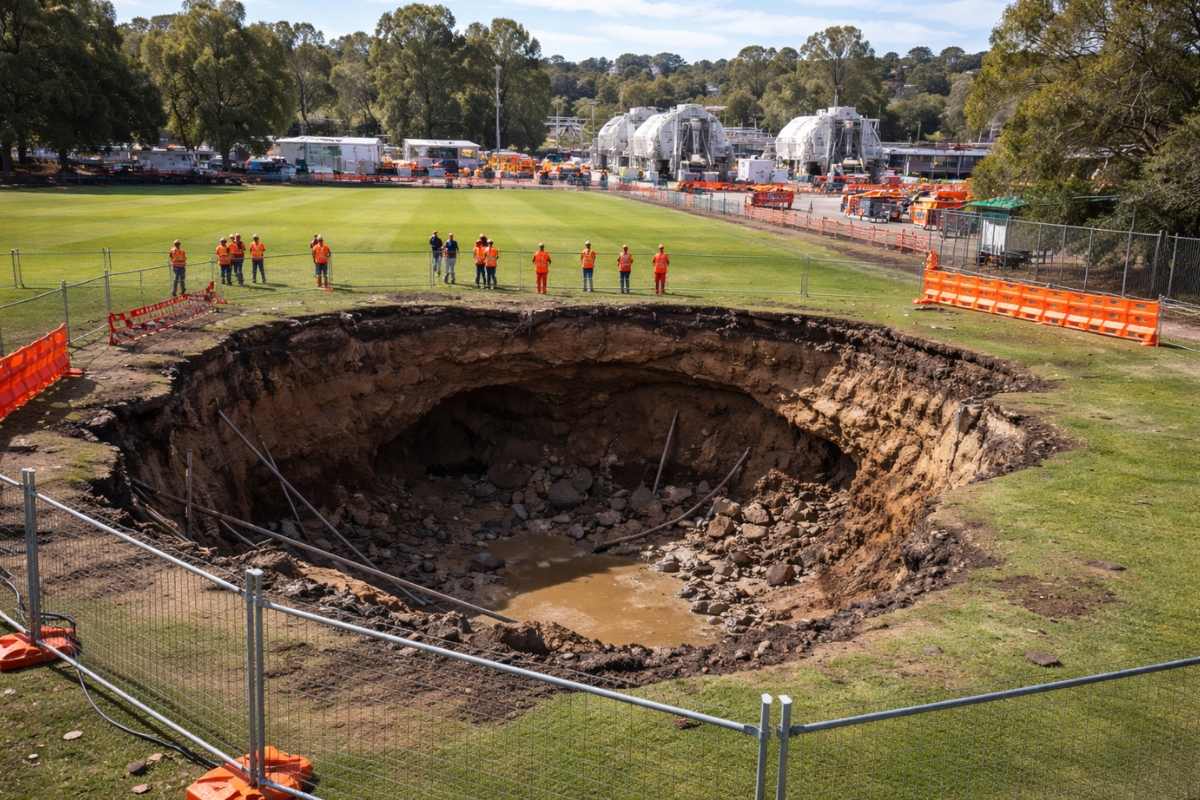
A massive sinkhole, estimated to be between 8 and 10 meters in size, suddenly opened up in Heidelberg, in the metropolitan area of Melbourne, Australia. What seemed like a localized incident quickly drew attention to one of the largest infrastructure projects in the country: the North East Link, a road corridor with tunnels and underground works valued at approximately US$ 26 billion.
Although no injuries were reported, the collapse prompted an immediate response from the teams responsible for the work and local authorities. Underground operations were halted for a technical assessment, while the surface site was cordoned off and underwent stabilization procedures.
The Collapse Point: A Sports Field Over an Active Underground Excavation Front
The sinkhole appeared at AJ Burkitt Oval, a sports field used by clubs and residents. The area was quickly fenced off and access was restricted to ensure safety and allow inspections of the ground.
-
China’s Engineered Bamboo: The “Material of the Future” Stronger Than Steel and a Sustainable Wood Alternative

-
Egypt’s “New Nile”: 170 km Artificial River Aims to Turn Desert into Farmland, but Water Supply Concerns Loom
-
Unable to secure a mortgage as a self-employed single mother, she designed her own floating home from a 20-meter boat and now lives “off-grid” with her two children and solar panels on an English canal.
-
Man Transforms Rusty Shipping Container into Luxury Home with Insulated Walls, Large Windows, and Drywall Finish, Surprising Onlookers



The site is located above the route of the North East Link, which includes deep excavations carried out by large tunnel boring machines. In projects of this type, soil variations, pressure, and stability may require ongoing operational adjustments to avoid surface deformations.

What Initial Findings Indicate: Technical Procedure and Soil Instability
After initial analyses, it was indicated that the episode occurred following a planned technical stage during tunnel operations. In underground works, pressure control procedures and advance conditions can directly influence ground stability, especially in areas with complex geological features.
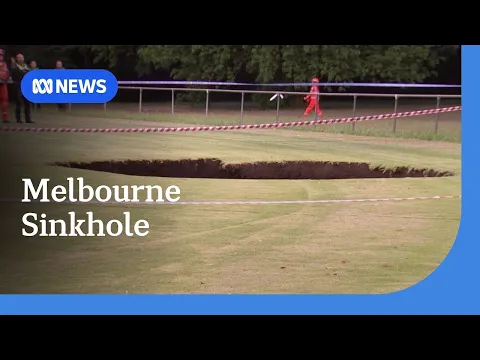
Among the outlets providing more detailed and consistent information on the case, ABC News Australia stood out by compiling technical explanations and official statements related to the operational sequence leading up to the collapse.
Investigation and Official Response: Case Treated as Serious Incident and Subject to Review
The incident was classified as serious by the authorities involved in the project, and there was acknowledgment that the occurrence requires a review of protocols. Such incidents tend to trigger internal audits and strengthen preventive measures, focusing on reducing the likelihood of recurrence during the next stages of excavation.
In large-scale projects, instability events also increase the demand for technical transparency, both for regulatory bodies and for the affected local population.

Stabilization and Repair: Isolation, Filling, and Enhanced Monitoring
Following the opening of the hole, the area underwent stabilization with emergency measures, including filling with structural material, such as concrete, to mitigate the risk of further ground displacement. The priority in this scenario is to ensure that no secondary collapses occur and that the surface returns to safe conditions.
With the initial stabilization completed, the focus shifts to additional inspections and continuous technical monitoring, especially in areas close to the underground route.
Resumption Under Control: Why a Point Event Can Alter Routines Across the Whole Project
Even when the collapse occurs at a specific point, the operational consequences can extend to the project as a whole. Resuming activities typically involves procedural adjustments, review of technical parameters, and increased monitoring of soil and structures.
The case in Heidelberg reinforces a central aspect of urban tunnel engineering: the progress of excavation depends on rigorous control and prompt response to any signs of instability, especially in deep works with high public investment.







