Portuguese
  Spanish


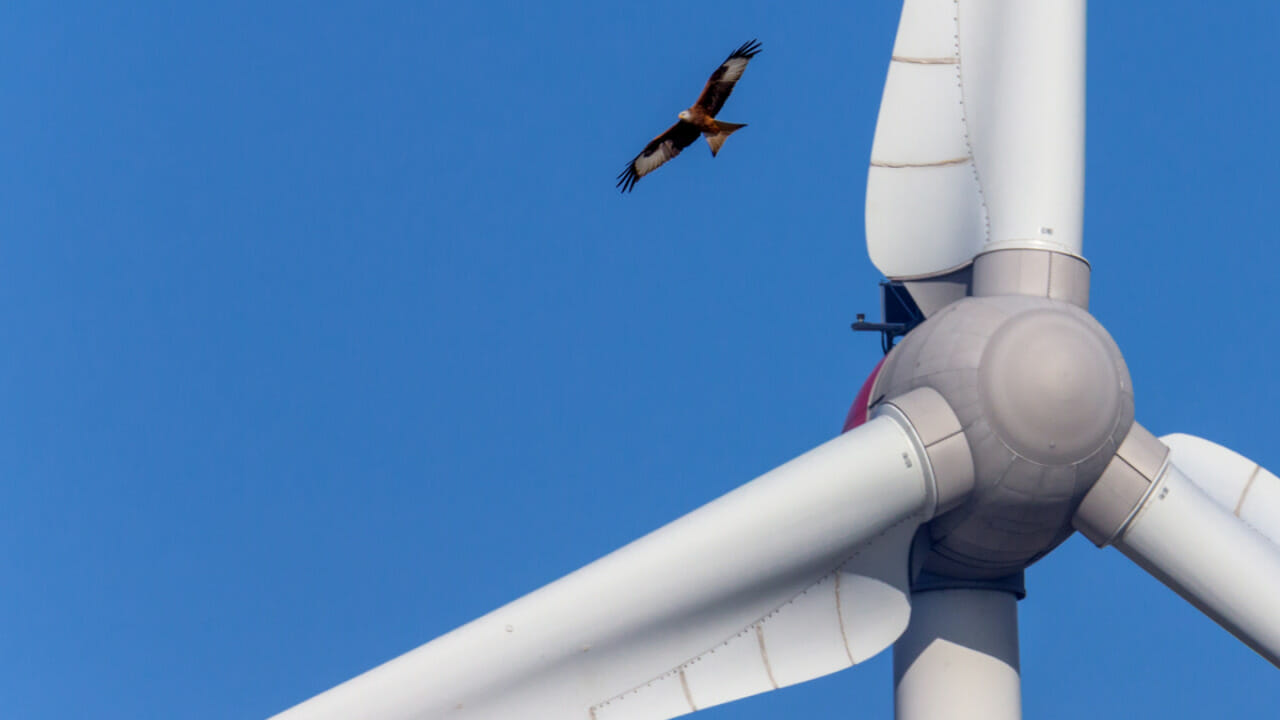

Wind Energy: The Technology of Turbines with Smart Blades Promises to Save the Lives of Millions of Birds Annually Around the World
Wind turbines have played a crucial role in generating clean energy worldwide. However, as not everything is ‘roses’, one of the biggest and most persistent problems surrounding this energy source is the impact on bird populations due to collisions with the rotating blades of wind turbines.
In search of innovative solutions to mitigate this problem, Norwegian researchers, led by SINTEF and the Norwegian Institute for Energy Technology, found an answer to this challenge and developed a revolutionary technology: the smart wind turbine.
Watch the Video Below and Learn About This Amazing Wind Generator with Smart Blades

Wind Farms Kill Millions of Birds Annually Around the World
The use of wind turbines as a source of renewable energy has brought numerous benefits to the environment by significantly reducing greenhouse gas emissions. However, wind turbines have also been associated with a concerning issue: bird collisions with the rotating blades.
-
Brazilian scientists are simultaneously advancing two research projects on clean hydrogen and driving solutions that could transform the energy matrix, enhance industrial competitiveness, and accelerate large-scale emission reduction targets.

-
Advancement in renewable energy: A R$ 150 million project launched by Petrobras and Finep aims to create state-of-the-art electrolyzers for green hydrogen, strengthening national research and preparing Brazil to compete in a billion-dollar energy market.
-
Illiterate or semi-literate grandmothers were trained to repair solar systems, open rural workshops, and light up homes that still depended on kerosene.
-
The world has bet on green hydrogen as the fuel of the future, but now faces the side effect: producing 1 kilogram requires about 9 liters of ultrapure water, and the largest projects on the planet are precisely in the driest regions of the Earth, where water is already scarce for people.





Currently, it is difficult to accurately determine the number of birds that die due to these collisions, but estimates suggest that millions of birds lose their lives annually worldwide. This is a problem that needs to be addressed for wind energy to continue being an environmentally responsible option.
SKARV System: Software-Controlled Wind Turbines That Promise to Revolutionize Renewable Energy Worldwide
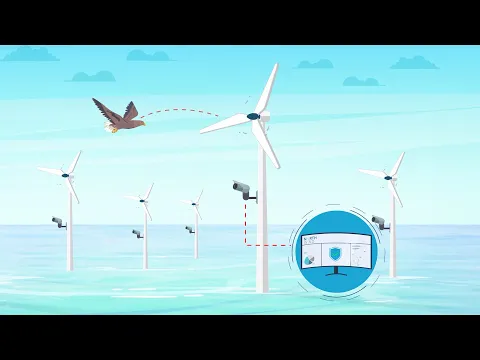
The team of Norwegian researchers developed a promising solution to drastically reduce the number of fatal collisions between birds and wind turbines. This solution involves integrating advanced technology into each turbine, making them “smart” and capable of detecting approaching birds.
The core of this technology is the SKARV software, which acts as the brain behind the smart wind turbines. Each turbine is equipped with cameras capable of identifying birds flying directly toward the rotors. The SKARV then activates, automatically calculating the birds’ predicted trajectory and sending control signals to slow down the blades, thereby reducing the risk of collision.
In simulations, SKARV has demonstrated a remarkable ability to avoid most collisions with birds moving on predictable paths. This includes situations where birds fly directly toward the turbine and are spotted at least five seconds ahead of impact.
Additionally, the system can be set up to completely shut down the turbines if many birds approach at the same time. However, the team notes that it may take up to 20 seconds for a large turbine to come to a complete stop from normal rotational speed.
Project Can Reduce the Number of Fatal Collisions by Up to 80%.
While this promising technology represents a significant advancement in reducing bird collisions with wind turbines, it is important to recognize that it does not resolve all situations. For example, it does not prevent collisions if birds come flying in from the sides of the turbines or if they are circling around them.
Paula B. Garcia Rosa, one of the experts behind this new system, notes, “It’s difficult to predict the flight trajectory of a bird, and the new system will not completely resolve this problem. If a young and inexperienced bird approaches a turbine with erratic flying behavior, it will be impossible to predict exactly where it will be a few seconds later. Prediction is also more difficult if multiple birds approach at the same time.” Paula B. Garcia Rosa, to New Atlas.
The successful implementation of this technology could have a significant impact on reducing bird deaths caused by wind turbines worldwide. Based on simulations, researchers believe the SKARV project can reduce the number of fatal collisions by up to 80%.
According to the American Bird Conservancy, compared to other risks faced by birds, such as accidental collisions with power lines, wind turbines represent a lesser challenge. In the United States alone, it is estimated that 5.5 million birds die annually after colliding with power lines.
Wind Generators with Smart Blades Could Be Available for Commercial Use in Up to Five Years
The next step in the development of this technology is integrating methods to identify more bird flight trajectories before practical demonstration. Researchers are committed to further enhancing the effectiveness of this innovative system.
The expectation is that this technology will be available for commercial use in up to five years. As we move toward a more sustainable future, the wind energy industry is working hard to mitigate its impact on wildlife while continuing to provide a vital source of renewable energy.
I would love to know what you think about this turbine. Have you implemented any type of renewable energy in your home or do you want to? Share your experience with us in the comments section. Don’t forget to leave 5 stars and turn on notifications from CPG to keep up with all the news about clean energy. See you next time!