Portuguese
  Spanish


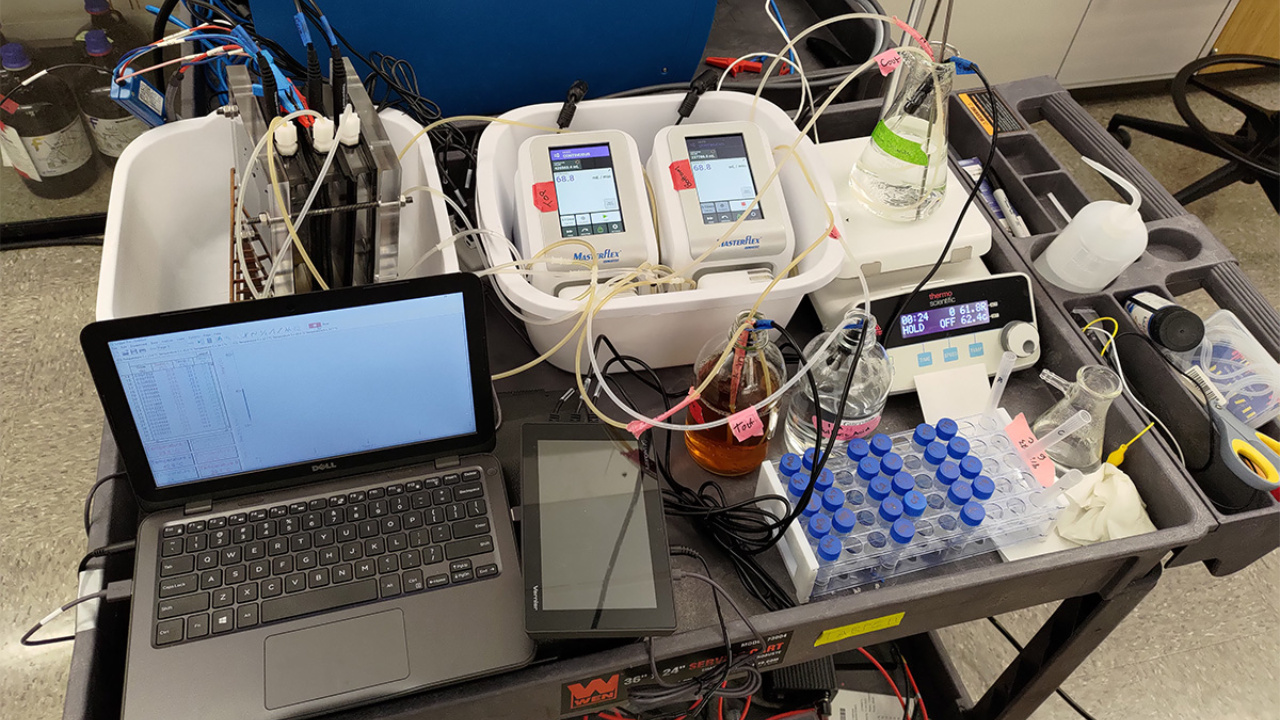


Using Solar Energy, Researchers from USP and Stanford University Develop Solar-ECS, a System That Converts Urine into Low-Cost Nitrogen Fertilizer, Offering an Ecological Alternative to Traditional Industrial Production.
A pioneering project is uniting science, sustainability, and technology to transform something unusual — urine — into a powerful source of agricultural fertilizer. The solution comes from the Solar-ECS system, a solar-powered reactor that uses photovoltaic panels to generate nitrogen fertilizer from hydrolyzed urine. The innovation was developed by researchers from Stanford University in the United States and the University of São Paulo (USP) in Brazil.
The goal is simple, yet revolutionary: to create a cheaper and more ecological alternative to the traditional industrial process, which heavily relies on fossil fuels and has a significant environmental impact. The study, published in the journal Nature Water, indicates that human urine contains enough nitrogen to meet up to 14% of the world’s agricultural demand, a potential that has been little exploited until now.
Solar-ECS: How Solar Energy Transforms Waste into Resources
The Solar-ECS is a photovoltaic-thermal electrochemical system that uses solar energy to convert nitrates (NO3-) from urine into ammonia (NH4+), the main component of nitrogen fertilizers. This process occurs through chemical redox reactions, in which electrically charged particles are transferred between the elements.
-
Brazil’s Vitória Airport to Launch Solar Plant Covering Area of 10 Soccer Fields, Boosting Clean Energy and Cutting Costs

-
Switzerland Converts Train Tracks into Solar Power Plants with Removable Panels to Generate Energy Without Using Additional Land
-
Surge in Solar-Powered Homes in Brazil Leads to Grid Strain and Connection Restrictions in Three States

-
Solar Chimney in Spain Harnessed Sun to Generate Electricity for 7 Years Without Burning Fuel




The reactor is divided into three parts: the anode, where the initial conversion of ammonia occurs; the cathode, which contains a selective membrane that allows only positively charged ions (cations) to pass; and a final chamber with sulfuric acid, where the ammonia gas mixes and forms ammonium sulfate, used as fertilizer.
One of the most interesting differentiators is the use of heat generated by the solar panels. Normally seen as a problem in photovoltaic installations, heating has been transformed into an advantage. The team utilized this heat to increase the efficiency of the reactors, since higher temperatures accelerate ammonia extraction.
Brazilian Researchers Participate in the Discovery
Chemical engineer Amilton Barbosa Botelho Junior from USP’s Polytechnic School participated in the study during his postdoctoral internship at Stanford. He was impressed by the work developed in Professor William Tarpeh’s lab, which researches ammonia production methods from urine.
Botelho Junior explains that the technology has a relevant ecological and social appeal. “Where there are people, there is urine,” he states. This means that the potential for nitrogen production is global. Additionally, he highlights that the environmental impact is positive since the process is entirely biological and does not harm the environment.
According to the researcher, the great advantage of the system is that it uses clean and renewable solar energy, eliminating the dependence on conventional electricity. “We can generate electric energy, not only in a clean manner but using sunlight, which reduces the consumption of grid electricity,” Botelho affirms.
The Challenges of Traditional Production and the Opportunity of Solar Energy
Today, nitrogen fertilizers are produced mainly in wealthy countries located in the so-called Global North. This production relies on the Haber-Bosch method, developed over a century ago, which combines hydrogen and nitrogen under high pressure and temperature to generate ammonia. Although efficient, the process requires large amounts of energy derived from burning fossil fuels — increasing costs and greenhouse gas emissions.
The consequence of this is an unequal distribution of fertilizers worldwide. Low- and middle-income countries end up paying more for the product, which hampers agricultural productivity and increases global food vulnerability. In this context, the solar-powered system offers a sustainable, decentralized, and accessible alternative.
Tests, Results, and Innovation in Using Solar Heat
During development, researchers tested the Solar-ECS under different climatic conditions. The solar panels were installed outdoors on the Stanford University campus, and the system’s performance was evaluated on sunny and cloudy days.
The tests were also conducted in the lab, where it was possible to simulate conditions of different seasons. “We were able to vary summer days with lots of sun and winter days that were cloudy to measure the impact on production,” explains Botelho.
The results showed that the heat from the panels, far from being a problem, was essential in improving the system’s performance. This is because increased temperature accelerates chemical reactions and favors ammonia conversion.
More Than Agriculture: Sanitation and the Environment Benefited
The positive impact of the system is not limited to agriculture. According to the study, urine treatment also contributes to basic sanitation and the reduction of water pollution. Today, up to 70% of the nitrogen present in over-fertilized regions is lost to the environment, causing eutrophication — the accumulation of nutrients in rivers and lakes leading to the death of aquatic species and loss of biodiversity.
After treatment with the Solar-ECS, urine samples showed lighter coloration and reduced odor, demonstrating efficiency in removing nitrogen and other compounds.
Botelho explains that the system is modular and flexible, which can be adjusted according to the size and needs of the community. Thus, it can be used in both large urban centers and isolated areas where access to sewage networks is limited. This paves the way for a circular economy model, in which human waste is reused safely and sustainably.
Challenges to Scale the Technology and the Role of Solar Energy
Despite the success in testing, the main obstacle to the expansion of Solar-ECS is the cost of reactive materials and electricity. However, using solar energy helps significantly reduce operational costs and the carbon footprint of the process.
Botelho states that the team is confident in the system’s viability at scale. “Scaling up presents challenges, but they are challenges that can be overcome with research and development,” he emphasizes. According to him, the team has already mastered the process in the lab and believes that application on an industrial scale can be achieved in the near future.
Moreover, researchers are exploring ways to apply the same technology to extract critical materials from mining, such as lithium, cobalt, nickel, and rare earths — essential elements for manufacturing batteries, solar panels, and electronic equipment.
The development of Solar-ECS reinforces the role of solar energy as a driver of the global energy transition. The use of photovoltaic panels and integrated thermal recycling systems shows that it is possible to create complete and self-sustaining solutions, reducing environmental impacts and improving the efficiency of industrial processes.
The innovation signifies a paradigm shift: instead of discarding urine as waste, it is treated as a strategic resource capable of generating fertilizers, saving energy, and preserving the environment.
More than a scientific curiosity, the project serves as an example of how solar energy and collaborative science between universities can open new pathways for a cleaner, more inclusive, and efficient future — connecting agriculture, sanitation, and sustainability under one sun.