






 Portuguese
  Spanish
  3 min of reading
  0 comments


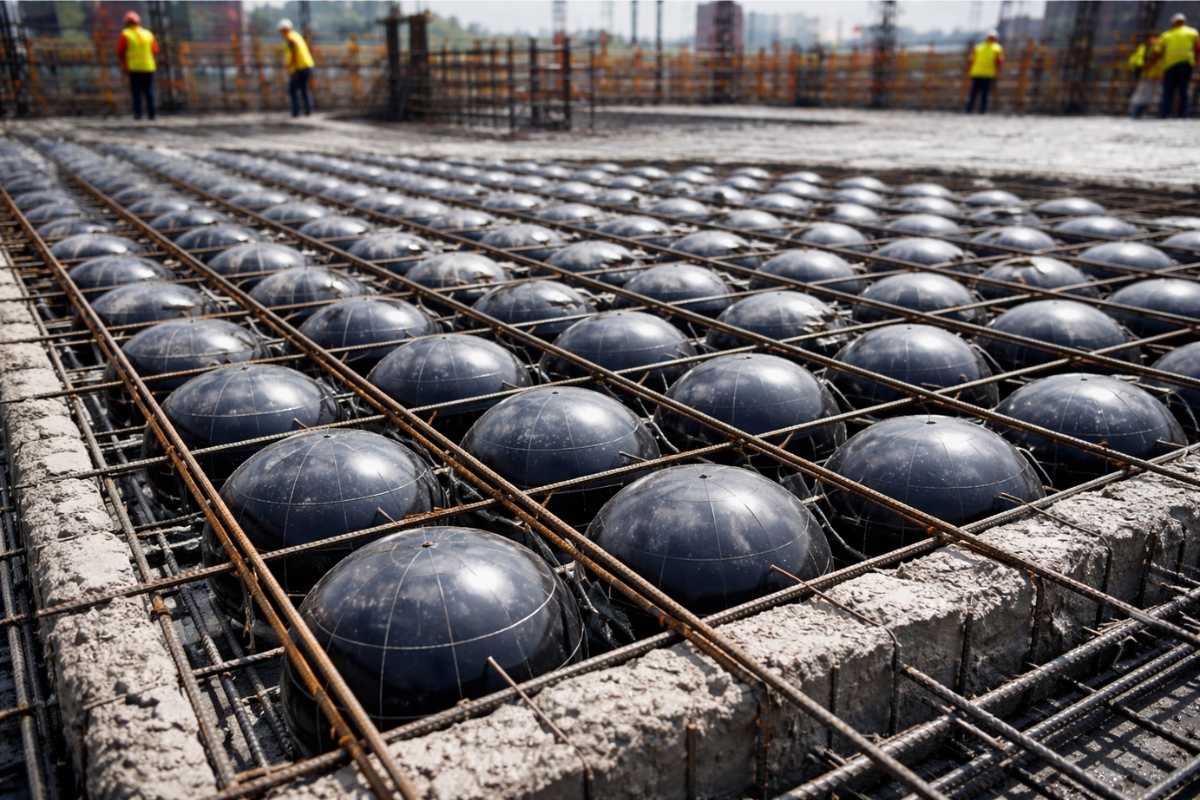
Building System With Plastic Spheres Is Applied in Buildings to Reduce Weight, Save Concrete, and Expand Spans With Up to 35% Less Load on the Structure
The construction industry has been adopting a different solution for concrete slabs in medium and large projects. The method uses hollow plastic balls inserted inside the slab to eliminate concrete where it contributes little structurally.
The technique is known in the market as biaxial relieved slab and has been primarily applied in buildings with flat slabs. The main impact is the significant reduction in self-weight, with direct reflections on structural cost and project performance.
With less mass, the structure can work with larger spans, fewer columns, and more streamlined foundations, while maintaining the safety criteria required by technical standards.
-
To halt the advance of the Sahara, the 8,000 km Great Green Wall in the Sahel relies on reforestation to combat desertification, but by 2026 it remains far behind the goal of 100 million hectares.

-
Long before sustainable construction became a trend, China built earthen fortresses with multiple floors, a central courtyard, and the capacity to house up to 800 people living in a community.

-
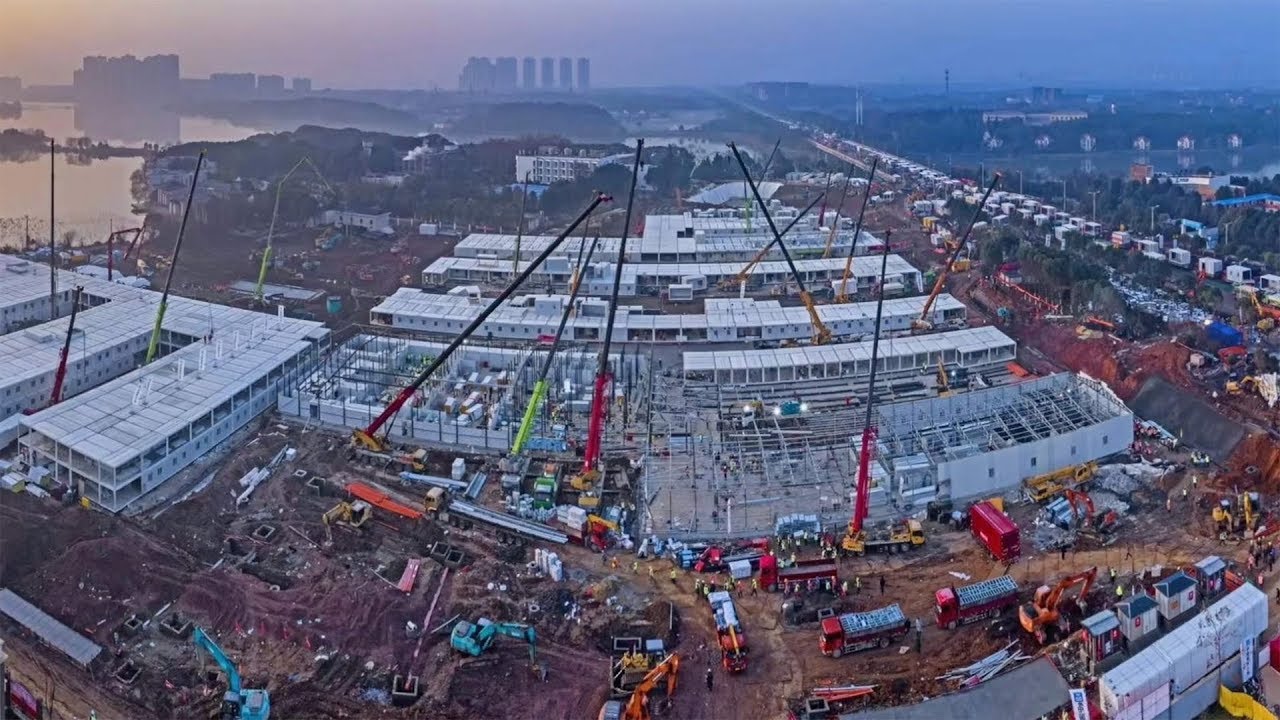
While in the rest of the world building a hospital takes years from design to inauguration, China erected the Huoshenshan Hospital from scratch in just 10 days, with 1,000 beds, foundation, structure, electrical installations, plumbing, and oxygen system ready to receive patients, mobilizing 7,000 workers.

-
Without mortar, grout, or traditional construction: the ClickBrick system assembles brick facades with ceramic pieces held by metal clips, eliminating the need for glue, speeding up installation, and even allowing everything to be dismantled later without turning the construction into expensive permanent debris.



How the Technology of Slabs With Hollow Balls Works

The system positions the hollow balls in the central region of the slab, near the neutral axis. This area is where the concrete has the least contribution to flexural strength.
The upper and lower faces remain solid and reinforced, ensuring that the slab continues to work in two directions. The result is a lighter, yet efficient structure.
This configuration allows the slab to function similarly to a solid slab but with reduced material consumption.
Weight Reduction Reaches Up to 35% Compared to Solid Slab
One of the most attention-grabbing data is the reduction of up to 35% of self-weight of the slab when compared to a solid solution of the same thickness.
According to ArchDaily, an international architecture and construction portal, this relief occurs because the removed concrete is located in areas of low structural demand.
This weight reduction directly impacts the sizing of columns, transition beams, and foundations, generating indirect savings throughout the structure.
Lower Concrete Consumption and Reduced Environmental Impact
By removing part of the concrete volume, the system also reduces cement usage. This contributes to the reduction of the carbon footprint of the project.
The material savings do not mean a loss of structural performance when the project is correctly sized. The solution requires specific calculations and compatibility with the adopted construction system.
In repetitive buildings, process rationalization can bring additional productivity gains.
Attention to Punching and the Solid Zones of the Slab
Despite the advantages, the technology requires important technical care. One of the main points is punching, concentrated stress in the region of connection between the slab and column.
For this reason, the project foresees solid zones without hollow balls around the columns. In some cases, specific reinforcement of the rebar is also necessary to ensure safety.
These details are part of the structural sizing and cannot be neglected during execution.
Where This Type of Slab Is Commonly Used
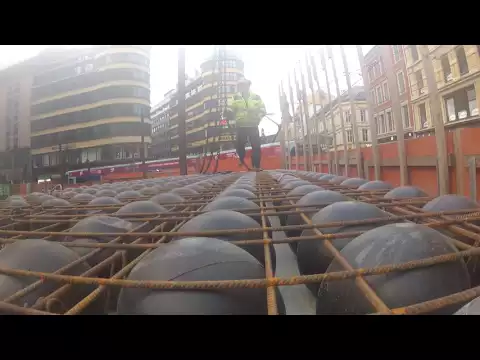

Slabs with hollow balls are more common in commercial buildings, residential multi-story buildings, parking garages, and hospitals. The system works best when there is regular modulation and repetition of floors.
In projects of this type, the weight reduction facilitates structural design and enhances architectural flexibility.
Projects with large open areas and less interference from beams benefit most from the technology.
Proper Execution Determines the Success of the System
The installation of the hollow balls requires strict control of positioning and coverage of the reinforcements. Any mistake can compromise the slab’s performance.
Therefore, the adoption of the system depends on trained labor and constant technical oversight. When well executed, the solution delivers structural efficiency, material savings, and performance equivalent to traditional slabs.
The advancement of this technology indicates a trend towards lighter and more rational structures, aligned with current construction industry demands.








-

-

-

-

-

-

140 people reacted to this.