






 Portuguese
  Spanish


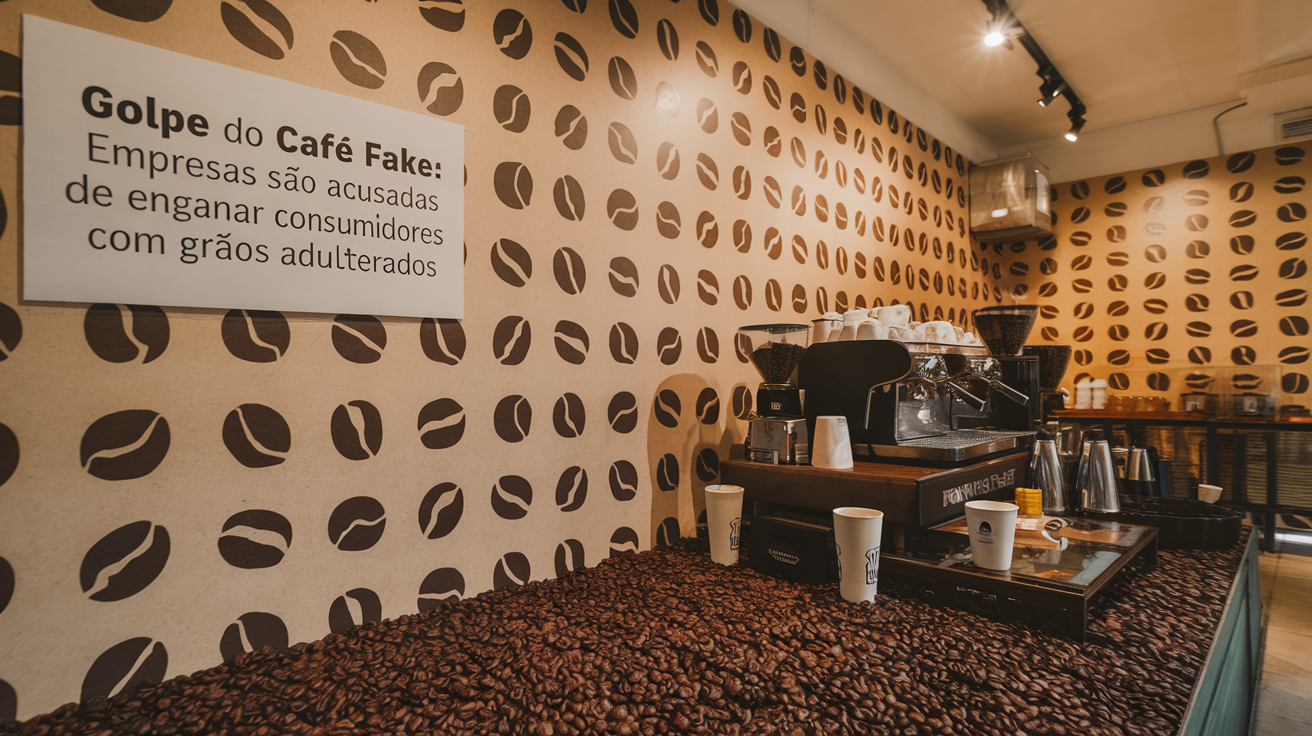


Fake Coffee Sales Are Taking Consumers by Surprise on Supermarket Shelves. Learn How Coffee with Adulterated Beans Deceives Consumers, According to the Executive Director of ABIC!
Coffee is one of the most consumed beverages in the world and has historically been among the most valuable commodities in the global market. Even with the evolution of consumption habits, it continues to be enjoyed in various forms, from small cups to large mugs. However, recently, the Brazilian coffee industry has faced a concerning challenge: the so-called fake coffee sales, which involve the adulteration of beans with impurities, causing apprehension among producers and consumers.
Understand How Fake Coffee Sales Work
This concern about fake coffee sales exists due to products made with “coffee flavor,” but which are not traditional coffee at all. Particularly at this moment, when ground roasted coffee is being sold at very high prices.
Referred to as ‘fake coffee’, these adulterated beans are a clear and evident attempt to deceive and trick consumers, according to the executive director of the Brazilian Coffee Industry Association (Abic).
-
France Revamps 530 Social Housing Units with Large Balconies and Glass Facades Without Demolishing Existing Buildings

-
10-Year-Old Max Makes History with Paris Fashion Show, Launches Own Brand, Hires Staff, and Sets World Record as Youngest Runway Designer

-
Bolivian Female Construction Workers Form Association to Combat Discrimination and 38% Pay Gap in the Industry
-
Near Amsterdam, residents buy land and discover they must also build streets, manage drainage, handle waste, and grow food on half their plot.




To give an idea, the association recently found a coffee-flavored powder being sold in Bauru, in the interior of São Paulo.
These adulterated beans can be made from shells, chaff, leaves, sticks, or any part of the plant except the seed.
An example of products made this way is a brand called Official of Brazil, which has on its packaging the phrase “traditional coffee-flavored beverage.” According to Silva, even though there is an indication that it is coffee with “adulterated beans,” there is still a risk that consumers will be deceived, as the packaging is very similar to products that are actually roasted and ground coffee.
Company Responds After Fake Coffee Sales Accusation
According to the manufacturer of Official of Brazil, Master Blends, a company that is based in Salto de Pirapora (SP), they created the coffee and made this clear on their packaging. Thus, they deny that the company is deceiving its consumers with adulterated beans. As the company highlights in an official statement, at no point was it stated that it is coffee and asserts that it only creates a byproduct to cater to a class that is suffering each passing day.
The company’s official statement also mentions that this product is composed of coffee and roasted coffee pulp and ground coffee, it is written “coffee-based beverage” on the front and also on the back of the packaging. Official of Brazil has been in the market for 32 years and emphasizes that it has never deceived consumers.
According to the statement, what has been considered fake coffee sales is the same phenomenon that has occurred with other large and well-known companies in the market, what used to be condensed milk has turned into dairy blend, before there were chocolates with chocolate coating and now they have chocolate flavor coating, among others.
Understand the Reason for Fake Coffee Sales with Adulterated Beans
These alternatives arise because, since 2024, the roasted and ground coffee industry has been passing on the costs of raw materials to consumers. Consequently, coffee prices increase and this creates a fertile ground for the sale of fake coffee.
According to Silva, Abic is going through a very tense moment; raw coffee, the base of roasted and ground coffee, has not seen such high prices since the frost of 1979. When this happens, the raw material becomes increasingly contested, and manufacturers who acquire the raw material at these prices will pass on the costs.
This is precisely why Abic is concerned about those who may end up profiting from adulterated bean coffees. Because of this, the entity has already reported the case to the Ministry of Agriculture and the National Health Surveillance Agency (Anvisa).









MEU DEUS SO VIGARISTA NESSE PAÍS e o cara de ainda acha que esta certo e um **** de marca maior CANA NELE e FECHA ESSA EMPRESA PRA NUNCA MAIS OPERAR
Já não temos um bom café pra consumo interno…que atende a demanda da maioria .que o consome. Se fizer mais misturas. Como fica quem trabalha honestamente nesse país!!! Temos poucas pessoas seria! No ramos de café…com qualidade no Brasil!!