






 Portuguese
  Spanish


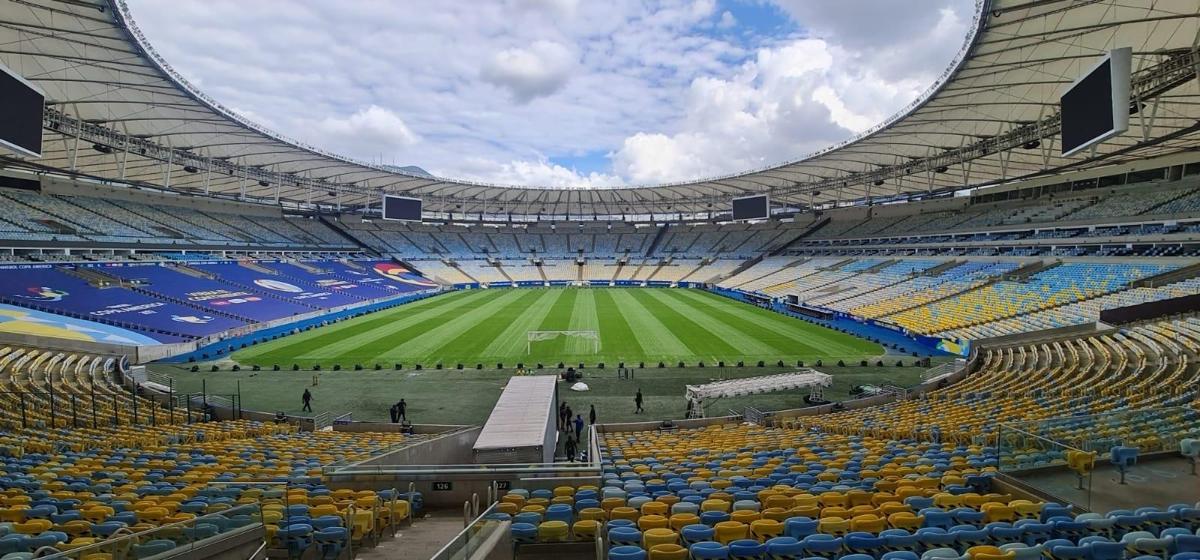


Bill Expands Number of Public Properties for Sale and Includes the Maracanã Complex and the Maracanã Village on the Disposal List
The Constitution and Justice Commission (CCJ) of the Legislative Assembly of the State of Rio de Janeiro (Alerj) approved, with amendments, the Complementary Bill (PLC) No. 40/2025.
The proposal authorizes the state government to sell 62 public properties, expanding the initial list of 48 properties sent by the Executive.
Among the new assets is the Maracanã Complex, which includes the stadium and the Maracanã Village, as explained by the deputy Rodrigo Amorim (União Brasil), president of the CCJ.
According to him, the market value could reach R$ 2 billion, although the final price depends on the negotiation conditions.
The text now goes to plenary voting, where it may receive new amendments and modifications.
What Changes with the New Bill
The CCJ report expanded the number of properties available for sale.
Initially, there were 48 properties, but after review and debate, the total increased to 62 public assets.
The expansion occurred because 16 properties were excluded, while 30 new ones were included.
The report was prepared based on a technical group coordinated by deputy Alexandre Knoploch (PL), who conducted on-site inspections and proposed detailed adjustments.
According to Amorim, the proposal aims to give a productive function to idle properties, strengthening the Fluminense economy.
He emphasized that the goal is to generate revenue, create opportunities, and reduce public spending.
In addition, he stated that “the most important thing is not just the money that comes in, but what does not go out.”
Thus, the legislator believes that the intelligent use of public spaces can boost the state economy.
Removed Properties and Political Disputes
During the vote, 12 properties with a public function were excluded.
Among them are Casa Nem, Escolinha de Artes do Brasil, Casa Almerinda Gama, and Grupo Arco-Íris.
Additionally, four other properties were removed following requests from lawmakers of different parties.
Among the excluded properties are the Caio Martins Sports Complex, requested by Verônica Lima (PT) and Flávio Serafini (PSOL).
Two properties in Niterói, the Iaserj building and the Ciep Municipal Esther Botelho, were also removed.
For Flávio Serafini, the project creates risks of speculative appreciation.
He argued that “there are high-value properties with urban restrictions that prevent new constructions.”
If the government changes these rules in the future, the price could multiply rapidly and reveal a strategic error in the decision.
-
Amazonas Updates Flag After Over 40 Years to Represent All 62 Municipalities in Historic Legislative Decision

-
Going to travel and leave your pet alone? Brazilian city creates strict rule, targets temporary abandonment, and can fine dog and cat owners up to R$10,000.
-
Traffic jammed between BH and Nova Lima may get significant relief with the Viaduto Ferradura, a R$ 48 million project that promises to connect MG-30 and MGC-356 without passing through the Belvedere junction.

-
Rio Pinheiros catches the attention of those passing by the bike path with less strong odor, more capybaras and birds on the banks, a reduction of up to 55% in organic matter, and a record removal of trash in São Paulo.


Therefore, Serafini advocated for a more thorough review of the sale criteria.
The Controversy Over the Maracanã Village
The fate of the Maracanã Village has become the most controversial point of the proposal.
The area has 14 thousand square meters and is located next to the Maracanã Stadium, one of the biggest symbols of Rio de Janeiro.
For Flávio Serafini, the site should remain under state control and receive cultural and social investments.
He proposed transforming the space into a center for the appreciation of indigenous culture, promoting inclusion and historical recognition.
According to Serafini, the project could transform Rio into a reference in the preservation of indigenous traditions.
In contrast, Rodrigo Amorim stated that the area is in a state of abandonment.
He argued that its requalification could generate jobs, income, and tourism.
Amorim cited the example of Wembley, in England, where authorities revitalized the area around the stadium and created leisure and commercial spaces.
Thus, according to him, the Maracanã could follow a similar model, balancing economy, culture, and urban modernization.
Next Steps and Expected Impacts
The PLC 40/2025 will be voted in plenary in the coming weeks, a decisive step that could change the list of properties and the sale criteria.
The Alerj held a public hearing to discuss the topic and request technical studies and financial projections.
Public Ministry and Court of Accounts will monitor the process to ensure transparency and legality.
While the government argues that the sale will help the public accounts, critics warn of the risk of losing historical heritage.




Que bom vender tudo.
Já se foi a água, energia elétrica, metrô e mais um monte de patrimônio público, seja ele lucrativo ou não, o importante e passar tudo para o capital privado que suga até a última gota para esfolar o cidadão.
A culpa não é desses ” políticos” que estão aí só para usar o cargo em benefício próprio ou para benefício de seus financiadores.
Acaba com tudo, o **** gosta!